Siouxsie Wiles: Menstrual cups are a great invention. But how safe are they?

Image: Jean Donaldson and Emma Stein
Menstrual cups are a game-changer in terms of reducing waste, but only a handful of contradictory studies, carried out under artificial conditions, have been done on their safety. Siouxsie Wiles wants to change that – but needs your help.
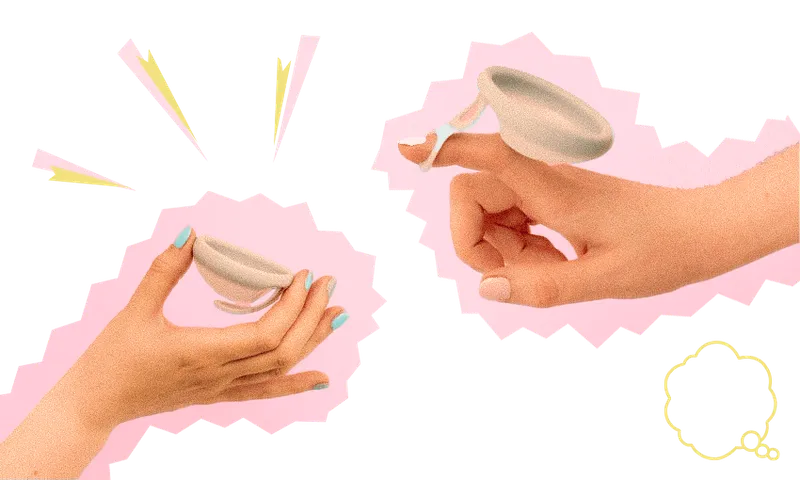
Menstrual cups are an ingenious invention, a reusable device that’s inserted into the vagina to collect period blood. Once full you just empty it, give it a wash*, and pop it back in. It’s both a cheaper and more environmentally friendly way of dealing with periods than using tampons and pads. Here are some eye-watering statistics for you. In 2023, people in New Zealand spent $79 million on disposable menstrual products, equating to an estimated 355 million units, each taking anywhere from 500 to 800 years to decompose.
But, despite first hearing about them in the early 2000s, I’ve never been able to bring myself to try a menstrual cup. As a microbiologist, I couldn’t get over my niggling fear of biofilms. What’s a biofilm, you ask? It’s when microbes exude a sticky matrix that allows them to stick to surfaces and form a little community that’s protected from the elements, including our immune system and antimicrobial drugs like antibiotics. Something like 65-80% of all infections are related to biofilms.
The study that started it all off
I didn’t give menstrual cups much more thought until 2018 when a journalist called asking me to comment on a new study suggesting menstrual cups might be riskier than tampons when it came to toxic shock syndrome (this is a rare but very nasty infection that can be deadly).
He sent me the paper, and I read how the researchers had put menstrual cups and tampons in plastic bags, filled the bags with bacterial growth media, added the bacteria that causes toxic shock, sealed the bags, and then shaken everything at 200 revolutions per minute in an incubator. After eight hours they tested how well the bacteria had grown and how much toxic shock toxin was produced.
More toxin was produced in the bags that contained the menstrual cups compared to tampons. Conclusion: cups are riskier than tampons.
My first response to reading the paper was WTF?! In what way is a menstruating vagina like a bag of bacterial growth media shaking more vigorously than the most exuberant belly dancer?! So, I did a quick search of the scientific/medical literature, and it turns out this was only the second study of its kind. The first was published in the 80s when menstrual cups were made of a different material.
In other words, a product widely advertised as “safe” didn’t seem to have any published evidence to back up that claim. So that got me thinking. Could we investigate whether bacteria can stick to menstrual cups under conditions that mimic the menstruating vagina and how cups are typically used? (Sticking is the first step needed for infection.) I had a great student, Aimee, start doing some experiments.
And then the pandemic happened.
As we went into lockdown, Aimee pivoted to a new project that didn’t need access to a lab. And that was that. In the years since, I’ve been a bit distracted and didn’t give the project any more thought. Then about 18 months ago, another lab member asked if I was ever planning to restart the menstrual cups project. Surely it’s all been done by now, I thought. I did another literature search to see what had been published in the intervening years.
A handful of contradictory studies…
I think it’s safe to say that 2018 study was a bit like kicking a hornet’s nest. Over the next few years, a flurry of studies were published, including some by Procter & Gamble, which manufactures the Tampax brand of tampons and the Tampax menstrual cup. They concluded their menstrual cups are safe when used as instructed. But another independent study concluded there was cause for concern.
So no solid conclusion either way. And again, all the studies were done under pretty artificial conditions. And used different cup brands.
In the meantime, though, at least one cup has come onto the market, bfree, that specifically says it’s made with an antibacterial coating. I’m clearly not the only one worried about infection risk. But what about all the other cups on the market?
So, what’s our project?
We’re asking the important question: how well do microbes stick to cups and discs under conditions that mimic the menstruating vagina? That means thinking about pH, oxygen levels, shaking speed, what nutrients are available, and adding blood. It seems hard to imagine, but almost all the lab studies done to date didn’t involve blood!
Published studies have also focused on the toxic shock bacterium, so we want to include the microbes that cause urinary tract infections, thrush and vaginosis. Just because they aren’t as deadly, doesn’t mean they aren’t important!
We also want to test a wide range of cups and discs. There are loads on the market. Thick. Thin. Hard. Soft. Textured. Smooth. Silicone. TPE. Rubber. Do microbes stick to them all the same? And what about a $3 cup from Temu or Amazon versus a $40 branded one? Does price matter?
Why we’re crowdfunding
Funding for research in Aotearoa New Zealand has been bad for a long time, with success rates well below other countries we like to compare ourselves to. And things have only gotten worse. It’s dire. On top of that, funding women’s health projects is even more difficult. A 2021 analysis revealed that just 1% of global healthcare R&D spend is invested in women’s health conditions beyond cancer.
I’ve spent more than 18 months applying for funding. In the meantime, we’ve been doing what little bits we can, thanks to a small grant-in-aid from Istar and donations from members of the public and from me.
More than 10 rejected funding applications later, and crowdfunding is all I have left. The timing sucks, with the cost-of-living crisis only getting worse, but I think this project is too important not to do.
So, I’m trying to raise $150,000, which will just about cover our expenses for a year. I’m hoping enough people have a few dollars to spare, either as a one-off or monthly donation, to get us to our target. Donations over $5 are tax-deductible, so individuals and companies in NZ can claim back one-third of the donation amount.
Shouldn’t the manufacturers be funding studies?
This is an excellent question and I have mixed feelings. On the one hand, yes, they should be ensuring their products are safe to use. But on the other hand, there is a clear benefit to studies being independent of the companies. That way, they’ll be free of any real or perceived bias/influence and able to fully report their findings.
So if you agree this study and our independence is important and you can afford to support us, please donate here.
If you can’t afford to donate, I totally understand. You can support us by sharing this post and the donation link as far and wide as you can – with friends, family, work colleagues, and using social media.
Together we can give menstrual cup and disc users important information about the products they use.
*Don’t even get me started on the differences in washing recommendations. Studying those is also on my wish list!

Siouxsie Wiles
Dr Siouxsie Wiles is an Associate Professor and head of the Bioluminescent Superbugs Lab at the University of Auckland. She and her team make nasty bacteria glow in the dark to find new medicines and to study how bacteria evolve to cause disease. Siouxsie recently published her first book, Antibiotic Resistance: the End of Modern Medicine? She is also a keen blogger, tweeter and podcaster and is the 2021 Te Pou Whakarae o Aotearoa Kiwibank New Zealander of the Year.


