The story of Polish orphan Frank Szpetner and World War II’s longest exile journey

Frank Szpetner and his fellow Polish orphans at Pahiatua. (Photo: Annika Stricker)
Deported by Soviet authorities from Poland during World War II, 733 orphaned children found new lives in New Zealand. This is the story of one of the last survivors.
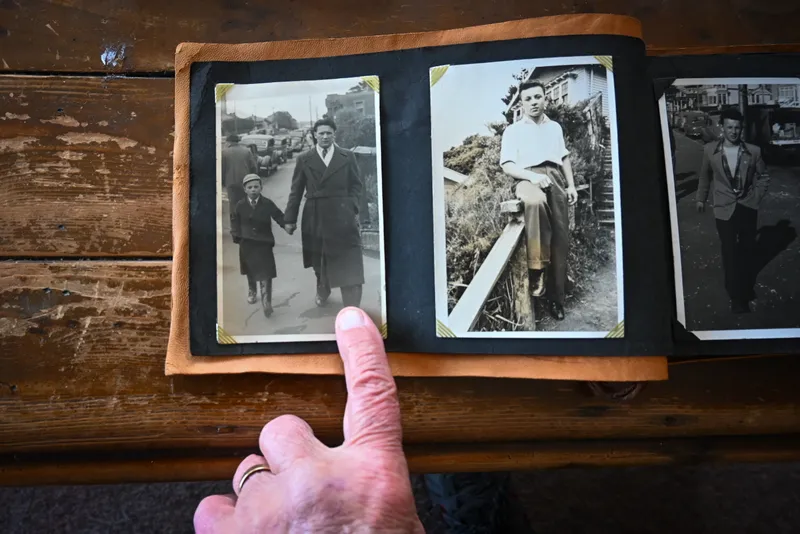
“That’s me,” Frank Szpetner says as he points to a little boy in a group of children in an old black-and-white photograph, its edges crinkled with age. He’s sitting in his daughter’s living room, his beloved photo album on his lap. Frank’s finger hovers over the smiling boy clutching a toy horse as if he never wanted to let go. Behind them is a barrack with open doors and windows inviting in the new residents. The photo was taken right after 733 orphaned Polish children arrived in Pahiatua, their new home in New Zealand. Frank recalls the day of their arrival: “They took us into the barracks where we were going to sleep, helped us pick a bed and took us across the road to the sheds. They were full of clothes and toys that the Kiwis had donated.”
I look at the photograph again. The boys are looking back at me, laughing into the camera. It is hard to imagine the hardship they had already survived. I met Frank exactly one year ago, in November 2025, for the 81st anniversary of the children's arrival in New Zealand. Little did we know that it would be his last reunion. Frank passed away in September 2026, before this story could be published. “Okay let’s do it chronologically,” I say. “Start from the very beginning.”
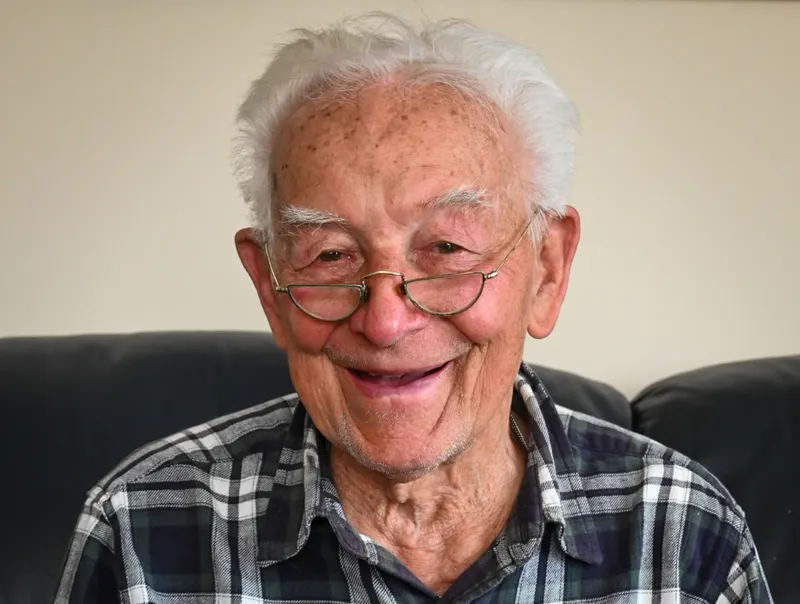
Frank takes me back in time – back to September 1939, to World War II, when the Nazis and the Soviets invaded Poland. It was just after the signing of a non-aggression pact, secretly agreeing to divide parts of Eastern Europe between the two parties. “I was four months old when the Russians took us to Siberia,” Frank says. He doesn’t know much about his birthplace, too young to remember anything himself. His family told him later that his father had a farm in East Poland, in a region that is now part of Ukraine. Then one night, a knock on the door: “The Russians came in and told us we’ve got forty minutes to grab some clothes and things we needed. And then we actually sat in cattle wagons for a week until they loaded the train completely full of people.”
Huddled in the overcrowded cattle wagons, the journey spanned over several weeks. There were barely any food supplies and just a single hole in the floor for waste. Conditions did not improve in the Gulags where deportees were forced to work in mining, logging or farming under brutal weather conditions with winter temperatures often dropping below -45°C.
The fate of the Polish deportees changed overnight, yet again: Nazi Germany invaded the Soviet Union in June 1941, which in turn reconciled with Western Allies, having to release the Polish people from the gulags. “We woke up one morning and the gates were open,” Frank says. “They said to us, make your way to the nearest neutral border which was either India or Persia, and you’ll be looked after.”
This meant another horrendous, month-long evacuation journey. When the train stopped somewhere in Kazakhstan, Frank’s mother went to fetch water. “When she returned, the train started moving again. She jumped onto the step, but her skirt got caught. She was dragged under. I never really knew my mother.” Frank pauses and silence fills the living room. After clearing his throat Frank adds: “The way they identified her was because Dad’s Army papers were sewn into the lining of her jacket. And believe it or not, I’ve got the papers today.”
When finally reaching Persia, now Iran, Frank’s father had already joined the Polish forces to fight against Nazi Germany. Eventually, his last remaining aunt decided to join the army too. Frank was left without immediate family members. Orphaned at the age of four, Frank sums up his life in the refugee camps in Persia: “I mean, they fed us but when it came down to it, you either looked after yourself or you died.”
The temporary orphanages in Persia were overflowing, and the Polish government-in-exile was looking for long-term solutions. British colonies, primarily Africa and India, accepted thousands of children and caregivers. The United States and Britain accepted none. Unlike the colonies, which were ordered by London to take refugees, New Zealand acted out of humanitarian empathy, inviting 733 Polish orphaned children as exiles rather than as typical refugees. On October 31, the USS General Randall arrived in Wellington Harbour carrying the children and their 105 caregivers.
“I turned five when the boat hit Wellington Harbour,” remembers Frank. Gathered on the docks was a bustling crowd welcoming the returning soldiers and Polish children. The orphans were lifted into train carriages for their very last stretch of the journey. Whenever the train stopped, flowers and sweets were passed through the windows. Locals and school kids stood on the platforms waving white handkerchiefs and New Zealand flags to greet the newcomers.
Off the train, army trucks transported the kids to Pahiatua, a camp originally built to intern New Zealand’s wartime aliens. “A soldier loaded me and the youngest one in the cab of the truck with him. And he was talking a funny language, which I did not understand. It was English,” Frank says. The soldier picked Frank up, sat him on his lap, and put his hands on the steering wheel. “And that’s how I got to Pahiatua,” Frank remembers vividly. Lines of wooden military barracks unfolded in front of the children, but they were remodelled into welcoming dormitories, with a bed for each child and space for their belongings.
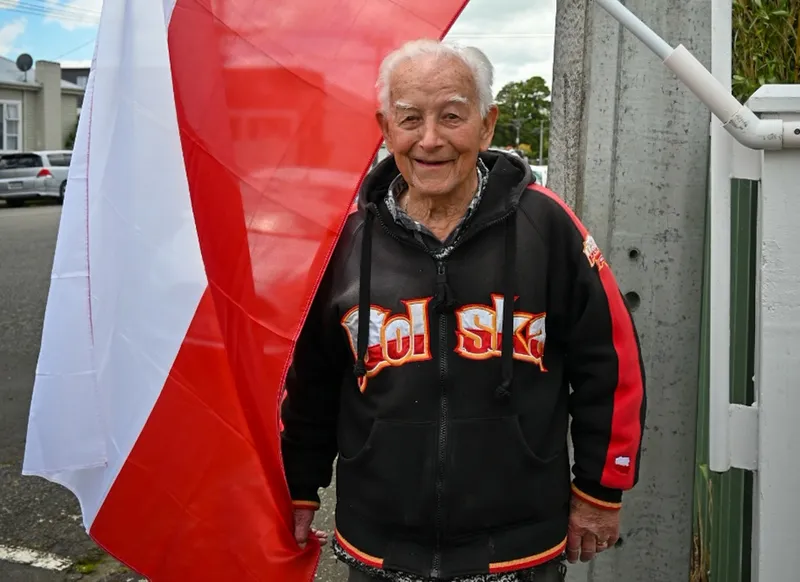
Frank looks back fondly onto the time he spent with the other children in Pahiatua. He remembers the forest they roamed freely and the river they used to catch fish in. The camp even had its own swimming pool but the kids always preferred the river. They would form deep friendships. “We looked after each other,” Frank smiles.
“You’ve never lived in Poland,” I say, “how come you feel so Polish?” Frank looks at me over his half-moon shaped reading glasses and smirks. “Because we were Polish and they made sure we knew that. We talked Polish. We were taught about Polish history, Polish food, and customs. As far as I was concerned, in my head, I was in Poland.”
The stay at Pahiatua was intended to be temporary. Polish language and traditions were preserved for when the children returned home. New Zealand quickly realized the critical situation in post-war communist Poland and offered the children the opportunity to settle permanently. Most did. “Only 19 boys and girls out of 733 children went back to Poland,” Frank says. The ones who stayed behind made a pact with them. “Write us a letter in ink if nothing’s changed, if it has, write the letter in pencil.” The letters came back in pencil. A sign that Poland had changed forever.
For Frank there was other news from home. His father had survived the war and was coming out to New Zealand. Frank leans forward on the couch, to look for one particular photo. A black and white photo of him and his dad walking down the street hand-in-hand, wearing long heavy winter coats. When Frank was eight years old, his dad took him out of the camp to settle in Wellington. Frank points to the photo. “That’s Dixon Street, and we had an argument. I turned around and I looked at him and said, ‘I don’t need you. Why don’t you bugger off? I can look after myself,’” Frank laughs. Frank tells me he carried that attitude into adulthood. It made him fiercely independent. “If I had a problem, I’d fix it. And I didn’t ask anybody else to help me. I always tried to make the best of a situation. A stubborn but efficient person.”
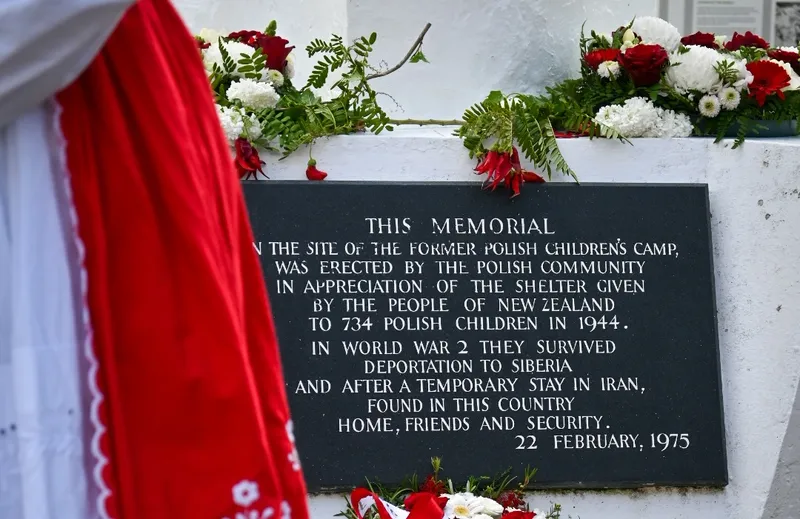
The last Polish children left Pahiatua camp by 1949. The site was later used to accommodate displaced people and finally closed in 1952, dismantling the barracks and converting the site into farmland. Today, cows are grazing on the land. A memorial rest area sits on the outskirts of the former camp site. Each November, former Pahiatua children, their descendants and the local community gather to remember the long exile journey to finding a new home in New Zealand. Frank loved the reunions. He loved seeing his childhood friends and sharing old stories. “He went peacefully, telling his stories right to the end,” his family reassures me. His voice remains. His story and the story of the 733 Polish children will not be forgotten.

Annika Stricker
Annika Stricker is a German freelance journalist based in New Zealand, whose work has appeared in leading European publications including Der Spiegel and Zeit Online. She has also worked internationally as a media analyst for NewsGuard. Her journalism often focuses on human-interest stories, understanding the world through people’s experiences.


