‘I felt sick’: How one Dunedin knitting group fell foul of the law

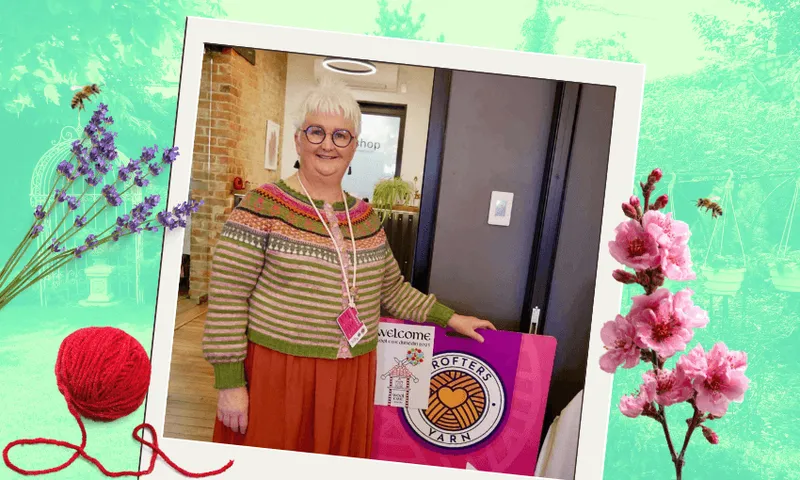
Knitting enthusiast Jan Aitken (Photo: Jan Aitken / Design: Tina Tiller)
Knitting is not supposed to be a dangerous hobby, but it led one Dunedin woman into a rather woolly situation.
Knitting is in Jan Aitken’s blood. As a child living on a South Otago sheep farm, she grew up watching her mother and grandmother spin wool and turn it into beautiful handcrafted knits. As an adult living in Ōtepoti Dunedin, Aitken’s love of knitting led her to create a local community of like-minded craftspeople, who gathered at her home to learn new skills and make new friends. Together, they created hundreds of knits for local charities, and when Aitken taught knitting classes in her garden studio, she started selling the knitters a few skeins of wool so they could all work on the same project together.
Crofters Yarn was Aitken’s life – until she got a phone call that changed everything. Her knitting had broken the law.
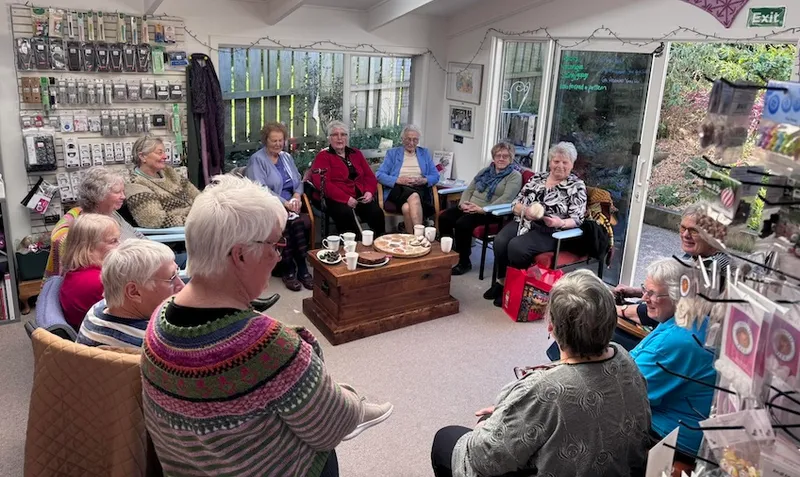
Aitken had just turned 50 when she was made redundant from her office manager job during the Covid-19 pandemic. “I thought, now what?” she says. She’d always considered creating a knitting group to bring people together in a meaningful way and, without a nine-to-five job to fill her days, she started up a small local wool swap. To her surprise, the knitters who arrived at her door weren’t people she knew – they were strangers, wanting to connect with other like-minded people in a post-pandemic world.
That first stash of rehomed wool disappeared in a week, proving to Aitken that the people of Dunedin wanted to knit. She decided to open the doors to her garden studio in the suburb of Wakari, offering somewhere for knitters to gather together, and Crofters Yarn was born. One of those early attendees was Rowena, who arrived at Aitken’s studio one day in search of knitting advice and received so much support that she kept coming back. Rowena points to the cardigan she’s wearing, a complicated knit covered in colourful flowers.
“I would never have done this at home by myself, but when you’re with a community that can help you and support you, it makes a huge difference.”
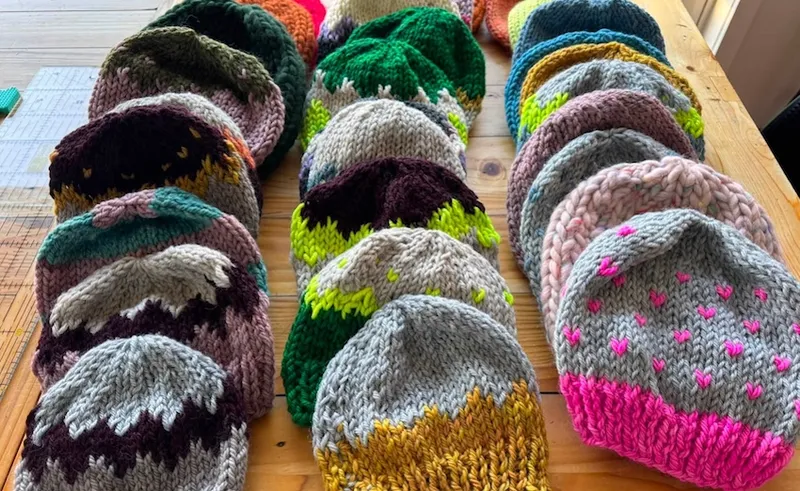
The Crofters Yarn community grew and grew. Aitken worked at a part-time job in the mornings and started hosting small learn-to-knit classes in her studio in the afternoons and evenings. Other knitters would regularly drop off items to be donated to Queen Mary Maternity Centre, the Dunedin Bedding Bank and local kindergartens. There were larger group outings to pubs and cafes, and in March this year, nearly 200 knitters climbed aboard a train and knitted their way to Ōamaru and back. It was the second annual Crofters Yarn train trip, and the sounds of laughter and the clack of knitting needles through the carriages was the culmination of everything Aitken had dreamed of.
But it all changed in April, when Aitken received an alarming phone call from Dunedin City Council. “I was sitting at work, just doing my little job, and I got this phone call telling me I was breaking the law,” she remembers. “I felt sick. I thought, ‘holy hell’.”
A DCC spokesperson confirmed to The Spinoff that it had received a complaint from a member of the public about Crofters Yarn operating from a residential home. “An assessment found the operation included a retail activity (the sale of yarn and wool products) and a training and education activity, both of which require resource consent,” they said.
Aitken was unaware that she had breached the District Plan 2026 (2GP) by teaching knitting classes and selling wool from her home. Although she charged a fee for her classes and sold products to her knitters, she says Crofters Yarn was never intended for profit, and any leftover wool went into charity knits. “We don’t make money. I don’t take a wage from it. I pour all my extra money into making sure the facility works.”
DCC informed Aitken that if she wanted to continue teaching and selling wool from her home, she would need to apply for resource consent. Aitken immediately stopped hosting knitters in her studio while she considered her options. She became anxious if people visited, wondering who in her neighbourhood was watching the comings and goings at her house. “I’m not a nervous person, but this just upended our whole lives – not just mine, but my family’s as well. That’s been the hardest part.” When news of the closure became public, Aitken received a disturbing card in the mail with the anonymous message “karma goodbye Crofters Yarn”.
As the stress took its toll, the prospect of applying for resource consent became overwhelming. Aitken considered closing Crofters Yarn for good. ”I was ready to throw the toys out of the cot, saying, ‘No, I’m walking away. This is just too hard.’”
Then, just as Aitken had opened her doors to the community, the community opened their doors to her.
A chance conversation with a customer at Aitken’s part-time job changed everything. Two planners from land development consultancy Terramark were “gobsmacked” when they learned of the situation, and offered their services pro-bono to help Aitken navigate the resource consent application process. (DCC confirmed to The Spinoff that they offered financial support to Crofters Yarn through a small fund available for not-for-profit organisations, which covered the application costs associated with the consent. This meant Aiken wasn’t charged a consent fee by the DCC, as costs were met from within the fund.)
Their support freed Aitken to focus on her community of knitters, many of whom relied on Crofters Yarn for regular companionship. “For some people, Crofters Yarn has been the only thing they go to during their week, and so the last 11 weeks have been really traumatising,” she says. Attendee Rowena was worried about what might happen. “I felt lost,” she remembers. “That’s the thing – we’ve got some good friends amongst us, people that you can share things with.”
But as word of Crofters Yarn’s troubles spread across Dunedin, the community stepped up to help. Several local cafes and organisations quickly offered their facilities, inviting knitters to gather over a warm cup of tea and a welcoming bite to eat. In fact, Aitken has had too many offers to respond to each one individually. After a break of just one week, the knitters rallied and began meeting at the Arthur Street School Library, Cobb & Co, The Corner Store cafe and Toitū Museum several times a week.
“There was no way we were going to let the community knit fade,” says knitter Rosemary.
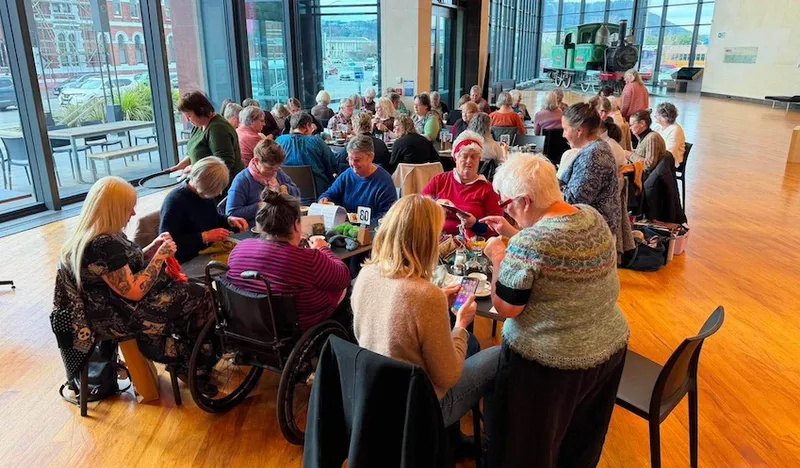
But the biggest response was still to come. To Aitken’s amazement, attendance at the public knitting sessions has exploded, and knitter numbers have tripled over the past few weeks. “My emails have gone nuts,” she laughs. New members turned up with their knitting or crochet project in hand, and beginners arrived to try something new during Dunedin’s cold, dark winter. They’re yarning together in more ways than one. “We get 35 people coming on a Thursday afternoon. It’s like, where are all these people coming from?”
On July 17, resource consent was granted for a community-based knitting group to operate from a private residence in Wakari, Dunedin. Aitken is relieved that she’s no longer breaking the law, but she’s more excited about what lies ahead for Crofters Yarn. The community’s new burst of popularity and Crofters Yarn’s official business capacity means she’s ruminating on big plans for the future. In the meantime, she’ll continue to teach her small classes in her studio and lead community knits around the city – and of course, she’s planned another train adventure for 2027.
That’s because it’s never been just about the knitting for Aitken. She admits it’s been stressful keeping the Crofters Yarn wheels turning over the past few months, but the experience has reminded her how important it is to have a community where everyone is welcome. As dedicated knitter Rosemary explains, “it doesn’t matter what colour, gender or aspect of life you’re in – everybody’s the same with knitting.”
Three months after that unexpected council phone call, Aitken is grateful for the generosity of spirit shown by the Dunedin community. “I’m not one to do lots of boasting, so I’ve been really embarrassed. But I’ve also been humble, because I don’t do this for me. I do this for everybody else.
“Who knew? A knitting group. We’ve stirred up so many people.”

Tara Ward
Tara Ward has written about television and culture for The Spinoff for several years. She lives in Ōtepoti Dunedin, where she tries to avoid walking up hills.


