‘It’s going to get worse’: What will it take to regulate the appearance industry?

Some recent headlines from the appearance industry. Additional design by Tina Tiller.
There’s an ugly side to our appearance industry, and experts warn we’re seeing only the tip of the iceberg.
When Ally Rose Wilson won the beauty therapy voucher on TikTok, she thought it was a sign. “I actually don’t ever do anything for myself at all,” says the 27-year-old mother of two, “So, when I happened to win, I thought it was something telling me to take care of myself after a pretty rough year.” She drove herself to the salon at a private home address in Avonhead, Ōtautahi, and selected a brow and lash tint. “I lay down on the bed and she just got straight into putting the stuff on my eyes and my eyebrows,” says Wilson. “It all seemed fine at first.”
But things weren’t fine when she woke the next morning – her face was severely swollen and she was struggling to open her eyes. After two separate visits to the hospital in agony, doctors discovered Wilson had sustained a chemical injury from the lash dye being left in her eyes. She required multiple rounds of eye irrigation and couldn’t see properly for a week. Even when her sight did come back, her long-distance vision was completely gone. “It’s all blurry now,” she says. “They told me I’d probably need glasses, and I just broke down.”
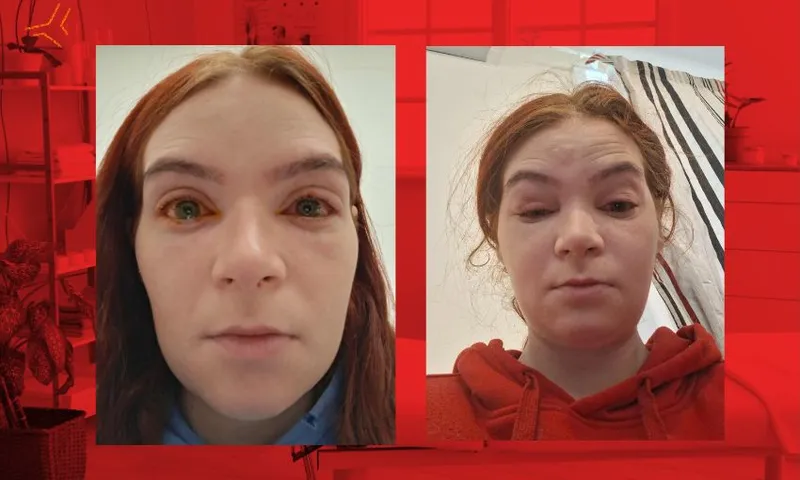
Wilson’s horrific experience is just one of many to make headlines in recent years. In July, it was reported that an Auckland woman received first-degree burns during a skin treatment, and described it as “the worst day of my life”. A Wellington woman was left with “checkerboard” burns across her chest after an intense pulsed light (IPL) machine was used on the wrong setting. Then there’s the thermal shock lipolysis that left one woman needing a skin graft, and the manicure that resulted in five infected fingers and “the most pain I’ve ever been in”.
The appearance industry extends beyond beauty therapy to piercing and tattooing, areas that have also delivered their fair share of shocking stories. Just last month, a master tattooist raised the alarm over the hundreds of botched tattoo cases in Aotearoa every year, including one man who nearly had both legs amputated due to infection. Ophthalmologists have had to warn against scleral tattooing after multiple patients presented with serious complications, and even tattoo removal has its risks, with one woman receiving first degree burns on both arms.
Tanya Morrison, national president at the New Zealand Institute of Environmental Health, was saddened but not surprised to hear the story of Wilson’s chemical injury. “We hear a lot of horror stories about burns, allergic reactions, and even cases of sepsis in New Zealand,” she says. In 2024, Morrison co-authored a report into the state of the appearance industry (beauty therapy, piercing and tattooing) and found appearance industry-related ACC claims had risen year on year between 2018 and 2023 (an average of 1,018 claims at a cost of $587,891 per year).
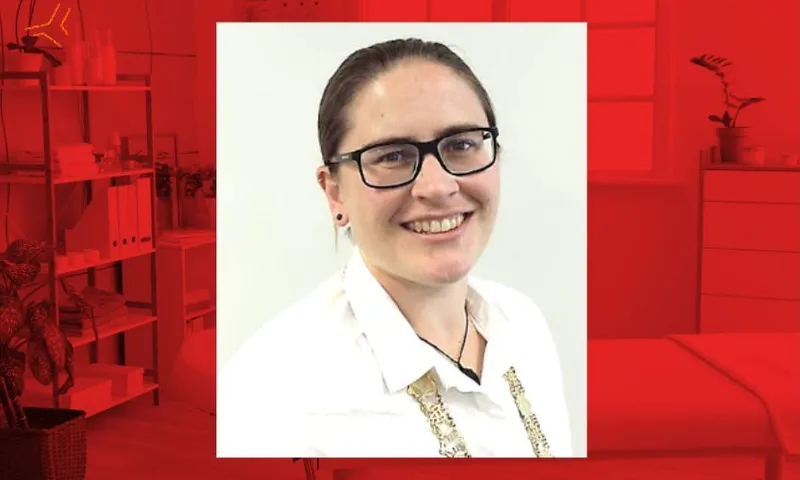
And this, she adds, is nowhere near representative of the true impact. “This is confidently the tip of the iceberg – the true costs are phenomenal,” she says. “It’s not just about the medical bills or the doctor’s visits. It’s taking time off work, losing hours of your life, impact to your mental health, wellbeing and self-confidence.” As Shirley Agostinha de Oliveira, who suffered first-degree burns during a skin treatment earlier this year, told NZ Herald at the time: “The damage it created mentally was really strong. I don’t go out much because I feel awful.”
Despite these instances of serious harm, the appearance industry remains largely unregulated. Only 16 out of 67 of our territorial authorities or councils have bylaws that relate to the appearance industry, with the most glaring omissions being Wellington and Christchurch. “Two of our major hubs and cities have absolutely nothing,” she explains. “So for this woman who has gone through this in Christchurch, what are her options for follow-up? Is it WorkSafe? Health and safety? Disability commissioner? Who do you turn to?”
The solution, Morrison says, is urgent regulation at a national level. “A new beauty therapist, skin piercer or tattooist can begin a business in New Zealand and there are no national requirements to be met in terms of public health, hygiene or sterilisation practices,” she says. “We need a minimum standard for the whole country in these industries that aren’t showing any signs of slowing down, because it’s going to get worse.” For now, regions without bylaws default to “very old legislation” like the 1956 Health Act, or these piercing guidelines from 1998.
When contacted by The Spinoff, minister for health Simeon Brown said that while he appreciated meeting with Morrison earlier this year, regulating the appearance industry was not currently under consideration.
While she continues to campaign for stronger regulation of these rapidly growing industries, Morrison says consumers need to keep doing their homework. She suggests looking for relevant qualifications on display, or asking if the technician is a part of an opt-in professional body like the New Zealand Association of Registered Beauty Therapists. “If you don’t get asked for consent forms or are told what the procedure is and what the risks are, you want to put a stop to that,” she says. “You want a bit of confidence that this person knows what they’re doing.”
For Wilson, her experience has had an immeasurable impact on her life. She has ongoing appointments with a specialist as she still has small cuts on her eyes, and will see an optometrist in a few months’ time to assess her need for glasses. Her husband also lost a week’s worth of wages caring for their children while she was incapacitated. “You just trust that these people have got the right qualifications and they are going to do the right thing,” she says. “It’s just put me off going absolutely anywhere. I won’t even go to a hairdresser now.”
Morrison’s primary concern is what it might take to finally spur action. “I don’t want to wake up to the headline one day where something has gone horribly wrong for that to be the catalyst of change. However, I feel like maybe that is what’s going to happen.” Wilson is pursuing a complaint with WorkSafe, and echoes the same concerns about what else could happen in an industry left largely unchecked. “I’m worried something bad is going to happen, something even worse than what I’ve had to go through,” she says.
“Something needs to be done about it.”
Alex Casey
Alex Casey is a senior writer at The Spinoff with over a decade of experience writing about popular culture and social issues in Aotearoa. She lives in Ōtautahi and likes watching reality TV and walking the dog, occasionally at the same time.


