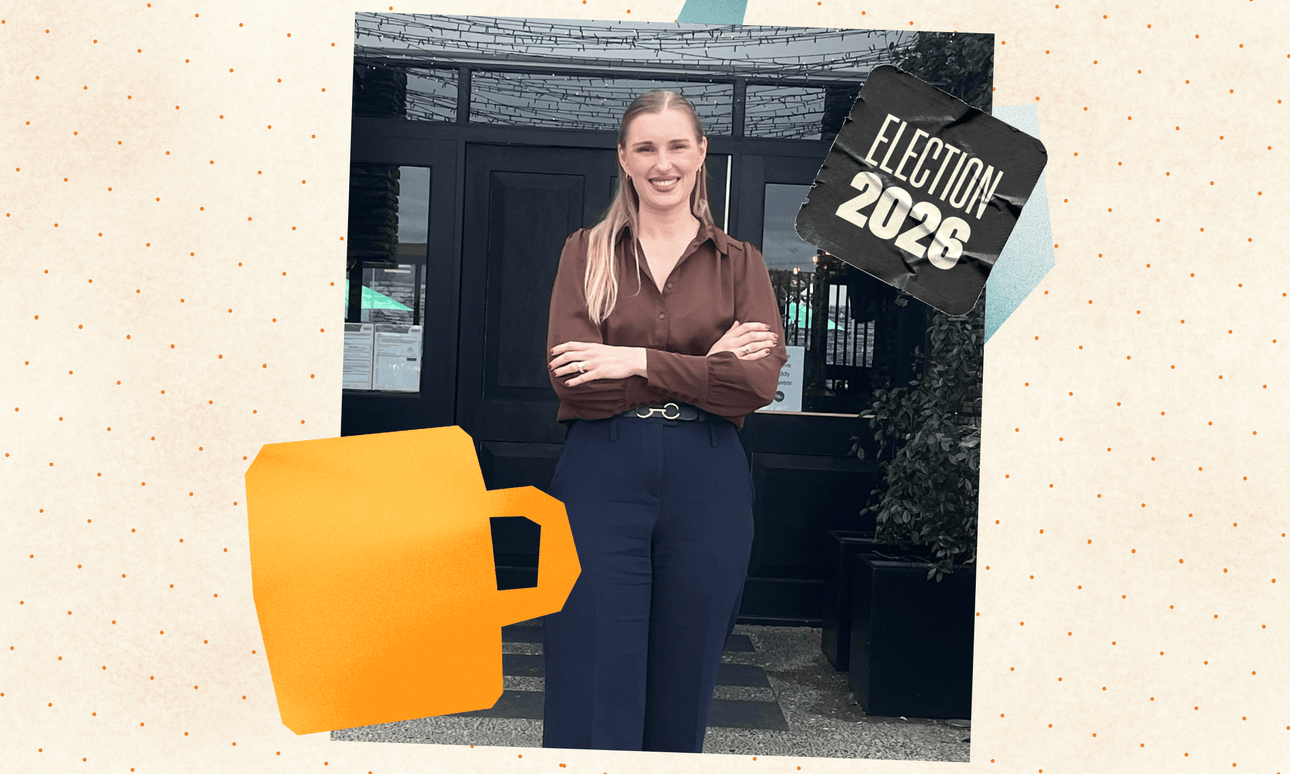

Leilani Momoiseā decided she wanted to fight and signed up for mixed martial arts programme Wimp 2 Warrior. Then came the panic, the first punch to the face and the fear she’d be knocked out in front of her family and friends.
Before you walk out to fight in front of a crowd of people, you will watch the sweat trail down the foreheads of others warming up. A distraction from the nerves, the pitter patter of gloves on target, and the shuffle of feet on mat. The beat of your heart will thump above the music in your headphones. The slap of skin and shin against pads will permeate through the busy hum. A room filled with activity. The calm of the coaches, and the hope of the fighters. They march out with anticipation, some return with dancing eyes and wild smiles. Others come back silent, their faces bloodied and eyes swollen, the black of bruising already on show. They’ll slump to a seat in a corner, and put their head in their hands. You’ll try to push the thought away but it’s already there. Will that be me?
Deep breath in, through your nose. Exhale out, through your mouth. Deep breath in. And out. They taught you that in training when the panic took over, head gear on and gasping for air, exhausted and trapped under the weight and skill of another body. You gave up, tapped out, desperate for freedom. Then, dejected at the failure. Take a moment to breathe, Eugene would tell you. In. And out.
You go up to watch the others fight, and are comforted by the lack of ceremony from one bout to the other, the distracted crowd in between, and how quickly they move on. No one cares about this as much as you do. Only the people who have been through what you have, can judge. And they won’t. Because they know what you know.
As you get strapped up, your right ankle will still be bruised from when you injured yourself in the most mundane way. Missing the last step on a flight of stairs. It happened a week before your fight, and you went home crying like a child. You hadn’t really known if you had wanted to fight, until that moment. Unable to stand or walk with any weight on your foot, you thought about the five months of training and early mornings, and all you’d learned and unlearned. The repetition and the drills and the aching muscles and going again, and again, and again and you just weren’t sure if you could do it all again, if you couldn’t do it now. Plus, it really, really hurt.
Five days before the fight the physio, used to dealing with professional athletes and sensing how much you wanted it, gave you the right amount of encouragement. He’d seen guys play footy on worse. Eugene called you an idiot and told you to put your ugly foot away. He and Mike were so unmoved, so deeply unperturbed, it gave you hope. “Everyone fights with injuries,” Mike shrugged. And you realised, with relief, no one was going to tell you not to do this.
Three days later you weigh in. You can walk backwards and forwards now. You probably don’t want to go changing angles abruptly. “Just don’t get taken down,” Eugene warned. “It’ll be hard to get back up if you can’t push off your feet properly.”
The first time you get punched in the face in sparring, your head snaps back and your eyes involuntarily water. Your coach impulsively cheered on the shot, Danae apologised, and you tried to shrug it off and carry on. But Danae could see you were shaken, and took it easy for the rest of the round. Even though you knew it had to happen, it still surprised you. That wouldn’t be the last time you’d cry at training. Never from pain, always from a sense of being overwhelmed and underskilled.
You learn the trick of it is to simply go again the next day. There is never any time to get too high, or too low. Each day a reset. Another day to improve, another day to expose your weaknesses, another day to feel good about your progress, another day to feel bad about your progress. But always another day. A sports cliche. A football rallying cry. A personal mantra as you wake each day, aching and fatigued and bruised. We go again.

You learn small things about yourself. You can go to bed before midnight, you can be up before 6am, five days a week. At first, you stick to it because you remind yourself of the money you paid. Then, it’s because you don’t want to fall behind, to be that person who holds everyone else back. Then, it’s because you love it. You love every moment of it. You love the learning of some small skill every day. Seeing the technicalities of a sport you watch broken down, piece by piece, and then having it all come together. You watch it now with more understanding, more nuance. You love the humility that comes with training at the same gym as some of the greatest mixed martial artists in the world, because it means nothing you could ever do would be in the tiniest bit impressive to the coaches there. There’s a freedom to that, to being OK with being bad. You love starting out as a novice, and feeling yourself getting better. It doesn’t mean you’re any good. But you’re better than when you started.
You learn combinations and defence, how to get into mount, and out of mount, how to put someone into a choke, and get out of it, how to take your opponent down, and how it feels to be taken down, and most of all you’re learning how quickly you forget all the things you learn when you’re tired, or panicked or things don’t go exactly as practiced. Deep breath in. And out. It changes over time, but you have to go through it first, to be tested first, before you can start to improve, to problem solve, to stay calm. Deep breath in. And out.
You learn about commitment, through observing the way Eugene and the other coaches and fighters have been there since before 5am and are still there when you return at 7.30pm. The way you’ll have watched them on TV in Las Vegas, cornering a UFC fight on a Sunday afternoon, and be back in the gym, teaching your class, on a Tuesday morning. These are the things you think about, when waking up in the morning gets hard.
In the last few weeks, you’ll know who you’re fighting. There’s no better motivation than knowing someone else is training to punch your lights out, to choke you out, to take you down. Your mind switches to them whenever you consider missing a class, whenever you feel ready to quit a workout. You’d asked Eugene before signing up, if having a fight at the end was compulsory. It’s not, he said. But trust me, by the time you finish the camp, you’ll want to fight. He was right.

At first, you hadn’t planned on letting any of your friends or family watch your fight. You didn’t want to embarrass them. You worried about getting knocked out in front of everyone. By the end of camp, you don’t care. You know how tough it was just to make it to the end. Not everyone did. If you get knocked out, so be it. It happens. This is the calm you feel when you know you’ve done all you can.
Still, the nerves mean you barely eat all day. Your sister tries to hang out with you in the changing room beforehand, but you can only manage a few sentences. You’d gotten your hair braided earlier, and as your scalp is being pulled in different directions, you hoped that was the most painful thing you were going to experience that day. You do a terrible job of wrapping your hands, and Brad Riddell re-does them for you. Talor warms you up, going over drills you’ve done hundreds of times before, on the mat, on the pads. Deep breath in. And out.
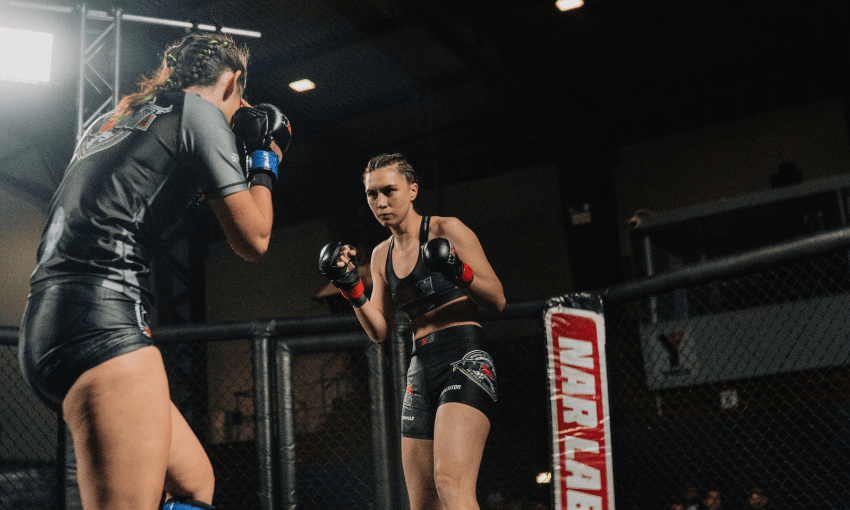
You walk up the steps, your opponent follows. You wait for your entrance song to play, not moving until you hear Drake’s voice carry across the floor, “Word on road, is this shit about to blow…” nervously tapping the doorframe with your glove before you walk out. At the base of the cage, you lift your arms for the ref to inspect, just as you’ve seen fighters do on TV. Your mouthguard goes in. The small door to the cage is opened, and you pace back and forth, ignoring your opponent as she enters and dances around it. You meet her and the ref in the middle. You’re not scared, but it still doesn’t feel real. Until you’re in it, you have no idea if you’ll be able to connect a single punch. When you do, you surprise yourself. The soft flesh of her face comes up against the hard leather of your gloves and your widened eyes meet hers. You feel yourself getting into a rhythm, when she hits you with a punch so clean your head snaps right back, and your feet follow. It doesn’t hurt, but there’s a brief dulling to your senses that scares you. You haven’t been punched with 7 ounce gloves before, and you don’t want to be punched too many more times like that. You’re more cautious now, more hesitant. Another sports cliche. Everyone has a plan, until they get punched in the face. Deep breath in. And out.
In the fight, time will feel compressed and stretched out all at once. Sometimes your body will move without thought, fluidly. When she tries to take you down in the second round, your muscle memory kicks in, and all the defence you learned is put into practice. Panic does not take over. You’re hyper focused. You stay standing. Other times you’ll stand there for what feels like forever, willing yourself to punch, to kick, to move, and your body won’t listen, it refuses to be told what to do. You stalk each other, waiting for your opening, trying to find a way in. You can hear her corner telling her to kick as you walk forward. You can hear your corner yelling at you to use your jab. By the end, she’ll have a black eye and you’ll have an outer thigh blackened by leg kicks.
The first thing people will always ask: “Did you win?” You’ll find it hard to describe how good it felt to lose that night. You’ll have never felt a high like that before, or since. You couldn’t keep the smile off your face. It’ll be your favourite thing to talk about in the years to come. It’ll feel like the only interesting thing you’ve ever done.