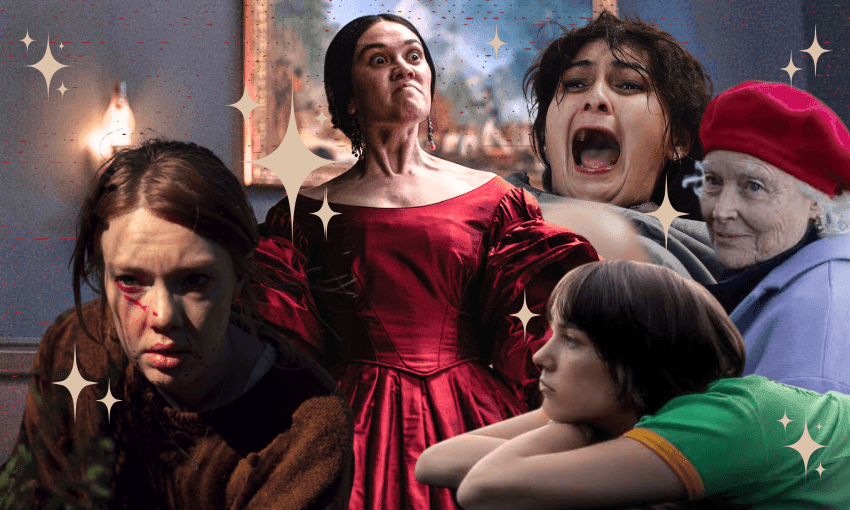



It’s been a stonking good year for bold, weird, fresh debut feature films. Alex Casey goes on a quest to figure out why.
Although we are only just approaching the final quarter of the year (sorry), I am feeling confident enough to make an early assertion about 2026 movies in Aotearoa. We’d normally wait a few more months before gazing back at, for example, what caused a monster year for locally-made horror films in 2023, or why every big local movie used the same Crowded House song in 2025. But I’m frankly high on film festival fumes, and need to get this on the record right now: 2026 has been a truly thrilling year for local debut feature filmmakers.
While arts funding has been slashed and our creative industries left in a deeply dark place, our cinemas have been beacons of hope in showcasing a steady stream of innovative, fresh local stories. It will be a long time before I forget the breathless silence in the room as the credits rolled on Mārama, Taratoa Stappard’s gothic colonisation horror, nor the deep belly laugh elicited from Samuel Austin’s delivery of a single word – “bouldering” – in Sports Team and Horse Bite’s cannibal comedy The Weed Eaters.
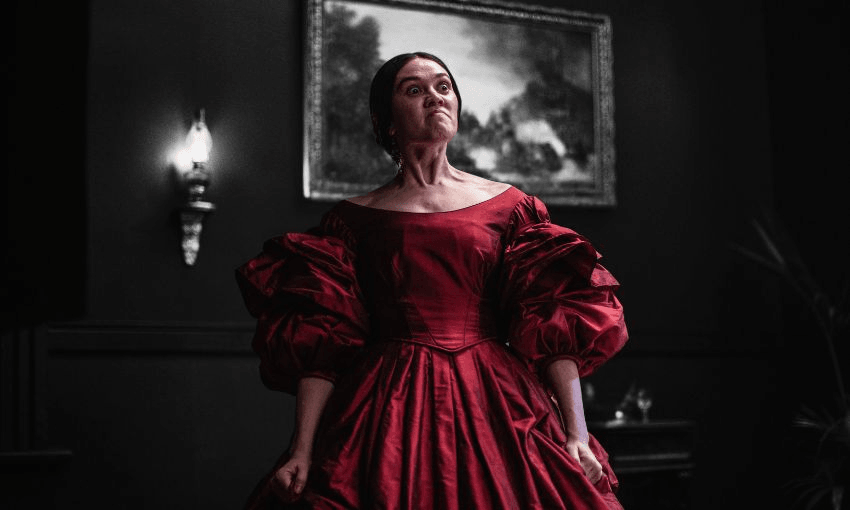
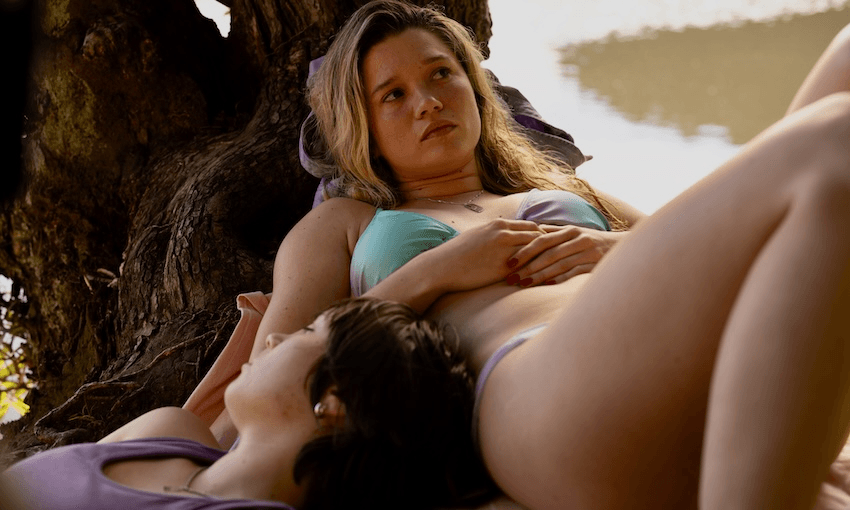
The memorable reactions have just kept coming. There were the tears streaming at the end of Chelsie Preston Crayford’s profound love letter to mothers and daughters in Caterpillar, the jangled nerves as Connor Bowden’s The Ungrateful Tenant rendered the Auckland rental market in black and white, and the smart, stomach-turning viscera of Thunderlips’ slime-fest Mum, I’m Alien Pregnant. Then there’s Paloma Schneideman’s Big Girls Don’t Cry, the raw coming-of-age catharsis which will destroy any former teenager in its wake.
All films that left indelible impressions, and all films made by first timers. So why is it that 2026 has seen such a groundswell in bold debuts? Over the last few days, weeks and months, I’ve asked the directors themselves how and why they think these cinematic stars aligned.
The unlikely incubator
The Covid-19 lockdowns may feel like a long time ago but, as it turns out, feature films take a long time to make. Several filmmakers mentioned the lockdowns as pivotal in eventually leading them to their debut feature films. “We were forced to go into incubation and really look inwards,” Big Girls Don’t Cry director Paloma Schneideman told The Spinoff last month. “I did write a lot of the film throughout that period, and I do think we’re seeing a run-on effect of that now.”
Chelsie Preston Crayford agrees. “We had so much time, and we had to create new structure and meaning in our own lives,” she says. Having come up with the idea for Caterpillar two years prior at a New Zealand Film Commission mentoring programme, she recalls a remote scriptwriting course in lockdown helping her to work through an early draft of the film. “I just remember I was chipping away on this craft that was really new to me,” she says.

Other makers also used the time to hone their technical skills. Connor Bowden started making short black and white films on his iPhone during the lockdowns, using himself and his parents as talent. He credits these as the genesis for his first feature-length silent film The Ungrateful Tenant. “That time taught me a whole new way of working which meant, when it got to 2022, and I was itching to make a feature, I knew confidently that I could just make a start.”
For Taratoa Stappard, Covid-19 saw him return from “disaster zone” England to “perfect bubble New Zealand” to make Taumanu as part of TVNZ’s indigenous supernatural anthology Beyond the Veil. “That was the first time I was being supported to tell a story from te ao Māori,” he says. “It gave me the confidence to push forward with this idea I had about a young Māori woman who is mysteriously summoned to Victorian England.” Five years later, that idea became Mārama.
The funding factor
While several of the first-time features this year received funding from the New Zealand Film Commission, with the likes of Schneideman praising their “championing of brave voices” and Thunderlips singling out the “good taste” of head of funding Ainsley Gardiner in particular, there’s nearly just as many films seeing the light of day in 2026 that sought their financial backing entirely outside of traditional funding pathways.
In Whānau Mārama alone, local debut films Uncle, In Search of My Moehau and The Ungrateful Tenant all crowdfunded their way into existence or were paid for by the makers themselves. “We put so much time and effort into funding applications and were always so disheartened when they were rejected,” says Jonathan Watt of lo-fi mockumentary Moehau. “We decided that we might be better off putting our time and energy into just shooting things ourselves instead.”

It’s a similar story for Uncle, a reflection on modern Māori masculinity made in just 16 days across various locations around Porirua. “We didn’t wait for permission to make this film. We simply started with a story we believed in and found people who believed in it too,” producer Julia Brown told Scoop in July. “Uncle exists because of the generosity of our whānau, friends and community, who gave their time, opened their homes and helped bring the film to life.”
And then there’s crowdfunded cult classic The Weed Eaters, which director Callum Devlin told The Spinoff earlier this year was born out of a fear of funding applications “eating 10 years of life away” before they were able to make something. “We didn’t want to go for the traditional funding route because we wanted less pressure,” added co-producer Annabel Kean. “We wanted to be able to do a first pancake and have the freedom to learn and make mistakes.”
The end of cultural cringe
Even though these debut films are vastly different in subject matter and style, all feel united by something much more vibes-based – a newfound sense of confidence, voice and assuredness that feels entirely at odds with any old ideas of cultural cringe in Aotearoa. How else could Caterpillar have pulled off a three-protagonist intergenerational story, or Mārama represent the first Māori gothic horror in film history, or Mum, I’m Alien Pregnant storm the midnight slot at Sundance?
“I’ve noticed it too and I think it’s really exciting – we’re starting to feel ourselves a little bit more,” Schneideman says. “It doesn’t feel competitive at all, there’s a lot of collective pride which feels different to the kind of tall poppy syndrome one might expect. Maybe we’re finally outgrowing that.” Stappard agrees. “There does seem to be a new, muscular sort an energy happening… a shifting of confidence to own it and celebrate yourself a bit more.”
So much to celebrate, and so much to come. With many of these titles still showing in Whānau Mārama across the country, Mum, I’m Alien Pregnant and Big Girls Don’t Cry will also have their nationwide cinematic releases in September and October respectively, along with local meta comedy-documentary Pop. Also, keep your eyes peeled for growing buzz around Alex Liu’s debut God Bless You, Mr Kopu – it’s premiering in the Toronto International Film Festival next month.
“There’s nothing like seeing other people from Aotearoa out there finding international success to feel like it’s actually possible,” says Kean. “It’s exciting to see how much international interest these movies are getting – they’re so local, but they resonate with people all over the world,” adds Thunderlips on this new wave of filmmakers. “Our cinema is diverse, brave, and always changing. We’re all working with pretty small budgets, but managing to punch well above our weight.”