‘Really mind-blowing’: The New Zealand coming-of-age film winning big overseas

Ani Palmer in Big Girls Don’t Cry (Image: Jen Raoult)
After a phenomenal run on the international festival circuit, Paloma Schneideman is bringing her award-winning film Big Girls Don’t Cry home to Aotearoa.
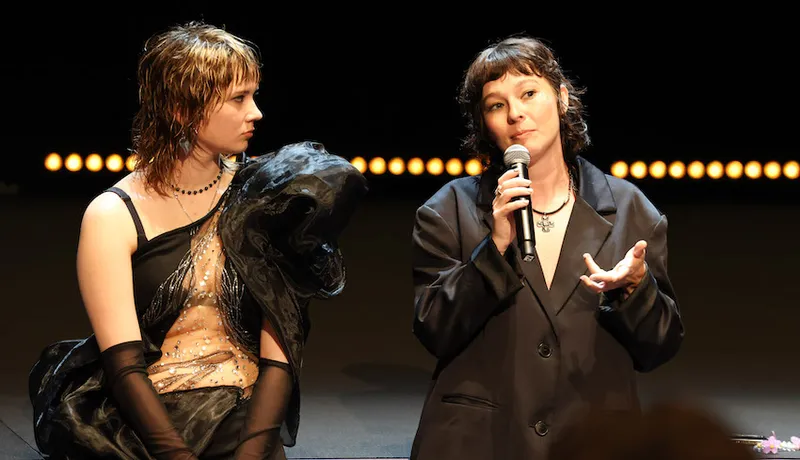
Less than a week ago, filmmaker Paloma Schneideman was in the crowd at Nouvelle Vagues film festival in Biarritz, wrongly assuming her astonishing debut feature film Big Girls Don’t Cry wasn’t about to win anything. That was when festival jury president Kristen Stewart began announcing the Grand Prix winner with a mention of a 14-year-old girl. “I was like, ‘wait, this is sounding familiar’,” says Schneideman. “It was a total shock. It was really mind-blowing.”
Set over one yawning summer in Ōmaha, Big Girls Don’t Cry follows 14-year-old Sid (Ani Palmer) as she attempts her own reinvention in the age of dial-up, Nokia 3315 face plates and self-administered bellybutton piercings. Exploring sexuality and queerness in mid-2000s small town New Zealand, the film premiered at Sundance to glowing reviews in Variety and The Hollywood Reporter, and has now taken out one of the most coveted international prizes for young filmmakers (the Grand Prix was won last year by Urchin’s Harris Dickinson).
While awarding the Grand Prix to Big Girls Don’t Cry at the weekend, Stewart said the film “unpacks the early 2000s and subliminal trespass and pain and strength in the face of it all with such an astounding touch.” Stating “I loved this film with my whole heart”, she also praised the way that the story deftly allows audiences to connect with and reflect on our younger selves. “It gave me a chance to see what that girl couldn’t see,” she said. “That she was the coolest girl in the room, and even if it hurts so bad right now, it’s going to be OK.”
Now sitting at home in Tāmaki Makaurau, Schneideman says she’s still processing the moment. “As far as queer co-signs go, Kristen’s about the best you can get,” she laughs. “But beyond that, I was just so struck by how beautifully she spoke about the film and how much the film spoke to her. It’s crazy when other people can talk about the film better than you can, because they feel so seen by it. You make this really inherently Kiwi work, and you worry if it is too specific or too restrictive that people aren’t going to resonate with it.”
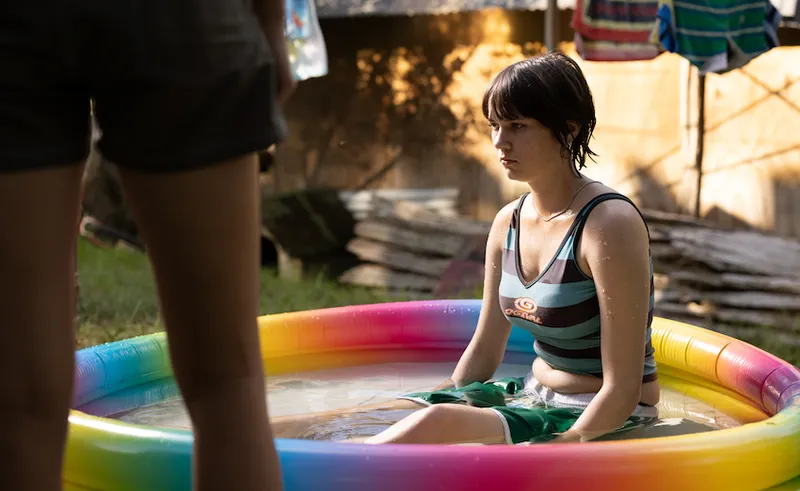
Schneideman says she made the film for her 14-year-old self, the one surfing Sky Digital to find “any inkling of female sexuality” and whose friends were constantly on Omegle and MSN Messenger seeking scandalous interactions with “weirdos all over the internet”. Although the story began with that specific girl, it was conversations with her friends in her 20s that highlighted just how universal these experiences actually were. “It just felt really imperative to give voice to that deep loneliness and shame that you feel as a teenager before you even understand it.”
And while she’s been enjoying the last six months of “crazy chaos” taking the film around the festival circuit from BFI Flare in London to South by Southwest in the United States, Schneideman is most excited to be bringing the film home to Aotearoa later this month when Big Girls Don’t Cry opens this year’s Whānau Marama New Zealand International Film Festival. “It was always a quiet but deeply personal goal to one day open the film festival,” she says. “I just know it’s going to be the greatest pride of my life to show it to the people I made it for and with.”
There are also, naturally, a lot of New Zealand references in the film that have flown over people’s heads overseas. “It’s been so funny to see where the humour lands across different cultures. There’s some really esoteric Kiwi gags in there that I just can’t wait for the New Zealanders to experience.” For example, there’s an old Warehouse ad playing in the background that didn’t quite land at Sundance. “To me and my crew it’s the funniest thing ever so we were cracking up, but everyone else was totally silent, because they just don’t get it.”
The film also captures all the prophecies and pressures that come with New Year’s Eve for young people in Aotearoa, the crown jewel event in our endless, often transformative, summer holidays. “When you are a teenager it feels like New Year’s Eve is kind of a projection who you’re going to be that year, so you want to be the coolest, funnest, best thing,” says Schneideman. “It’s such a cultural phenomenon here that makes for an interesting coming of age story. I think New Year’s is so evocative of change and transformation, and that is what this film’s about, really.”
And even if you didn’t slurp back your first shotgun in the mid-2000s, Schneideman says Big Girls Don’t Cry has something for everyone. “This film is for anyone that’s tried on versions of themselves in aspiration to get closer to who they really are. I hope you come and watch it and feel seen and reflected, and I hope it offers up some catharsis with a side of humour.” In fact, some of her favourite responses to the film have been from dads in the audience. “It has really surprised me how many people a story like this can actually reach,” she says.
“But I guess everyone comes of age, right?”

Alex Casey
Alex Casey is a senior writer at The Spinoff with over a decade of experience writing about popular culture and social issues in Aotearoa. She lives in Ōtautahi and likes watching reality TV and walking the dog, occasionally at the same time.


