
In today’s excerpt from The Bulletin, Dan Brunskill looks at how the retirees of today and tomorrow might shape the 2026 election.
To receive The Bulletin in full each weekday, sign up here.
Labour Party policies are supposedly hard to come by these days, but another was announced yesterday. If elected, the party would pass a law ensuring retirement village leavers were paid back their license fee within three months. Party leader Chris Hipkins made the announcement as Consumer NZ presented a petition with 40,000 signatures to MPs outside Parliament on Monday, RNZ’s Lillian Hanly reports.This issue is this: Retirement villages charge residents an entry payment which gives them the right to occupy a unit but not ownership of it. When the resident leaves or dies, they do not get that money back until the village has relicensed the unit. In some cases, this can take over two years.
Advocates want the government to set a three-month time limit for that refund, so that elderly residents can access their money (about $700,000 on average) to pay for specialised care, or for their families to settle their estates. The coalition government is not willing to go that far. It has proposed a law change which would require payment within a year and charge interest after six months. These changes would only apply to new contracts.
Seniors minister Casey Costello said a shorter time frame put smaller village operators under financial strain and could have unintended consequences.
Retirees swing (their votes)
This may sound like a niche issue but it has the potential to swing votes in an election which is being shaped by retirement issues. In July last year, 1news’s Benedict Collins reported National MP Sam Uffindell had told a group of retirees his party needed to steal a Labour’s members’ bill on this issue.
“Importantly, it needs to go through the House before the end of this term, because if it hasn’t, we’re going to have a whole bunch of disgruntled people and retirement villages who all vote and all talk to each other about it,” he said.
Retirement-aged voters made up 26% of NZ’s 2023 electorate, compared to 21% of the adult population. The median voter is roughly 51 years old and will be preparing for retirement, so these issues can matter a lot.
That’s why soon-to-be UK Prime Minister Andy Burnham’s first promise was to keep the ‘Triple Lock’ on pensions. Outgoing PM Keir Starmer’s popularity first cratered after he cut the winter fuel allowance for pensioners.
National’s big policy announcement at its annual conference was to make KiwiSaver compulsory and automatically enrol babies with a $1500 starting balance. Back in November, it also pledged to lift contributions to a total of 12%.
Abolish super for Gen Z
This could be seen as the first step towards abolishing universal superannuation which Treasury warns could rise to cost 8% of New Zealand’s entire economic output by 2065, Thomas Coughlan reports in the NZ Herald.
A group of actuaries told RNZ the optimal contribution rate would only need to be 10% if you assume superannuation settings stay unchanged.
Both the Labour Party and New Zealand First oppose any changes to pension eligibility and believe it will be possible to fund the scheme indefinitely. This opposition will make it difficult for National and ACT to progress their policy of gradually lifting the retirement age to 67 or higher.
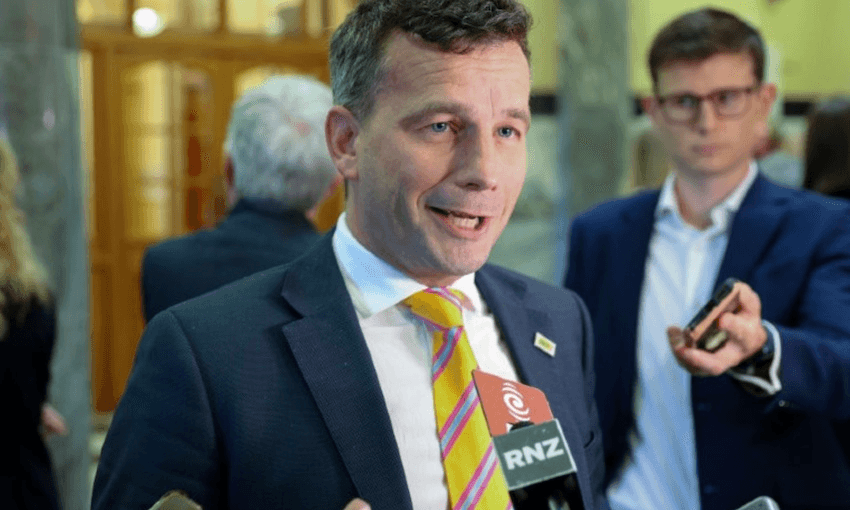
However, RNZ’s Lauren Crimp reports David Seymour believes Winston Peters could be convinced to back the policy. “Some people say, you can’t teach an old dog new tricks. I think there’s an exception to every rule”.
Of course, this isn’t really an issue for today’s retirees. It is something which will mostly affect gen X, millennials, and even gen Z – who are set to start retiring around 2062.
Correction: This article previously said Casey Costello was the minister in charge of Retirement Villages Act reform. This was incorrect and has been removed. Associate housing minister Tama Potaka is leading this reform.