The battle for Te Tai Tonga: Four candidates, one enormous electorate

The battle for the country’s largest electorate is wide open. (Image: The Spinoff)
Tākuta Ferris broke Labour’s decade-long hold on Te Tai Tonga in 2023. Three years later, he’s running as an independent against Labour, Te Pāti Māori and the Greens.
Te Tai Tonga is the country’s largest electorate. Stretching from Stewart Island in the south to Wellington’s Hutt Valley in the north, the electorate’s population is as diverse as its landscape. Previously known as Southern Māori, the electorate has long been a Labour stronghold, with the Tirikātene whānau being synonymous with the seat for the best part of the last century.
But, in 2023, Te Pāti Māori candidate Tākuta Ferris dethroned the incumbent Rino Tirikatene, who had held the seat for 12 years. Over 28,000 votes were cast in the electorate in that election, with Ferris receiving almost 13,000 votes (45%). Tirikatene received just over 10,000 votes (35%), with Rebecca Robin from the Aotearoa Legalise Cannabis Party notching a respectable 10% of candidate votes.
Despite Ferris’s success at the last election, he has struggled to maintain support according to a recent poll, managing to garner only 18% support as the preferred candidate among those polled. Instead, Labour’s candidate Mananui Ramsden led the preferred candidate stakes, with 36% of those polled supporting the political newcomer, indicating the seat could swing back to Labour on November 7.

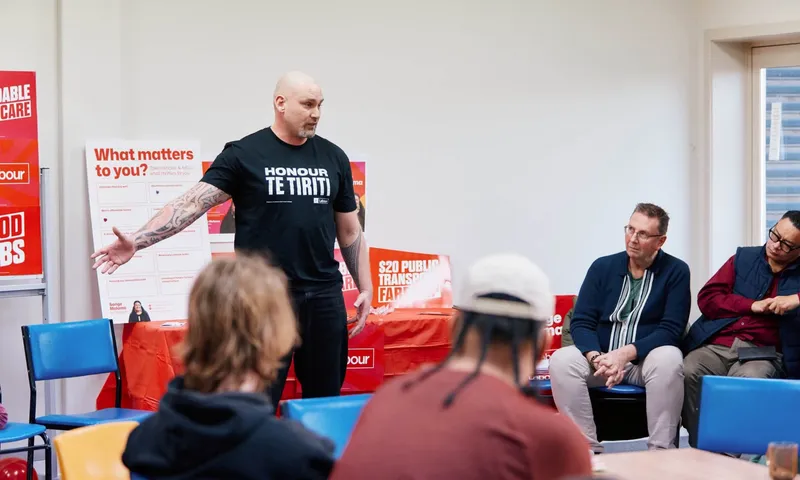
Trailing Ramsden in the poll is Lisa Marie Murch, who replaced Ferris as the candidate in Te Tai Tonga for Te Pāti Māori following his much-publicised exit from the party last year. Murch has a background in education and advocacy, having previously served on the board of the New Zealand Educational Institute Te Riu Roa for seven years. Also vying for the seat is Green Party candidate Lisa Te Morenga. A professor of Māori health and nutrition at Otago University, Te Morenga has spent the last three decades in Te Tai Tonga, living in Te Whanganui-a-Tara, Ōtautahi and Ōtepoti.
Ferris now finds himself in the peculiar position of trailing all three of his rival electorate candidates in the polls – a rare spot for an incumbent. Asked about his poor poll results during a recent electorate debate, Ferris brushed off criticism, saying he was “never too worried about polls”.
Despite his apparent indifference to the results, the fact Ferris polled so poorly will be of concern. Since the introduction of MMP, independent Māori candidates have been mostly unsuccessful in the past, with the exception being those who have managed to form new parties or join existing ones. Ferris found success in the previous election thanks in no small part to him being on the ticket of Te Pāti Māori, who rode a wave of momentum into the election on the back of increasing racial tensions.
With his expulsion from the party, Ferris will be hoping a solid number of Te Pāti Māori loyalists will follow him as he treks the notoriously difficult path of an independent MP. However, a significant portion of them will likely remain loyal to the party, especially if the poll is anything to go on. This means, similarly to Te Tai Tokerau, votes could be split between Ferris and Te Pāti Māori candidate Murch, allowing Ramsden to walk up the middle and reclaim the seat for Labour.
As with any Māori electorate, maintaining a positive relationship with local iwi will be critical. In Te Tai Tonga, the most predominant iwi across most of the electorate is Ngāi Tahu. However, the influence of Ngāti Toa and voters based in Wellington cannot be underestimated. According to Stats NZ, just over 9% of the total Māori population lives in Wellington. With the electorate extending to the Hutt Valley north of Wellington, a significant portion of the electorate’s votes will ironically come from Te Upoko o te Ika.
Ramsden has chosen to go electorate-only for Labour, so none of the candidates are likely to make it in on their respective party lists – winning the electorate is their only path to parliament. Given that only one candidate will make it there, whoever is successful will be forced to bear the weight of representing the largest geographical electorate in New Zealand. That comes with a raft of challenges unique to Te Tai Tonga, including mining, water quality, and access to quality healthcare.
But before any of those challenges can be confronted, there is an election to win. Three years after Ferris broke Labour’s long hold on Te Tai Tonga, the political split between him and Te Pāti Māori could provide the very opening Labour needs to take it back. In an electorate stretching almost the length of the country, the race may ultimately be decided by which candidate can hold together a Māori constituency that is now more politically fractured than it has been in years.

Liam Rātana
Liam Rātana (Ngāti Wairupe/Ngāti Kurī) is editor of The Spinoff's Ātea section. He is passionate about indigenous and minority issues. Liam enjoys cooking, poetry, photography, and exploring the outdoors.


