Te Pāti Māori has expelled two of its six MPs. What happens now?

Debbie Ngarewa-Packer, Rawiri Waititi, Mariameno Kapa-Kingi and Tākuta Ferris.
Tākuta Ferris and Mariameno Kapa-Kingi will see out this sitting week – and possibly each one from now until the general election – as independent MPs. How did we get here, and what’s next for the fractured party?
After two months of internal turmoil, former Te Pāti Māori MPs Mariameno Kapa-Kingi and Tākuta Ferris are now on their own. The move to revoke the MPs’ memberships by the party’s national council comes after weeks of public and internal bickering between the party’s leadership and members, as well as Toitū te Tiriti leader Eru Kapa-Kingi.
Got lost along the way? Here’s everything you need to know about the Te Pāti Māori split.
Auē … So, what the heck is going on?
From today, Te Tai Tokerau MP Mariameno Kapa-Kingi and Te Tai Tonga MP Tākuta Ferris will spend this sitting week – and quite possibly every sitting week until the next general election – as independent MPs. They were expelled from Te Pāti Māori on Monday morning (which also happened to be the one-year anniversary of the Toitū te Tiriti hīkoi reaching parliament) in an attempt to close off a pretty ugly chapter for the party, which has seen internal strife spill out into the public arena.
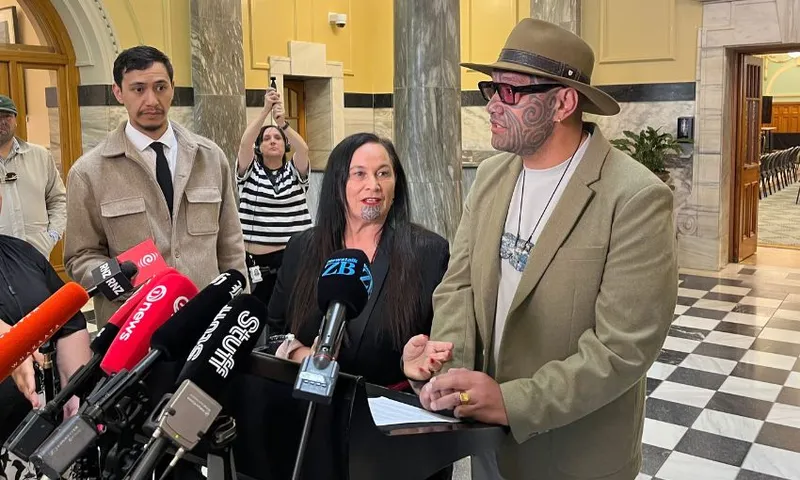
Te Pāti Māori co-leaders Debbie Ngarewa-Packer and Rawiri Waititi told reporters that on Sunday, the party’s national council (minus the party president John Tamihere, who is overseas) voted to expel the MPs for “breaches” to the party’s kawa (constitution). The national council is made up of the party’s national executive, the co-leaders and chairs from each of the Māori electorates, six out of seven of which are held by Te Pāti Māori. Ngarewa-Packer and Waititi claim this was a unanimous decision by the party’s national council, however, Te Tai Tonga and Hauraki-Waikato abstained from voting, while Te Tai Tokerau was excluded from the process.
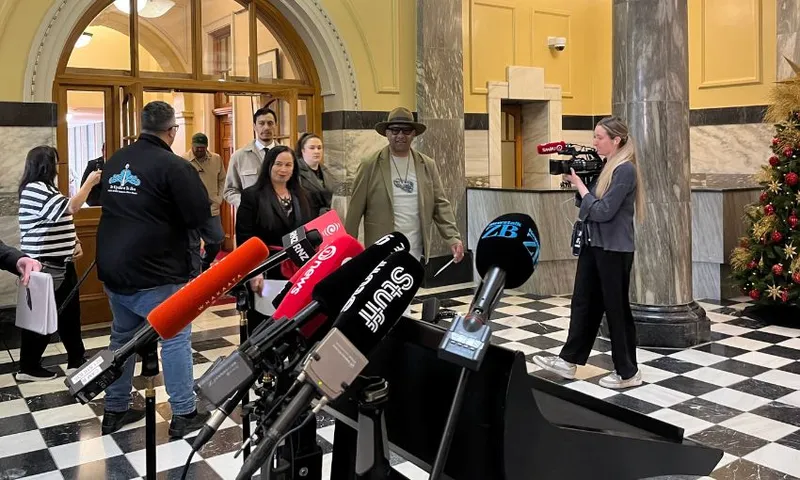
Asked whether the party’s other MPs (Hauraki-Waikato’s Hana-Rāwhiti Maipi-Clarke and the newly elected Tāmaki Makaurau MP Oriini Kaipara) supported the decision, with its caucus size now reduced by a third, Ngarewa-Packer said the leadership “can’t say that they’re not on board … because they haven’t expressed it”.
What happened to kanohi ki te kanohi? How did we get here?
Remember when the headlines surrounding Te Pāti Māori revolved around the byelection in Tāmaki Makaurau, following the passing of late MP Takutai Tarsh Kemp? A few days out from the announcement of Kaipara’s landslide win, Ferris landed himself in hot water after criticising a group of Labour volunteers for “campaigning to take a Māori seat from Māori” (the multi-cultural volunteer group was campaigning for Labour MP Peeni Henare, who has held the seat thrice before).
Despite a public apology from the party (and one behind closed doors to Labour leader Chris Hipkins), Ferris doubled down on his comments in a midnight Instagram post a few days later. And party president John Tamihere originally defended Ferris, telling Waatea News he agreed with the “substance” of his comments.
On October 2, Te Ao Māori News published allegations made by Eru Kapa-Kingi towards the party’s leadership, which he described as a “dictatorship model” (this came after his mother, Mariameno Kapa-Kingi, was demoted as party whip). A week later, after Kaipara was sworn in as the party’s newest MP, Te Pāti Māori announced a much anticipated “reset” in which they promised to work better together.
But the week after that, an email meant for party members was leaked to the media, exposing an allegation of overspend in Kapa-Kingi’s office (which Mariameno has claimed was done with the knowledge of the party’s leadership) and alleged abuse against parliamentary staff by Eru Kapa-Kingi. Since then, Te Pāti Māori’s leaders have avoided media opportunities to answer questions on the turmoil, until things came to a head a week ago when Tamihere shared a strongly worded Facebook post urging the MPs to do the “honourable thing” and exit the party.
What’s Ferris’s alleged crime – being a bit hōhā?
As far as we can tell, yeah. Ngarewa-Packer and Waititi wouldn’t divulge the exact reasons why either MP had been expelled, but according to the party’s constitution, it can be done when a member fails to uphold Te Pāti Māori kaupapa and tikanga, fails to act within the constitution or abide by decisions made under the constitution, joins another political party, fails to pay a membership fee or misuses party funds.
In terms of Ferris’s expulsion, the Herald suggests it partly relates to a media interview criticising the party. There have also been a few clues suggesting a connection to his earlier Instagram posts. Ngarewa-Packer told reporters it was important for the party to “regain the confidence of tangata Tiriti” following “damage to those who believed in Aotearoa hau and believed in tangata Tiriti”.
“We now want to go into that mode of repairing confidence and showing them that we are true on being able to have an Aotearoa that is inclusive to everyone,” Ngarewa-Packer said. “That’s part of the decision.”
Ferris was also singled out by Tamihere in the party president’s Facebook post. Tamihere claimed he was advised by an iwi leader from Te Tai Tokerau that Kapa-Kingi had asked leaders in her electorate whether they would support her and Ferris in an attempted takeover bid against the current co-leaders. Organising a coup without a definite kill shot is always a surefire way of being blacklisted, as political history has shown.
So, will they be kicked out of parliament?
Waititi told reporters that invoking the party-hopping or “waka-jumping” legislation – which would force the MPs to give up their seats, and end up triggering two byelections – had not been a consideration for the leadership. Rather, that’s a decision for the party’s national council.
For the party-hopping provisions of the Electoral Act 1993 to be triggered, the speaker needs to declare the seats vacant. This requires either an MP to quit, or the leader of their party to eject them from caucus and then write to the speaker to inform them that the MP remaining in parliament “would affect the proportionality of political party representation in parliament as determined at the last general election”.
The Green Party co-leaders successfully used this option last year in seeking to have Darleen Tana booted from parliament following their resignation from the party. Because Tana was a list MP rather than an electorate one, no byelection was needed: their seat was taken by the next person on the Green Party list, Benjamin Doyle.
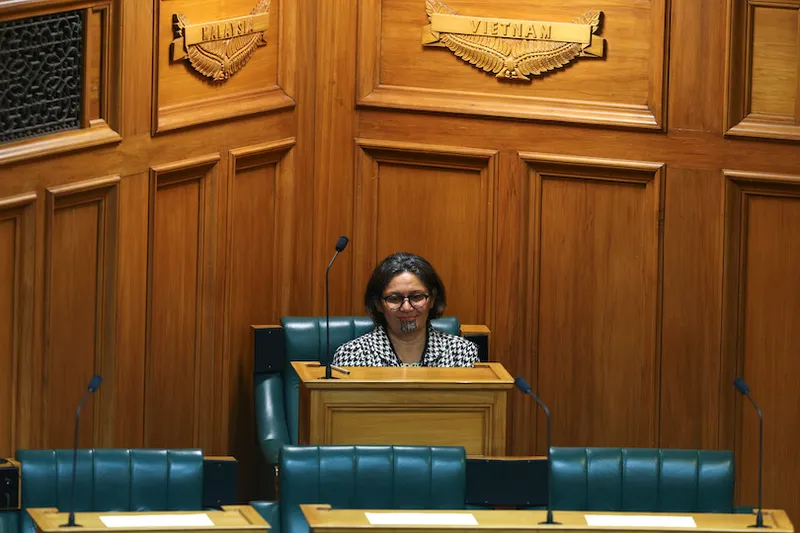
The situation is quite different here because Ferris and Kapa-Kingi were expelled, rather than resigning, and also because of a parliamentary quirk known as the overhang: the current parliament has 123 MPs rather than the standard 120, an overhang of three seats caused by Te Pāti Māori winning more electorates in the 2023 general election than its party vote provided for.
By Ferris and Kapa-Kingi becoming independent MPs, the argument could be made that the proportionality of parliament is restored, rather than thrown off kilter, and Te Pāti Māori may struggle to convince the courts if the ejected MPs challenged the decision. The party would also need the support of two-thirds of its caucus (presumably not including the two who have been expelled, though the legislation isn’t entirely clear on that), and to give the MPs it’s attempting to have removed 21 days to respond.
Can Ferris and Kapa-Kingi fight back?
They can, and they say they already have. Both MPs have published statements claiming the move is “unconstitutional”, and confirming they will continue to serve as MPs. Ferris wrote that he “reject[s] the decision in the strongest possible terms”, while Kapa-Kingi has confirmed she has launched a legal appeal against the party. This will be formally lodged at the party’s annual general meeting on December 7, which is also when the decision on whether to invoke the party-jumping law will be made.
What do other parties say?
Waititi has said the party is focused on “positive and constructive kōrero with the Labour and the Greens parties”, frequently referencing his desire for the current coalition to be a “one-term government”. “It’s important that, if we’re going to make this a one-term government, that the opposition benches need to be working together,” Waititi said.
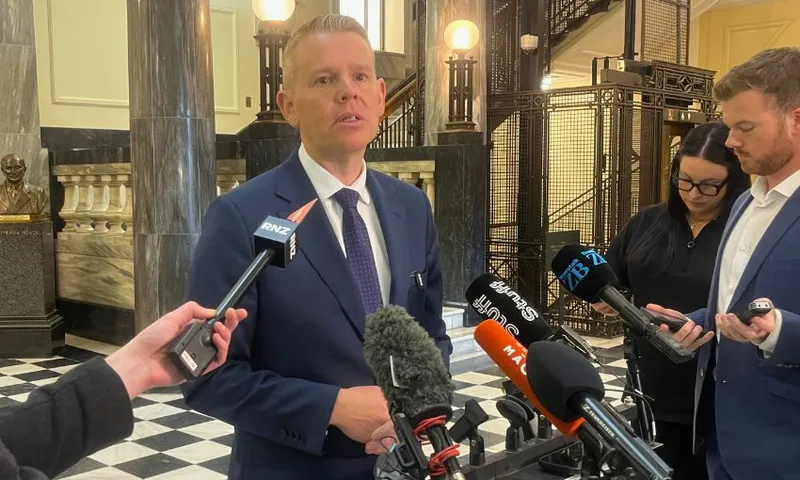
Labour leader Chris Hipkins said on Monday that he hasn’t spoken to Te Pāti Māori since the byelection. “I want to lead a government that’s inclusive, that’s focused on the interests of all New Zealand, [and] some of the statements that we’ve seen from members in recent times does not reflect that,” Hipkins said. “As of today, they’ve still got a long way to go before they could be considered for any kind of partnership and any governing arrangement.”
Meanwhile, the prime minister called the party a “joke”. “I haven’t seen a single policy idea about what they’re doing to lift cervical screening rates with Māori, immunisation rates and academic achievement for Māori kids,” Christopher Luxon said at the post-cabinet press conference on Monday afternoon. “It’s all performative, it’s all dramatic, it’s all a soap opera.”
This piece has been updated to clarify the role of the speaker in the party-hopping provisions of the Electoral Act 1993.

Lyric Waiwiri-Smith
Lyric is an award-nominated politics reporter at The Spinoff. She covers parliament from the press gallery, pens the weekly column One MP, One Pint and is endlessly curious about what makes our decision-makers tick. Off the clock, Lyric loves a live gig, a cold brew, and being a Wellingtonian (on a good day).


