Move-on orders are a game-changer for fixing the nation’s complex problems

It’s amazing the issues you can solve if you just shift them to somewhere you don’t have to look at them.
New Zealand has a lot of problems and few of them are easy to solve. From overpriced housing to rotting infrastructure, many of our most troublesome issues are structural, built on decades of political decision-making and burrowed deep into our policy settings. Fixing them can feel overwhelming. Where do you even start? Preferably two decades ago. It’s nigh on impossible. But on Sunday, the government pioneered a new approach to addressing the nation’s complex, intractable dilemmas: telling them to go somewhere else and then not looking at them anymore.
Justice minister Paul Goldsmith laid out the strategy in a press conference near the Commercial Bay shopping mall in central Auckland. For months, the city centre’s business association has been complaining about visible homelessness in places like Queen St. Social agencies have urged the government to respond by investing more heavily in mental health services and initiatives like Housing First while rethinking its decision to tighten emergency housing access.
Goldsmith had other ideas. He announced “move-on orders” which look like they’ll mostly impact streeties and the unhoused. Though police already have the ability to prosecute disorderly conduct under the Summary Offences Act, they’ll be able to shift people engaging in less aggressive behaviours such as rough sleeping or “indicating intent to inhabit a public place” a kilometre away from their location under threat of a $2000 fine or up to three months in prison.
Journalists raised an obvious question. Wouldn’t that just move the people involved to another place? But Goldsmith had anticipated that objection and quickly made it clear the move-on orders would keep being applied in each successive area until the people caught indulging in behaviours such as sleeping on the streets either dematerialise or decide to stop being poor. “Of course the law applies everywhere in the country so if you’re told to move on and you go up the road and start doing the same behaviours again, then you’ll be subject to another move-on order until the message gets through that society doesn’t tolerate these activities,” he said.
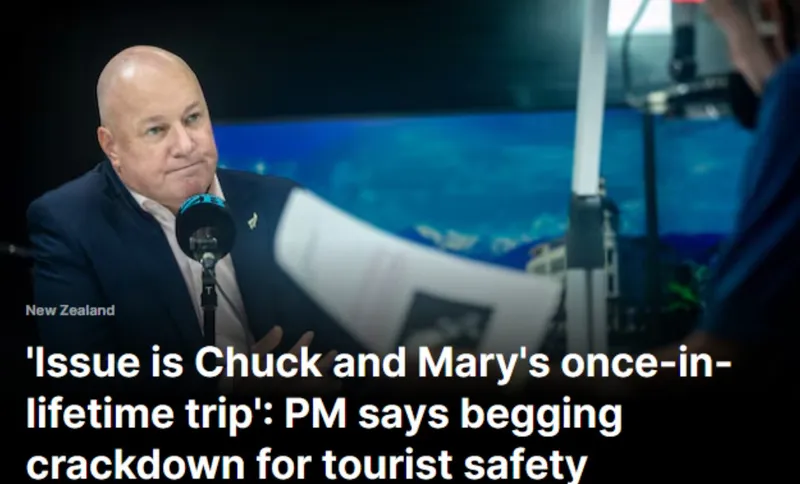
It’s a novel approach, and one ripe for adaption to other policy areas. For a long time, the Ministry of Primary Industries has been spending time and money trying to rid Auckland’s North Shore of the yellow-legged hornet. It’s invested heavily in public awareness campaigns and eradication efforts. But perhaps the problem is less the hornet itself, and more the fact they’re in Auckland, where Chuck or Mary could jump off a cruise ship on their once-in-a-lifetime trip only to be stung into organ failure by an aggressive insect. MPI could save time and money by catching then transferring the hornets to a less recognisable location such as Palmerston North.
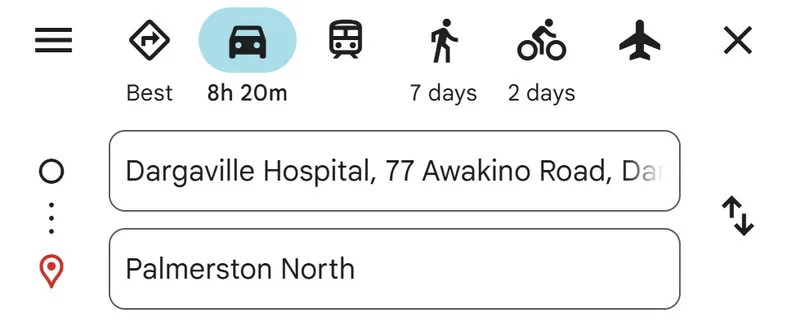
Similarly, the government has faced pressure to improve medical care in places like Dargaville, where patients have been turning up to the hospital to find there’s no doctor on site overnight. So far, most of the criticism has focused on the need for difficult and costly measures such as improved medical training and recruitment, when another solution could be to simply tell patients to move on until they either die or find a place where their sickness is less confronting.
A lot of wastewater is currently being ejected into the sea off Wellington’s south coast. The council is investing millions of dollars into costly repair operations when it could simply be funneling the tsunami of poo to a more discreet location such as a minor city two hours away.
The Wellington Phoenix have faced criticism for losing all their home games. The team could move on to a place like Palmerston North, preventing any further damage to their record.
The government has been dealing with complaints from homeowners in Parnell about its unreasonable plans to upzone their area just because it’s within walking distance of Auckland’s city centre and connected to hundreds of millions of dollars worth of public infrastructure. At the urging of his boss, housing minister Chris Bishop has tied himself in knots trying to accommodate the whiners while still allowing houses near the train line we just spent $5.5bn on. A move-on order for the villa owners in Parnell, along with similarly well-appointed suburbs such as Ponsonby, would clear out some much-needed space and stem the tide of public meetings. Thankfully there’s a mid-sized city crying out for growth in the Manawatū-Whanganui region of the North Island.
The government has also faced pressure over the cost of butter. It should tell butter to move on.
Some will say these solutions lack nuance. In an interview with RNZ’s Morning Report, Auckland city missioner Helen Robinson pointed out that move-on orders will only remove our problems from view at best and push already struggling people into damaging police interactions at worst. She argued the real solution to homelessness in city centres is to invest in housing people rather than criminalising them. “That’s not responding to the need. It’s dealing with the symptom, not the need. In fact, all it’s doing is just shifting that person down the road.”
Robinson is asking us to grapple with a complex problem and address its root causes rather than just its visible manifestations. She’s telling us to do something difficult rather than taking the easy way out. In other words, she’s trying to make us uncomfortable and that’s not acceptable for someone in the public realm. It’s about time she’s issued a move-on order.

Hayden Donnell
Hayden Donnell is a senior writer for The Spinoff. He previously worked at RNZ, TVNZ and the New Zealand Herald, alongside other media companies that have since closed down or been renamed. His primary passions are local politics and the Big Fresh animatronic fruit and veggies.


