The fight for Te Pāti Māori voters has begun

Image: The Spinoff
As Te Pāti Māori reels from internal turmoil, Labour and the Greens are moving quickly to capture its support base.
With the self-implosion of Te Pāti Māori still echoing around the halls of power, the politically astute of the left can smell blood, and will be doing all they can to enchant disillusioned voters. The two biggest benefactors of the turmoil are Labour and the Greens, and the two parties will be eager to win the support of that once loyal voter base.
It has been five months since Te Pāti Māori began falling apart. In that time, two of the party’s MPs have been expelled from the party, the high court ruled one of those expulsions was unlawful, there have been calls for the party’s president and co-leaders to resign, and a lot of wondering what’s next for the party. Social media has been abuzz with disillusioned Te Pāti Māori supporters saying they won’t be backing the party come November’s general election.
Te Pāti Māori received 88,000 votes at the last election, or just over 3% of the total party vote, and, more importantly, it took six of the seven Māori electorate seats. With polls showing a tight race between a National-Act-New Zealand First coalition on the right and a Labour-Greens (and possibly Te Pāti Māori) coalition on the left, every vote will count.
As well as capitalising on the demise of Te Pāti Māori, Labour and the Greens will be wanting to distance themselves as far as possible from a party in such a state of disarray in order to weaken arguments from the right about a potential “coalition of chaos”. This will also help attract more centrist voters who may have been fearful of voting for the left bloc because of the more controversial policies of Te Pāti Māori.
The Green Party has 14 Māori candidates on its initial candidate list. The ranking may change after party members vote on the list, but as it stands, current MPs Marama Davidson, Teanau Tuiono, Tamatha Paul, Hūhana Lyndon and Kahurangi Carter seem likely to make it into parliament on the party vote, as does new candidate Craig Pauling.
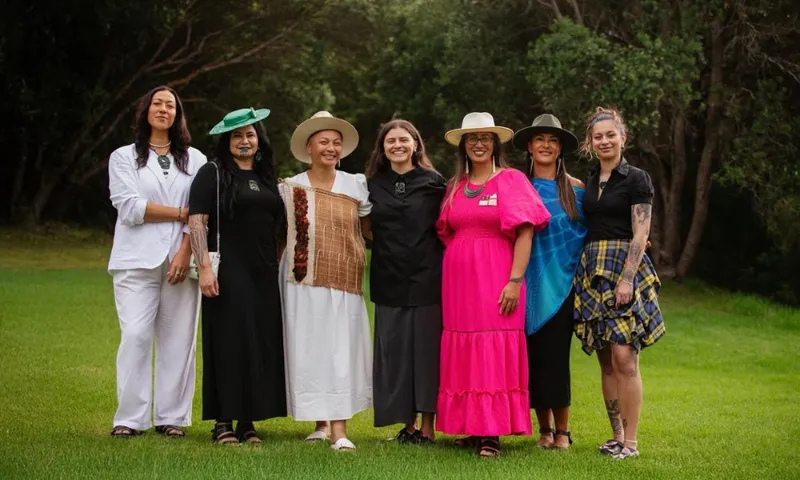
Lyndon will be one to watch in the battle for Te Tai Tokerau, with current electorate MP Mariameno Kapa-Kingi yet to decide whether she will stand as an independent candidate or under the banner of Te Pāti Māori. Labour’s Willow-Jean Prime will also attract a significant number of votes – former deputy leader Kelvin Davis held the seat for two terms, and Labour attracted almost 5,000 more party votes than Te Pāti Māori in Te Tai Tokerau at the 2023 election. However, Lyndon’s and Prime’s likely high list rankings for their respective parties could dictate where the electorate puts their vote – they may decide to vote tactically and reelect the incumbent Kapa-Kingi, meaning all three MPs make it back to parliament to represent the region.
The inclusion of prominent Māori lawyer Tania Waikato – who became synonymous with the Toitū te Tiriti movement – in the Greens’ candidate list should help the party capture a chunk of former Te Pāti Māori voters looking elsewhere. Despite initially being placed at 15 on the party’s list, Waikato will likely be bumped up a few places following the party’s membership voting process.
Her selection as the Greens’ candidate for the Waiariki electorate could be a strategic coup for the party, potentially ousting Te Pāti Māori co-leader Rawiri Waititi from parliament. Support for Waititi has waned in recent times, especially among Waiariki electorate members who claim there was no proper consultation process followed when the party was deciding to expel Kapa-Kingi and Te Tai Tonga MP Tākuta Ferris.
Waikato is from Te Teko, just an hour away from Ōpōtiki, where Waititi comes from. The duo share multiple iwi affiliations and have worked together before, notably when Waikato represented Te Pāti Māori MPs before parliament’s privileges committee. Her ability to cut through with voters at a regional level – and whether they turn out to vote – will be key.
Ikaroa-Rāwhiti – currently the only Māori seat not held by Te Pāti Māori – is perhaps going to be one of the most interesting contests this election. In what sounds like a bad game of musical chairs, former Te Pāti Māori candidate Heather Te Au-Skipworth is standing for the Green Party this time around. The Hastings District councillor was replaced as the candidate for Te Pāti Māori by former Labour minister Meka Whaitiri at the last election. The decision proved to be costly, as political newcomer Cushla Tangaere-Manuel won the seat with a 3,000-vote majority.

In the Tāmaki Makaurau byelection held last September following the death of Takutai Tarsh Kemp, Te Pāti Māori capitalised on a feeling of disdain for the major parties by driving home an “unapologetically Māori” message. The party secured a landmark victory, with Oriini Kaipara defeating Labour’s Peeni Henare by over 3,500 votes. The message clearly resonated with Māori voters seeking authentic, untempered representation.
However, claims of a “dictatorship model” operating within Te Pāti Māori will likely be offputting to a large cohort of these voters come November. Combined with the presence of unapologetically Māori candidates like Lyndon and Waikato, the Greens are well positioned to capitalise.
Labour, meanwhile, has secured some strong new candidates for the Māori seats. Ngāi Tahu iwi leader Mananui Ramsden will contest Te Tai Tonga, where the incumbent Tākuta Ferris has signalled he intends to run as an independent candidate. Te Pāti Māori is yet to confirm if it will stand a candidate in the seat.
In Te Tai Hauāuru, environmental lawyer Tāwhiao McMaster is hoping to represent Labour and take on Te Pāti Māori co-leader Debbie Ngarewa-Packer. While Ngarewa-Packer won the seat decisively in 2023 with a majority of 9,200 votes, Labour actually led the party vote in the electorate (40.9% to 35% for Te Pāti Māori). Although some might consider Ngarewa-Packer unlucky to be embroiled in the party’s internal conflict, as co-leader, she bears collective responsibility for the party’s governance and the “dictatorship” allegations.
As we get closer to the election, Māori voters will be weighing up who is best placed to represent them. Some voters will remain loyal to the kaupapa of Te Pāti Māori, despite its embattled leadership. Others will return to Labour, and some will go to the Greens. Many will wonder how to vote tactically. The Greens are well placed to absorb voters who remain committed to a strong, unapologetically Māori political voice, but want it delivered through a more stable vehicle. Labour, meanwhile, is positioned to reclaim those willing to prioritise pragmatism and the prospect of government.
The question is not which party benefits – both will. The question is whether either benefits enough.
This story previously incorrectly stated Tāwhio McMaster had been confirmed as the Labour Party candidate for Te Tai Hauāuru. This has been corrected.

Liam Rātana
Liam Rātana (Ngāti Wairupe/Ngāti Kurī) is editor of The Spinoff's Ātea section. He is passionate about indigenous and minority issues. Liam enjoys cooking, poetry, photography, and exploring the outdoors.


