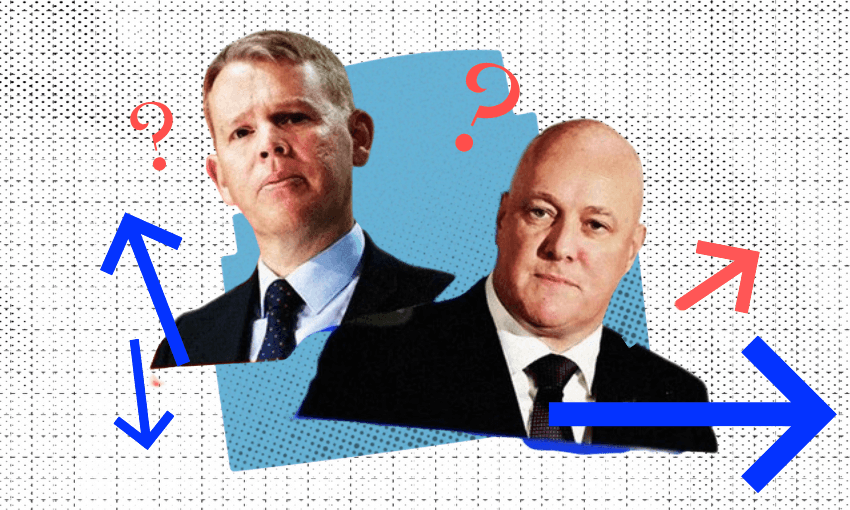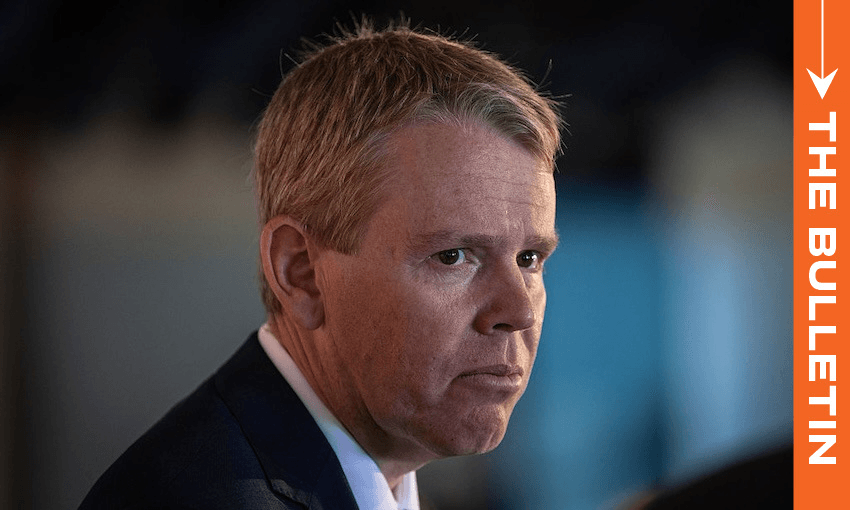
The Hipkins-Paul story has put media principles under the spotlight – and made the rest of us question how much we’re comfortable about knowing, writes Catherine McGregor in today’s excerpt from The Bulletin.
To receive The Bulletin in full each weekday, sign up here.
A different standard
The story of Jade Paul’s social media claims against her ex-husband, Labour leader Chris Hipkins – which he has flatly and comprehensively denied – has prompted as much scrutiny of the media as of the man at its centre. Most outlets chose not to repeat the substance of Paul’s allegations, for legal and ethical reasons. Audrey Young, writing in the Herald (paywalled), reflects carefully on what distinguishes stories that are in the public interest from those the public is merely interested in – and where this one falls. Explaining why she and so many others in the media have been circumspect in their reporting, she says that to act otherwise “goes against one of the fundamentals of traditional journalistic practice, which is to not run a story that poses more questions than answers”.
Lyric Waiwiri-Smith, in The Spinoff, examines whether the protection traditionally extended to politicians’ private lives has been applied consistently in this case. Political expert Lara Greaves notes the contrast with the treatment of former Wellington mayor Tory Whanau, whose alleged scandalous “footage” was graphically described on air by The Platform’s Sean Plunket without him having actually seen it (since it didn’t exist). Compare that to Plunket’s measured response to the Hipkins story this week: after some “soul searching”, he concluded that “everyone, including those who occupy elected public office, is entitled to a private life.”
The oxygen from the right
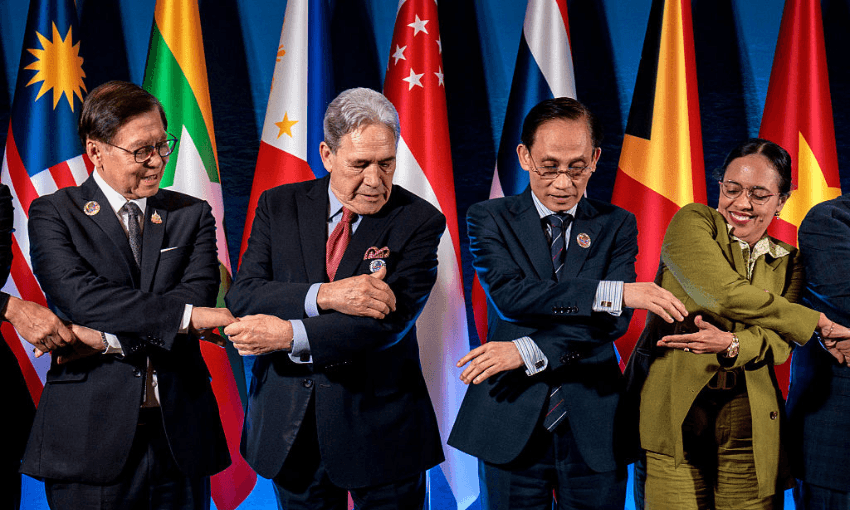
The story has drawn attention partly because of how it has been amplified. Richard Harman, writing in Politik (paywalled), notes that most of its oxygen has come from the right on social media: Cameron Slater has been active on X promoting Paul’s account, as has Ani O’Brien, a former press secretary to Judith Collins. O’Brien has posted on X that while she has made no secret of her friendship with Paul, she is not “pulling strings behind the scenes”. Winston Peters has issued a statement making clear that he’s not interested in weighing in, and clarifying that Paul does not work for NZ First and has no affiliation with the party. She had worked for a short period for cabinet minister Casey Costello before leaving for another role about a year ago.
National MPs, meanwhile, have stayed conspicuously silent – conscious, Harman says, that they could easily be next. While there is no suggestion of a concerted political campaign, “the right-wing trolls on social media are pushing it along as hard as they can”.
The cost of a political spouse
There is one element of Paul’s account that Newsroom’s Jonathan Milne finds straightforwardly credible: her claim that she was forced to leave jobs she loved because her relationship to Hipkins created a perceived conflict of interest – the same dynamic, he notes, that cost Madeleine Setchell her position as head of communications at the Ministry for the Environment in 2007, when her partner’s role as a senior adviser to John Key was deemed to create a conflict. It is a pattern experienced mostly by women – not just political spouses, but anyone who “agree[s] to put their career on ice, for the good of a partner’s career and the integrity of the nuclear family”.
“That’s difficult when the family remains intact,” Milne writes. “It becomes intolerable when the relationship breaks up and the realisation sinks in that the best days of one’s career and earning potential have been sacrificed.”
A very messy story
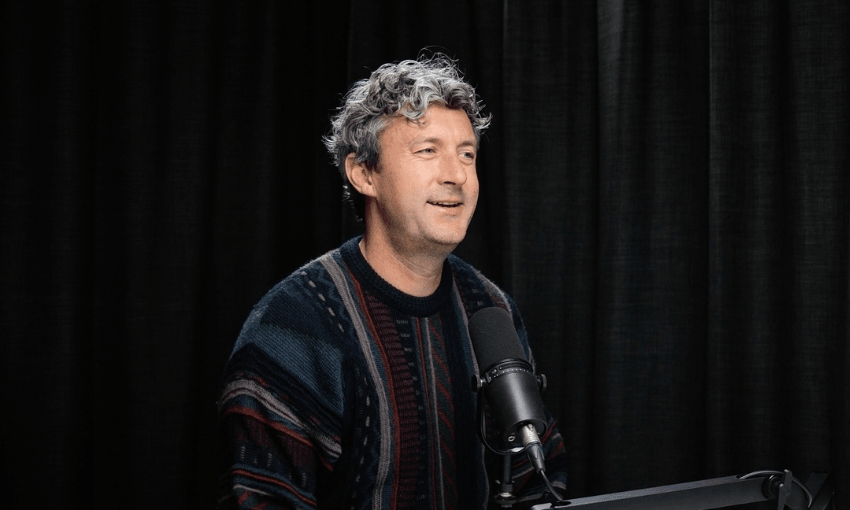
This morning in The Spinoff, Veronica Schmidt writes compellingly about why the story has been so difficult for many people – particularly left-leaning women – to process. As editor, she made the call not to publish Paul’s allegations without verifying them or securing Hipkins’ side of the story. As a “post #MeToo feminist”, the internal conflict was real: “A part of my mind told me this made me a good journalist (well done, Schmidt. Pat on the back). Another part told me I was a shit feminist, and gave me an actually quite violent kick in the flank.”
When Hipkins appeared on those familiar parliamentary tiles and choked up when asked about his children, many who had been confident in their positions found themselves uncertain again. “It felt like much of the country had now journeyed to the centre of their venn diagrams, where feminism, politics, privacy, fairness and marriage meet,” Schmidt writes. “And guess what’s there? A fiery mess.”