
The prime minister forced a confidence vote and won. But has anything actually changed, asks Catherine McGregor in today’s excerpt from The Bulletin.
To receive The Bulletin in full each weekday, sign up here.
The credits roll
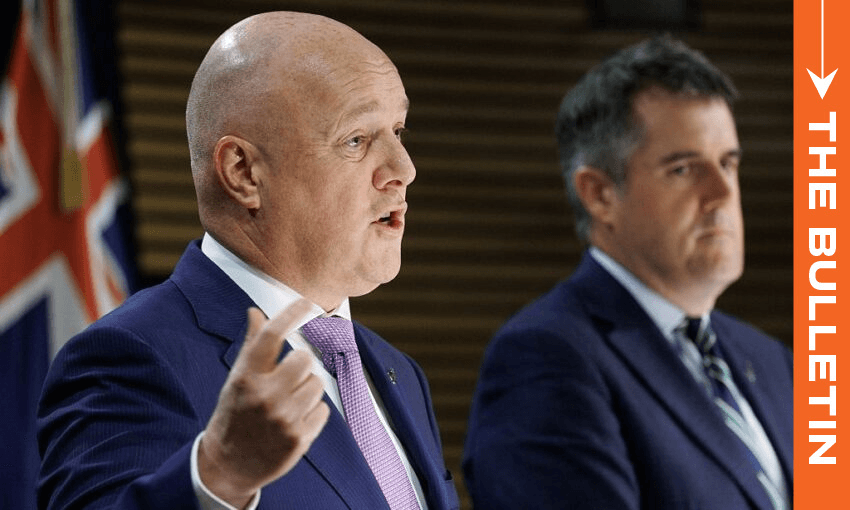
It was, as Luxon himself put it, a “media soap opera” – one where its star had the last word. After nearly three hours behind closed doors, the prime minister yesterday emerged alongside deputy Nicola Willis to deliver a two-minute statement in parliament’s banquet hall: “The caucus has answered clearly and decisively. It has backed my leadership. That matter is now closed.” He then walked away without taking questions. The vote was anonymous and only the scrutineers know the final count. “Yet in the House, Luxon affirmed he had the unanimous support of caucus members,” notes the Herald’s Thomas Coughlan. “The Herald has good reason to believe this isn’t the case.”
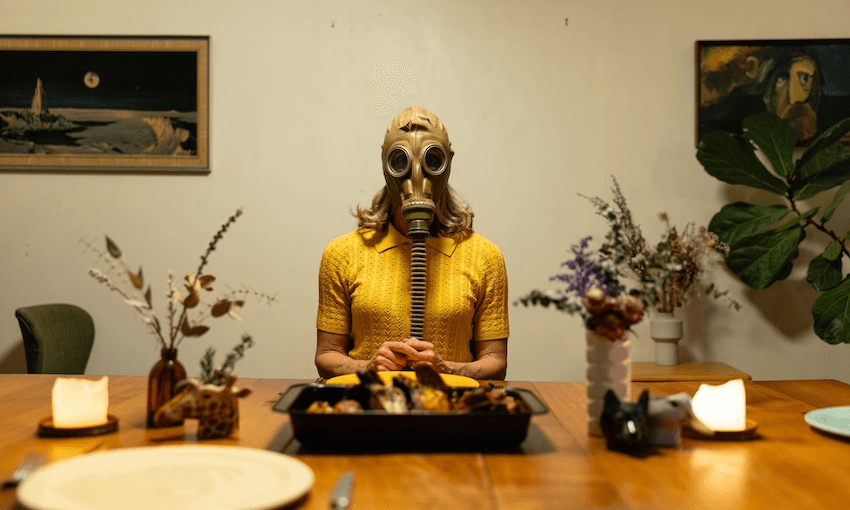
The Spinoff’s Lyric Waiwiri-Smith, recapping proceedings in full soap opera register, describes the moment Luxon spoke before the media. “Mic drop,” she writes. “Luxon refuses to take questions and walks off, leaving his enemy to wither. The credits roll.” Notable by his absence from the caucus meeting was chief whip Stuart Smith – the man who started the current drama and whom Waiwiri-Smith describes as “five disgruntled MPs stacked atop each other under a trenchcoat” – who happened to have a “longstanding personal appointment”.
More than just a media soap opera
Luxon may have tried to play off the whole affair as a media beat-up, but that claim doesn’t stand up to scrutiny. As BusinessDesk’s Thomas Manch reports, the way Luxon has spoken about Coughlan’s report on Friday that Smith was “ghosted” by the PM has shifted conspicuously in the past few days. On Monday morning Luxon spoke of party “discipline” being an issue and gave the impression he knew which five MPs had been “moaning”; by Monday afternoon he denied any knowledge of them; by Tuesday morning he had called the confidence vote to “put the media speculation to rest”. Complicating matters is that Chris Bishop acknowledged the briefings had been real, describing them as “really untidy and really unhelpful and destructive of morale and confidence in the caucus”.
Smith’s absence from the meeting left plenty of loose ends. Whether Smith was the source of the original leak, and whether his position as whip is now tenable, will be questions Luxon cannot indefinitely avoid.
What Winston knows
While Luxon’s caucus fell into line, his coalition partner delivered a verdict of a different kind. Winston Peters called the decision to hold a confidence vote a “very bad move” with inevitable consequences. “This is not the first time it’s going to happen,” he said, suggesting Luxon had let a genie out of the bottle. As The Spinoff’s Toby Manhire notes this morning, Peters had his own reasons for relishing the moment: in Sunday’s Verian poll, Luxon’s preferred prime minister rating had fallen to 16%, while Peters’ had risen to 12%. When a journalist pointed out that Peters had himself outpolled his then-leader Jim Bolger in the 1990s, “Peters seemed lost for a second in a reverie,” Manhire writes.
“A moment later, the 80-year-old added, before skipping away with a Cheshire grin, ‘if you want me to lead the National Party, why don’t you have a poll on that.’”
A vote won, not a problem solved
The Post’s Luke Malpass put the situation plainly. Yesterday’s events were “a vote won, not a problem solved”. National is tracking at around 29% on a rolling poll-of-polls basis, roughly nine points below its 2023 election result. “Every caucus has a number at which changing leader becomes worth the risk. Based on today’s vote, 29% is not yet that number.”
Former Act leader Richard Prebble, writing in the NZ Herald (paywalled), notes that, on current numbers, “National risks losing power, losing perhaps 26 electorates, and being reduced to a rump that could take years to rebuild”. What is true of the party goes double for its leader, Prebble says. “To continue with a leader whom the polls say voters do not want is to insist the voters are wrong. In politics, even when voters are mistaken, the voters are never wrong.”
More reading
- Toby Manhire: Crunch time for Luxon and the Moany Five at National caucus
- Nick James: Which MPs would lose their seats if National’s support continued to slump? (The Post)
- Jo Moir: Luxon puts even more pressure on himself with confidence gamble (RNZ)