‘A grand national cause’: How France is keeping books and reading alive

Daniella Blake, a self-published Aotearoa author in France, has learned a lot about how France does books and reading.
Made possible by


Daniella Blake on what she’s learned while living in France and trying to sell her English book to the French.
It sounds like a bad joke. “Come and attempt to sell your book written in English to the French.” But I couldn’t refuse the invitation to try and sell my book at one of France’s most prestigious book fairs, La Comédie du Livre in Montpellier.
The fair is held at the commanding Parc Peyrou and today the entrance is guarded not only by two stone lions and cherubic angels but also a giant open book that you must walk through to enter the fair.
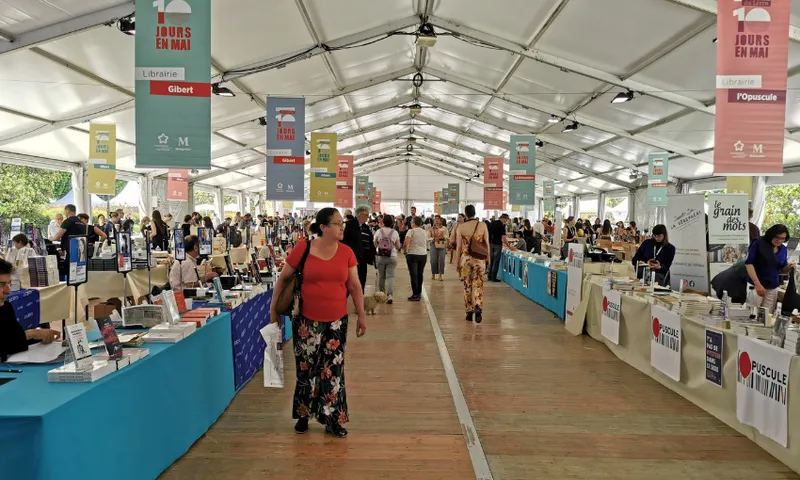
Inside, two fraught women hand out maps to help fair-goers navigate the 16 independent bookshops, 60 publishing houses from the local region, and 330 authors who have come from all over France and who have been flown in from other countries. The fair itself lasts three days, but associated festivities have been going for 10 days with 188 different events in total, including conferences, meetings with authors and film makers. In 2024, 50,000 people attended the festival.
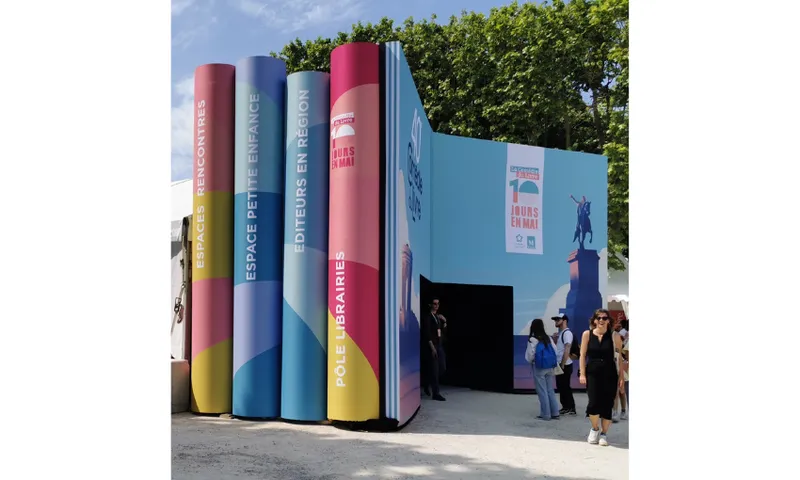
Beyond the giant door, the marquee is buzzing. Lines of tables hold hundreds of books as their authors sit behind them waiting to meet their readers. The lucky ones have queues of fans already lining up to get their books signed. After weaving through stall after stall I finally find Le Bookshop, Montpellier’s only anglophone bookshop and one of the few to accept self-published authors like myself.
Fellow authors include a comic book author, Phil, who has a moustache like Dali, wears a shirt with pink pineapples, and moved here from the UK after Brexit. His books, published in the UK, sell well to French parents trying to encourage their children to get past their fear of English.
And then there is Sayima, originally from Tanzania, who has just moved to France after eight years living in China. She writes, in her own words, “depressing” poetry. We sit next to more well-known anglophone authors (British author Claire North, New York author Mateo Askaripour and Scottish author Andrew O’Hagan) who have been invited here by the festival with all expenses paid. One of the more recent objectives of the book fair is to open to the world beyond France.
O’Hagan, a seasoned traveller on the books circuit, looks bemused. “This is both the most hilarious and humiliating experience I have ever had,” he tells me. “In the UK, authors are protected from directly having to sell their books like this. We are invited to conferences where you know you have an audience who is there to see you. Here it’s like we’re at a vegetable market where someone decides to buy someone else’s tomatoes rather than yours.”
There are 50 such book fairs in France, but Montpellier’s fair dates back to 1986 when it was set up by the city’s famous socialist mayor, Georges Frêche. Book fairs are part of France’s historic policy of “democratising culture”, which dates back to the French revolution. One of the ways they do this is to bring culture literally into the street and through festivals. I go to a yearly street theatre festival where 250,000 festival-goers take over a medium-sized town for a week to watch as many as 4,000 performers.
When I travel around France, I note the presence of small bookshops in tiny villages and weekly open-air book markets. There are weekly shows on national television about books, and the newspaper Le Monde frequently has a slot about an author, or about literature, on its front page.
In the 20th century, France made reading and the book industry an “affair of the state”, and from the 1970s the government argued that books were not a commercial product but a creation of the mind, and thus should never undergo the laws of the market. This idea of “cultural exception” was introduced by France during the General Agreements on Tariffs and Trade negotiations in 1993.
As for pricing, a 1981 law set a single price for new books, whether sold in an independent bookshop, a large chain store, or online. This prevents supermarkets from using their market weight to sell discounted books. Sixteen other countries in Europe have adopted the rule.
France has one of the highest numbers of independent book stores; a total of 3,500, of which a third are in small towns (by comparison, the UK has only 1,052). After Covid, 270 townships, mostly with less than 15,000 inhabitants, opened a new bookshop, collectively collectively employing 12,000 people with financial aid from Centre National du Livre. Nearly half of all books purchased in France are sold through these independent bookshops.
Other government policies designed to protect independent booksellers include a rule that books incur a reduced VAT (5.5% instead of 19%); and a 2023 rule that online retailers must charge a minimum three-euro fee on all deliveries under 35 euros to stop the giants like Amazon out-competing smaller bookshops.
In 2017, the government introduced the “Pass Culture Scheme” which gave 15-19-year-olds money (an online credit system) to access culture – they can use the money to buy cinema or theatre tickets, musical instruments or books. In 2024, 89 million euros of book sales came through this channel.
But protecting the book industry is different from ensuring the French keep reading.
Despite the fact that 86% of French call themselves readers, 63% say they read at least five books per year and 49% read every day or almost, the French spend an average of 41 minutes per day reading, compared to three hours and 14 minutes on screens.
To combat this decline, from 2017, the French government began increasing its focus on encouraging reading and in 2021 made reading a “Grand National Cause”. Recognising that libraries have a social vocation, they passed a law that clarifies the missions of libraries, affirms pluralism and diversity, and strengthens public reading policy.
Other measures include “15 minutes of reading” per day instigated in schools, companies and institutions. Universities hold public events such as “Nights of Reading”. And since 2018, the “Book for the Holidays” scheme gives out almost one million copies of a book chosen for the occasion, per year, to ten and eleven year old students. In 2025, this was an illustrated version of Homer’s The Odyssey.
The government coordinates a scheme of 20,000 volunteers reading to children at school or in libraries and there are reading-aloud competitions for high school students; the finale is played on national television. In 2024, this attracted 120,000 student participants.
All of this adds up. The book industry is France’s biggest earner in the cultural economy. In 2023, new book sales amounted to 4.3 billion euros. Time will tell if the new measures will be enough to win the battle against screens.
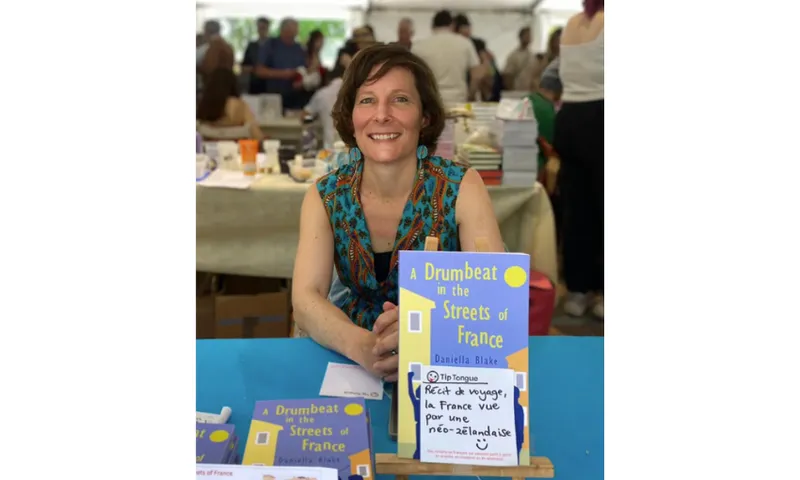
Back at the Montpellier book fair, I watch in amazement as – over the course of a day – hundreds of people line up to get their books signed by Baptiste Beaulieu, a young doctor and writer. Others hurry past to find their favourite author among the labyrinth of books and stands. There is a noticeable void around our anglophone stand. Some appear to glance at us with a strange mixture of … Pity? Respect?
I end the day with three book sales, which is three more than I expected. Despite this, witnessing firsthand how the book industry is keeping itself alive in France was a galvanising experience. Now, with the help of 25 friends, my book has been translated into French. It is currently selling well.
A Drumbeat in the Streets of France by Daniella Blake is available to purchase online here.
The Spinoff Books section is proudly brought to you by Unity Books and Creative New Zealand. Visit Unity Books online today.

Daniella Blake
Daniella is a New Zealand travel writer and cultural anthropologist living in France. Her debut travel book is called A Drumbeat in the Streets of France. daniellablake.com


