Vale Neville Peat, 1947–2026

Neville Peat (Photo: Penguin Random House)
Made possible by

The widely respected conservationist, photographer and prolific author has died at the age of 78.
Communities across Aotearoa are mourning the loss of naturalist, explorer, conservationist, writer, publisher, photographer, father, husband and grandfather, Neville Peat. Peat died in Dunedin on March 1 following a short illness. Mary Hammond, Peat’s wife, told the Otago Daily Times that Peat “was well-respected in so many aspects of his very diverse life, but always remained very grounded and humble.”
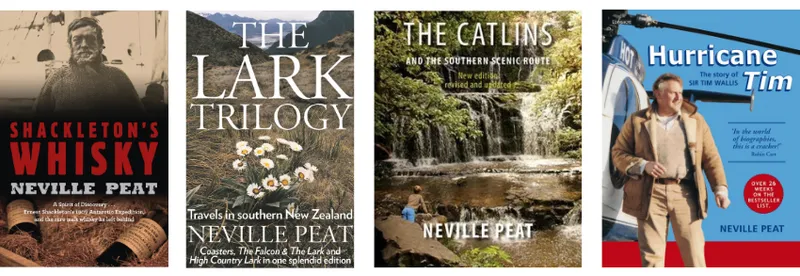
Over his career Peat published over 50 titles, including the acclaimed The Falcon and the Lark: A New Zealand High Country Journal (1991), an evocative blend of memoir, folklore and nature writing that weaves together the rhythms of a kārearea on Otago’s Taieri Ridge. It’s a beautiful book and one that carries Peat’s distinctive approach: close observation, deep curiosity and a generosity of spirit towards the reader.
The breadth of Peat’s publishing is astonishing. His biographies include the bestselling Hurricane Tim: The Story of Sir Tim Wallis, the thrilling life story of the legendary aviator, entrepreneur and farmer who pioneered New Zealand’s deer industry and founded Warbirds Over Wānaka. In the late 1970s, Peat spent two summers at Scott Base, gathering stories and taking photographs which fuelled five books on Antarctica, including Snow Dogs: The huskies of Antarctica, and Looking South: New Zealand Antarctic Society’s First Fifty Years 1933-83. His most recent book is Home on the Islands (Potton & Burton, 2022) which, like the Lark series, is part memoir, adventure travel, history and conservation – it covers Peat’s insights and research into Rakiura Stewart Island, Anchor Island in Tamatea/Dusky Sound, Kāpiti Island, Tiritiri Matangi in the Hauraki Gulf, as well as Ross Island in Antarctica, Enderby Island in the subantarctic Auckland Islands, the Chatham Islands and the New Zealand dependency of Tokelau.
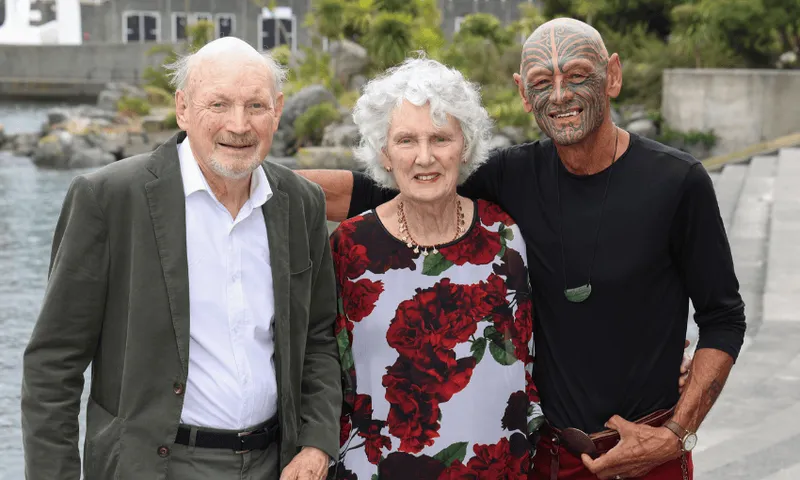
Peat was a dedicated and active citizen of Dunedin and in 1994 was honoured with the title of Dunedin Citizen of the Year in acknowledgement of his photobooks on the area and for his work establishing the Dunedin Environmental Business Network in 1993. Between 1998-2007 Peat served as a member of the Otago Regional Council, chairing the Environment and Science Committee, and later served as a Dunedin City Councillor between 2013-2016. He was also the chairman of the Orokonui Ecosanctuary trust board between 2010-2016. Peat also worked on the concept development, research and writing for Otago Museum’s 1,200 square metre landmark gallery “Southern Land, Southern People”, as well as information displays at the Royal Albatross Centre at Taiaroa Head and the New Zealand Marine Studies Centre at Portobello Peninsula.
The literary world recognised Peat’s invaluable contributions to science and nature writing first in 1996 when he and Brian Patrick won the Natural Heritage category of the Montana New Zealand Book Awards for Wild Dunedin: Enjoying the Natural History of New Zealand’s Wildlife Capital. In 2007 Peat was awarded New Zealand’s most valuable literary prize, the Creative New Zealand Michael King Writers’ Fellowship so he could work on his book about the Tasman Sea (The Tasman: Biography of an Ocean). Also in 2007, Peat received a Storylines Notable Non-Fiction Book listing for his young readers version of the Tim Wallis story, Winging It: The Adventures of Tim Wallis (Longacre, 2006). In 2018 Peat was awarded the New Zealand Order of Merit; and in December 2024 Peat received the Prime Minister’s Award for Literature in the non-fiction category, alongside Lynley Dodd for fiction and Apirana Taylor for poetry.
Of his own work, Peat said: “Through my words and photographs, and at times in collaboration with other authors and illustrators, I have tried to convey something of the essence of New Zealand – its nature, its geography, its ability to astound and inspire. Although they range from Tokelau to Antarctica, my books have a mostly Southern New Zealand focus, with natural history and geography being major themes. In the Lark titles, I have incorporated fictional elements to help readers tune into southern landscapes and seascapes. The award-winning Wild series (with scientist Brian Patrick), broke new ground in natural history writing, describing the nature of southern regions such as Fiordland and Central Otago in detail from the rocks up.”
In an interview with the Otago Daily Times in 2008 Peat said he felt everyone should read “books that weave nature into the world of human endeavour and emotion. Only through a better understanding of nature can humans, as a species, expect to survive for long.”
Aotearoa has lost an incredibly generous, caring and adventurous writer and we extend our condolences to all who loved him.
Read an excerpt from The Falcon and the Lark here.
This page will be updated over the coming days with tributes to Neville Peat (below).
Neville was one of the most delightful and natural human beings I’ve known. I got to know him well when I had a residency in Dunedin a long while back, and ever afterwards, I felt buoyed and privileged to see him. My heart always lifted when I was in his company. His responsive, mischievous smile is a memory I’ll carry with me for a very long time. I recall walking an Otago beach with him, approaching a pile of seaweed and sand, and shouting “Shit!”; when the pile reared up to become a truculent sea elephant. Neville didn’t retreat as fast as me, because he was laughing so much. And he was at the peak of our non-fiction writing. Histories, biographies, works on the natural environment, including his remarkable, visionary Lark series: he wrote with elegance, perception, respect. He informed and moved. What an asset he was. What a force for decency and good. We’ll miss him enormously. / David Hill
The Spinoff Books section is proudly brought to you by Unity Books and Creative New Zealand. Visit Unity Books online today.

Claire Mabey
Claire Mabey is a children's author of The Raven's Eye Runaways, The Raven's Eye Rebellion, and a picture book Cass and the Beast illustrated by Jill Calder. For a long time Claire worked on literary festivals and is the founder of Verb Wellington. She lives in Te Whanganui-a-Tara with her partner and son.


