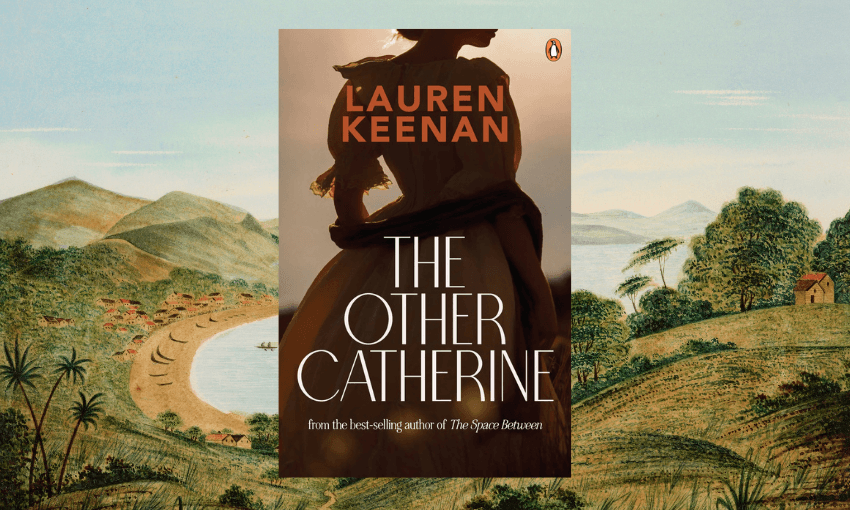


Claire Mabey reviews Lauren Keenan’s latest historical novel that centres on the lives of two women a century apart.
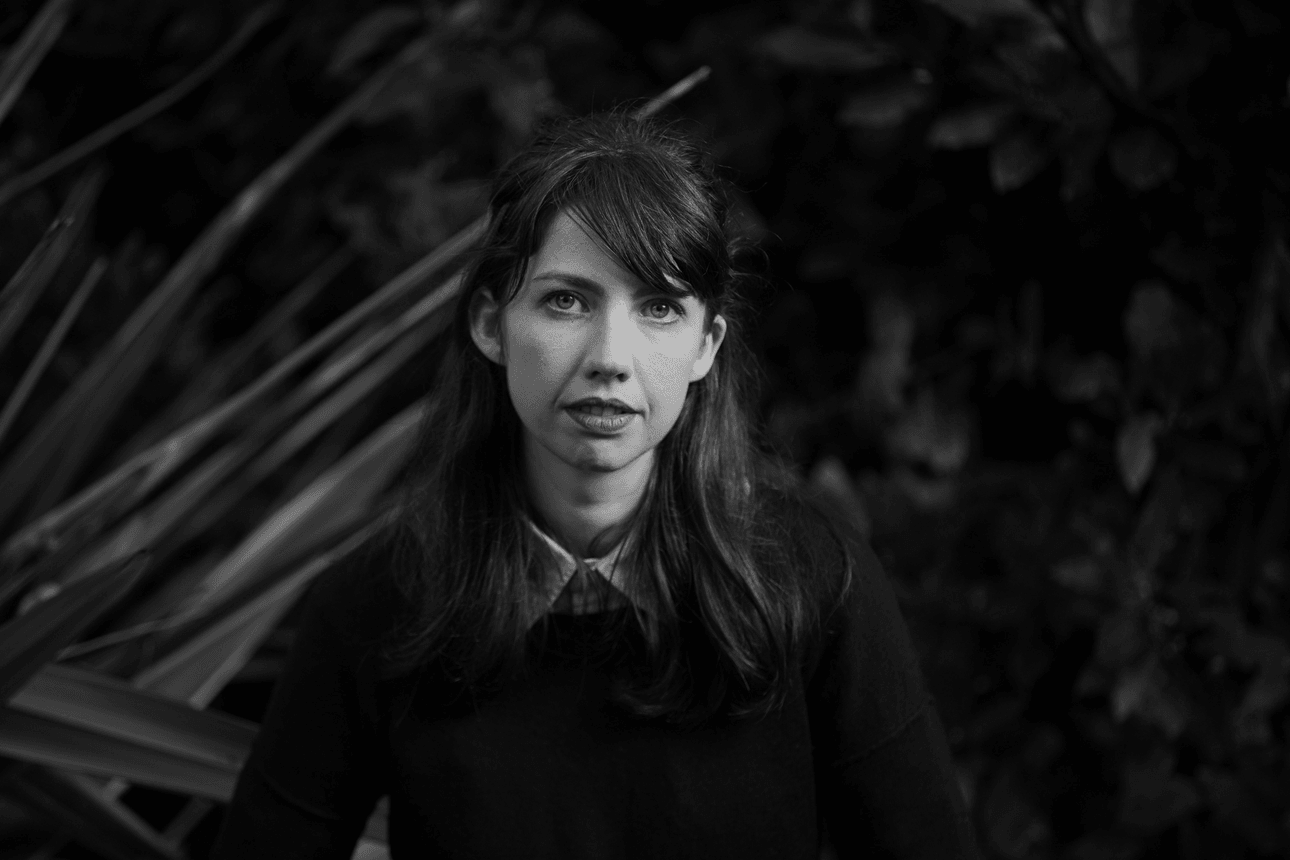
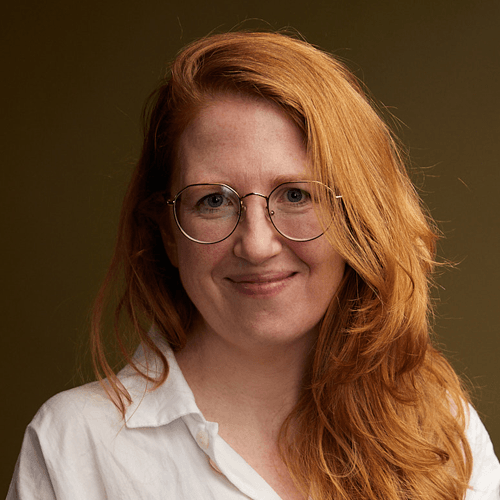
The Other Catherine by Lauren Keenan (Te Āti Awa ki Taranaki) is dedicated to a list of women, their names forming a supportive crowd, and to “all the other women who came before me. I wish I knew more of your stories – and more of your names.” It’s an apt ode to women’s lives but also to the difficulty of unearthing them from the obscuring tendencies of patriarchy and colonisation.
Keenan’s latest historical novel surfaces the lives of two women – one Irish and the other Māori – and is the author’s third book in as many years. In 2025 she published Toitū Te Whenua: Places and People of the New Zealand Wars; in 2024 she published her first historical novel for adults The Space Between. Before that she put out two children’s novels: Amorangi and Millie’s Trip Through Time (2022) and Rimu: The Tree of Time (2024). On every page of every book, Keenan’s passion for whakapapa, and for the stuff of history – the artefacts, the names, the people behind the stories – shines through. This is an author who can make the past sing.
The Other Catherine begins with Keita in Te Awaiti, Marlborough Sounds in 1893. We meet her on the beach as her family gather around a dead whale. We learn that Keita is a kuia, a mother and a widow, her husband, Abraham, a whaler recently killed in the course of his work. We also learn within the first paragraphs that before Abraham, Keita was someone else. She appears haunted by her past, and when a mysterious package turns up from someone in Sydney, we’re swiftly introduced to a chapter in another point of view: Catherine, a convict on a ship sailing away from Cork, Ireland in 1793. From there the novel tips back and forth between the two women one-hundred years apart, the mysteries of their lives unspooling on the page, the threads between them pulling tighter as events unravel.

Keenan is brilliant at evoking atmosphere and undulating pace as the details of the two lives dance around each other through alternating chapters. Keita’s story is told in the first person as her memory cycles back to tell her story of marriage, family, invasion and survival. Catherine’s is told in the present tense from a third person point of view – a clever way to differentiate between the two lives. Keita’s is a slower, more reflective tone that spans locations, coming-of-age and the enormity of change; while Catherine’s thread makes the heart race as she and a clutch of women try to survive cramped, miserable conditions as maritime prisoners en route to a sentence in a faraway land full of “giant rabbits” (kangaroos).
Both lives are marked by upheavals and transformations and both are at the mercy of the colonial project. Keenan’s structuring of the stories mean that the reader gleans the truth even before Keita: and that in the end it’s artefacts, letters and records that reveal who Catherine really was. It’s a satisfying twist in a story built on real-life excavation. At the back of the novel Keenan offers an extensive bibliography of further reading, and a fascinating historical note. “For as long as I can remember,” she writes, “I have been able to recite my Keenan family tree back many generations, all the way to when my Irish whaler ancestor, William Keenan, arrived in New Plymouth in 1828 and married a local Māori woman, Kātarina. As an adult it was uncomfortable to realise that, yes, I knew all these names, but it was mostly only the men I remembered.”
This is so often the case with families: the male line carrying the names and with them, the histories. Keenan’s work in this novel is to locate the women, both based on real people, and honour their bravery and their grit. The result is a lively love letter to ancestors who survived, despite mistreatment and the undermining of identity through colonisation (both ways – Keita by settlers, and Catherine through the course of being sent from her home for the theft of a coat).
Names are important in this novel: vital to both the mystery and the eventual completion of the story – who was Keita, really? And why did Catherine come to mean so much to her? The events cover the Waikato invasion of North Taranaki – several heart-stopping chapters describe an attack (utu for the 1822 battle of Motunui), and how pākehā misunderstanding of battle tikanga may have contributed to more violence than was necessary. On Catherine’s side, the story takes in prisoner rebellion and a heroic instance of identity swapping with huge implications for the survival of Catherine’s story.
Keenan’s writing is fluid, easy to become absorbed by, and she has taken pains to imbue Keita’s story with te reo and Catherine’s with a distinctly Irish linguistic atmosphere informed by research, which she cites in her historical note. Representing voices of the past for readers of the future is a balancing act for the writer of historical fiction: Keenan has proved herself an agile performer; the sense of history is unmistakable even while the characters are alive and clear on the page. The novel is a bridge between us all.
Water, land and sky play subtle but crucial roles, too. Catherine loses the land of Ireland and is a captive of Tangaroa’s domain for the entirety of her portion of the story. There she encounters whales for the first time and lives under the moon and stars both familiar and made strange. Keita, of course, is defined by her relationship to her ancestral lands, and through the practice of whaling (which she finds abhorrent) is auspiciously tied to Tangaroa’s domain, too. Keenan shows how even people from the opposite sides of the world can find connection through the environment, and the exploitation of it, that holds us all.
The Other Catherine is an absorbing and educational read that celebrates matrilineage. I’ve seen the novel spruiked on plenty of Mothers Day reading lists ahead of this weekend – I hope plenty of women out there have had the chance to read it, uninterrupted, and let it prompt thoughts of their own ancestors, the names to be understood and the stories to be discovered.
The Other Catherine by Lauren Keenan ($38, Penguin) is available to purchase from Unity Books.