Witi Ihimaera Smiler: In honour of the octopus

Witi Ihimaera Smiler’s new memoir is out now. (Photo: Supplied).
Made possible by

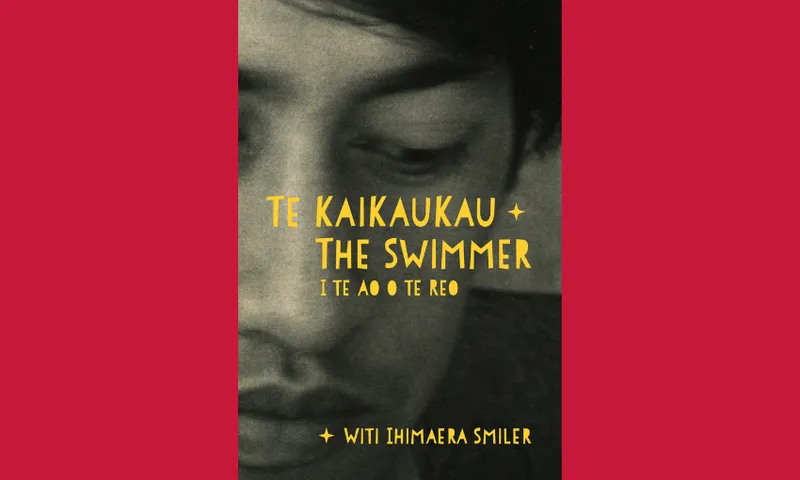
Witi Ihimaera Smiler, author of Te Kaikaukau: The Swimmer I Te Ao O Te Reo, explains why the wheke is so central to his philosophy of language and life.
Kaua e mate wheke, mate ururoa.
Don’t die like an octopus, die like a hammerhead shark.
This popular proverb translates as never give up, fight to the end like the hammerhead shark. I don’t mind the motivational purpose of the proverb but the problem with the comparison is that the octopus is perceived to give up easily.
I haven’t been able to verify the provenance of the whakataukī: who created it, when and where and under what circumstances. But the hono of the octopus with cowardice was wrong then and is still wrong now. Maybe the fault is in the way the wheke swims – headfirst and tentacles trailing – it looks like it is always running away.
But of the two creatures, the octopus is more intelligent. It has a big brain in its head as well as mini-brains at the base of each tentacle, nine brains in all! This intelligence has enabled it to adopt a different strategy to the shark. For instance, the hammerhead shark certainly attacks; the octopus varies its strategy to include an array of defensive moves – it lives to fight another day. The most important difference is, however, in the kaupapa. The shark attacks for food; its desire is to appease its hunger. The octopus defends for a very specific reason: to protect its whānau.
Which is why, in my latest book Te Kaikaukau: The Swimmer I Te Ao O Te Reo, I have mounted a defence of the wheke which appears in pūrākau and mātauranga of Polynesia as a wondrous primeval entity. A shapeshifting marine creature, she (the octopus in mythology was female) is the mother of the universe, ensuring the interdependence of all things across it.
In the 1920s, anthropologist and scientist Te Rangi Hīroa used the wheke to pictorialise the questing intelligence of our early canoe voyagers departing Ra‘iātea (the head of the octopus) as tentacles, each reaching out to populate the Pacific purposefully, not accidentally. How did Te Rangi Hīroa know, way before Pākehā did, that each arm had its own brain? In this representation, the octopus is considered the lone survivor of the world that precedes us. She is the guardian of the original wisdom, infinite knowledge and fertility.
One Māori myth tells of the hero Kupe pursuing a giant wheke from Tahiti – and discovering New Zealand in the process – because the octopus had been destroying his nets. But in a Hawaiki version, the same story is told from the octopus’s point of view. Her name was Tumu-rai-fenua and she and her human partner, the tohunga Muturangi, were the owners of the reef that Kupe fished at. She destroyed his nets because he was taking away the food from her children.
In this earlier version, Tumu-rai-fenua seeks to save her children by luring Kupe to follow her. And forget all those stories that imply Kupe killed her! She lived on to raise more children in Aotearoa’s waters. Hers is an extraordinary story of motherhood.
More recently, Rose Pere used the image of the octopus to to represent Māori health. The head represents the whānau. The eyes of the octopus are the waiora. Each of the eight tentacles represents a specific dimension of health: wairuatanga; hinengaro; taha tinana; whanaungatanga; waiora; mauri; hā a koro ma, a kui ma; and whatumanawa.
Frankly, the octopus is a great symbol of Māori intelligence. The Māori have always fought for the wellbeing of the family and language nests. Our ways of traditional warfare have always used our surroundings to assist us: guerilla tactics including tactical retreat and camouflage, just like the black cloud the octopus uses when it disappears. The octopus plays the long game when it comes to survival. So have Māori.
In my own world, I have fought my battles with the strength of my mind and creativity. My books prosecute the power of the Pākehā, they are my weapons, my pen is mightier than the sword. My brain is mightier than my brawn.
Maybe we should change the whakataukī so that it is more relevant to us today. Or at least create a new one to go with it:
Mate ururoa? Kao. Ora wheke.
Die like the shark? No. Live like the octopus.
Te Kaikaukau | The Swimmer I Te Ao O Te Reo by Witi Ihimaera Smiler ($45, Auckland University Press) is available to purchase from Unity Books.
The Spinoff Books section is proudly brought to you by Unity Books and Creative New Zealand. Visit Unity Books online today.

Witi Ihimaera
Witi Ihimaera Smiler is a giant of Aotearoa writing and culture. Best known now for his Whale Rider novel, he was one of the first Māori writers published, and his 1972 story collection Pounamu, Pounamu has not been out of print in 40 years. Ihimaera has received many prestigious awards and is a Distinguished Companion of the Order of New Zealand. He has declined a knighthood.


