‘Mind-bending, impressionistic, genius’: The Black Monk by Charlotte Grimshaw, reviewed

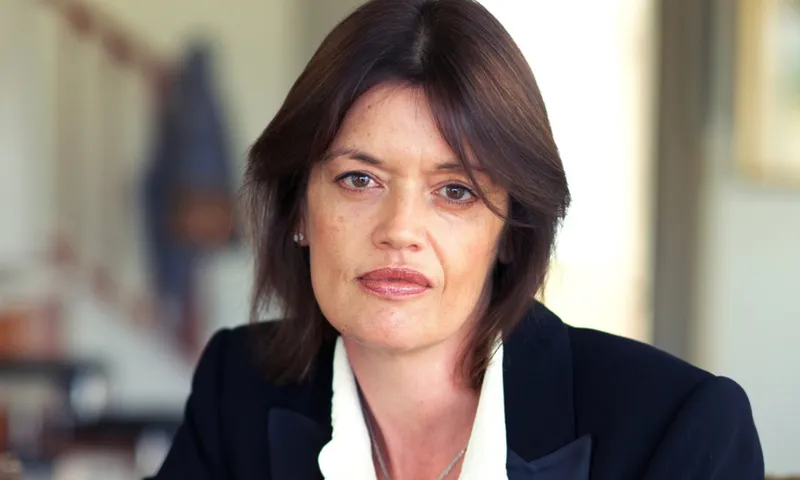
Charlotte Grimshaw by Jane Ussher. (Design: Tina Tiller).
Made possible by

Rachael King reviews Charlotte Grimshaw’s latest novel.
There’s a video currently going around the internet where a guy called Baron Ryan takes on the role of both an interviewer and a writer. Interviewer Baron pesters writer Baron to confess that his novel is all based on his own life, which the author denies in an exasperated manner. Reader, I shared it with the caption: “reviewing Charlotte Grimshaw’s latest book.”
I suppose if you came to The Black Monk knowing nothing about the author, you would have a completely different experience. After all, novels are fiction, and it’s famously rude, and frankly exasperating, to suggest otherwise. And yet.
If you have read Grimshaw’s other work, fiction and non-fiction, the disclaimer at the beginning of The Black Monk – “All characters in this novel are fictitious. Any resemblance to persons, living or dead, is purely coincidence” – immediately seems disingenuous. But below it lies another statement and a clue that the games are about to begin: “All characters in this novel are fictitious. Any resemblance to persons, living or dead, is synchronicity.”
Alice Liddell (the name is surely not accidental with its connection to Lewis Carroll and looking-glasses) is a children’s author, but possibly not a very good one: “Did she write children’s fiction because she avoided facing the world? Could she write a novel for adults…? Not the banal clichés, the stereotypes she’d been getting away with, her mad professors and gutsy girls and brave, sarky boys…” As she watches her older brother Cedric (Ceddy) slowly poison himself with alcohol, she finds herself haunted by a shadow she dubs the Black Monk. First described by Ceddy when he was young, the shadow now inhabits Alice’s world, always lurking in the periphery, making her cast her mind back over her life and find connections everywhere. The monk is made flesh in Anton, a mysterious German shoe salesman she first encounters in Karori cemetery, when she’s young and hungover. The only proof she has that Anton exists and is not a figment of her imagination is the tooth she keeps hidden in the back of a freezer. It’s a memento, a talisman, one of a few that pepper the novel.
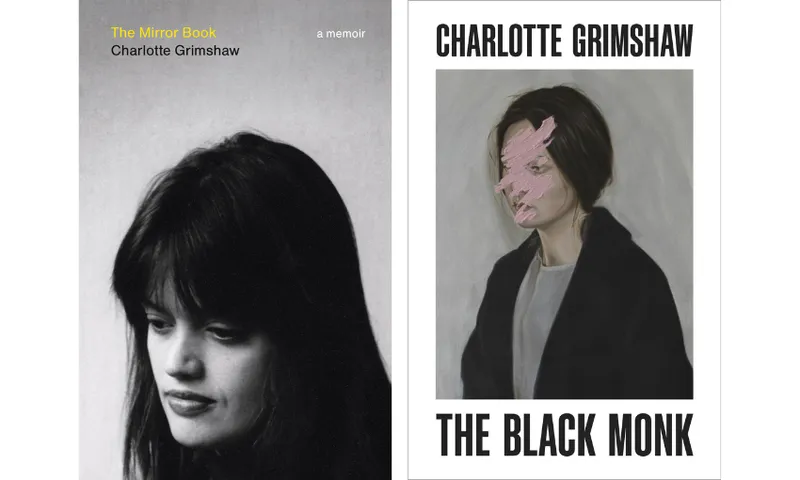
If you are looking for a linear story, The Black Monk is not it. Like Grimshaw’s memoir The Mirror Book, it is fragmentary; it jumps around in time periods, doubling back on itself, reiterating and repeating dialogue, interrogating and revisiting scenes. When the narrator says “Now, Alice sat at her desk,” after a flashback, it’s unclear when “now” is, and anyone waiting for the story to “start” will possibly read until the end.
Thoreau said, “Know your own bone; gnaw at it, bury it, unearth it, and gnaw it still”, and it’s safe to say that Grimshaw has a favourite bone. I haven’t read all her books, but the latest three – two novels and a memoir, plus the short story also named The Black Monk – are all about a woman who is a writer grappling with truth and fiction within her family. All include a cold, gaslighting mother, a mysterious woman that the narrator becomes attracted to (in the case of the memoir, it is the absence of this woman that is noted: the lack of a close female friend), a psychotherapist, a shadowy figure, and an unhappy family (though they will deny it). If I think of Tolstoy’s quote about all happy families being alike, this is turned on its head in Grimshaw’s fictional worlds: all these families are remarkably similar.
In this novel you’ll find elements of The Mirror Book and all her other novels, including an acrobatic paragraph that tours through the author’s whole back catalogue of titles. In a dream, Anton talks to her about “provocation and guilt and foreign cities, about opportunity and singularity … a starlit peninsula … and a woman whose name meant ‘blue butterfly’.” But there are also elements to be found from Grimshaw’s columns, and her past writing on auto-fiction, in which she invoked Karl Ove Knausgård and Catherine Chidgey, and her musings on Trump and Ukraine, which are other ever-present threads through her work.
In The Mirror Book, Grimshaw touched only briefly on her relationship with her brother, Oliver, who died in 2024, two years after the memoir was published. In it, she wrote that his “behaviour seemed to me not only strange but opaque. His past and present life was one of the mysteries I’d tried to explore, but my questions were blocked and disapproved of by my literary family.”
In The Black Monk, Alice decides to tackle an adult novel (though she wonders if she has the confidence). She describes it as “a story about herself and her brother, and that she had the idea of writing a character who was a shadow, one she had never named.” Elsewhere she spells it out: “She’d never written about Ceddy’s addiction, nor described his wild, erratic personality.” For Alice, it’s time to finally write about her brother. “‘I’m writing a confession’, she said and added, ‘But it’s fiction.’”
Recently in The Post, Grimshaw spoke about her brother, who was an alcoholic, but stated, “The characters in my book are completely fictional as are their experiences.”
The Mirror Book again: “Fiction is an arrangement of the facts just as the writer wanted them. It’s the world through the looking glass, strands of our own stories appearing in fiction although they’re denied in real life.”
Alice believes she is collaborating with the universe, with the Fates. Each night she emails what she has written and imagines the emails being intercepted, the data distorted, “so Alice could legitimately say: this is not a true confession, this is fiction.” And yet, she is also “shaping the data received from the ether. She was making art out of all that was unsayable.”
I’m no expert but I’m familiar enough with some key Jungian ideas, especially about storytelling, to see them everywhere. Grimshaw quotes Jung liberally, and Alice begins to suspect that the Black Monk, the shadow that haunts her, is an aspect of her self. The shadow will write the truth she is unable to say out loud. It will create order from the chaos of her family.
Alice thinks she sees connection in everything, “because storyteller”. She believes in “some kind of collective consciousness, because otherwise how did she focus on the very thing that was significant, that was going to be significant. How did she know?” Like Jung – whose archetypes are found in everything from The Wizard of Earthsea to Star Wars – Alice believes that we’re wired to look for connection and meaning in everything, but that she is walking “the border between paranoia and prescience”. Synchronicity is all well and good, but when does it start to get worrisome? Alice’s connections – her paranoia and her prescience – are one of the most interesting aspects of the book. They lend the novel an uncanny, mysterious air, verging on the supernatural (if it were a film, there would be liberal use of a Hitchcockian dolly zoom). The narrative repeats itself, making points over and over, almost word for word, which does start to feel delusional. Are these characters even real? Did that really happen the way Alice recounts it? Surely not everything is connected?
And yet here is the reader, this reader at any rate, scanning the text for connections to the author’s other work, fiction and non-fiction, trying not to be interviewer Baron. It starts to feel like living inside a reality TV show where you’re not sure who is real and who is an actor.
More connections: another thing that links all the books I’ve mentioned is the strange activity of writing fiction. How as novelists our unconscious builds connections between things; how we use the people around us and the events in our own lives, sometimes disguised, sometimes in plain view, sometimes deliberately, sometimes not. Similar mantras come up here as the ones that emerged in The Mirror Book: go and make a story out of it; life gives you material, so use it; telling your story is existentially important. Here, the psychotherapist says, ‘Telling your story is important… But if you are to heal, your narrative has to be true.” This is echoed by Cedric, the brother: “If you can’t tell your story… there is no order, only anarchy, and you are alone.”
So, here we have a novel about a woman writing a novel that will be a confession, but also a eulogy, and it will be about her brother, and her mother, and it will be true, but it will be distorted enough that it will be fiction. The novel will try to make sense of all the connections Alice finds around her, because she is an artist “making meaning and beauty in a chaotic, disorderly world”.
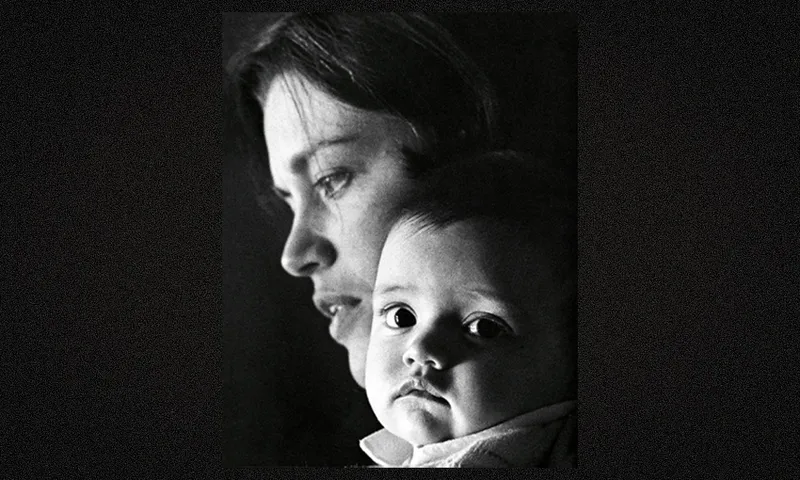
Perhaps The Black Monk is a necessary step to close the loop, now that the author’s mother and brother are no longer alive. There is such a poignancy to Alice’s efforts to connect with them both – to help Cedric out of the mire of his addiction, and to find any kindness from her mother, Rula, who is a facsimile of the mother in Grimshaw’s novel Mazarine, in The Mirror Book, and in the Black Monk short story. She leans away from her daughter in photographs, a familiar image. She finds “endless jokes” in life but denies family problems, offering her daughter no warmth.
Alice’s childhood and adolescence mirror the author’s on multiple points, and with a memoir existing that uses the same material, there is no longer plausible deniability, and perhaps that is the whole point of it. An author denies that her book is anything other than fiction; the reader knows the truth. There is the evidence, right there.
The Black Monk feels like another piece in the Grimshaw “uber book”, which is how David Mitchell’s novels are often described. They fight with the truth, with fiction; they take us on a journey through one of the most original minds in New Zealand literature. And in among the repeated recycling of questions and attempted answers there are arresting descriptions of the streets outside the window, or the weather, which this review hasn’t even touched on. There are side characters who appear and disappear with their own mysterious intentions that may or may not be imaginary or repurposed by Alice’s mind hungry for synchronicity.
You don’t read this book for the plot. You read it for the mind-bending, impressionistic wordiness of it all, for the tour through a character’s splintered psyche, through the “I and the I and the I” of it all. You also don’t read a Charlotte Grimshaw novel passively. You’re constantly on your toes, looking for meaning and connection. You are part of the experiment. You are accepting that this is fiction, you are complicit, and therein lies its genius, and the genius of its author.
The Black Monk by Charlotte Grimshaw ($38, Penguin NZ) is available to purchase from Unity Books.
The Spinoff Books section is proudly brought to you by Unity Books and Creative New Zealand. Visit Unity Books online today.

Rachael King
Rachael King is the author of two novels for adults, The Sound of Butterflies and Magpie Hall, and two for children, Red Rocks and The Grimmelings.


