NZ suspicion of US has surged in Trump 2.0 – it’s now seen as a bigger threat than China

US President Donald Trump and Chinese President Xi Jinping in Beijing in May. (Photo by Evan Vucci-Pool/Getty Images)
The latest Perceptions of Asia survey shows a dramatic change in the way New Zealanders see the global giants.
The United States has leapt up the list of countries that New Zealanders consider a threat, ahead of both Pakistan and China, according to the Asia NZ Foundation’s Perceptions of Asia report, published today.
According to the survey, completed in February of this year, 35% of New Zealanders consider the US a threat (defined as “one you view with caution or suspicion”), more than double the last full poll, undertaken 14 months earlier. Back in 2022, in the middle of the Biden presidency, just 10% identified the US as a threat. In the corresponding period, the estimation of China as a threat has significantly fallen, from 37% to 23%.
The sense of friendship with the US has, in turn, dropped, from 61% in the last survey to 39% in 2026.
“Those warmth perceptions have really fallen off a cliff,” said David Capie, professor of International Relations at Victoria University of Wellington.
While the survey had measured some cooling in perceptions in the first presidential term of Donald Trump, it was emphatically more pronounced in the second term, which had brought within the first months a spray of tariffs, as well as “an attack on Venezuela, threats to seize Greenland, and [talk of] Canada as the 51st state”. It made for “a really different kind of administration when it comes to New Zealand’s interests”, said Capie.
The change in New Zealand sentiment towards the US and Chinese behemoths across recent years is especially stark when looked at in “net” terms. Here the perception is measured as the proportion of New Zealanders who consider the country a friend minus the the number who see it as a threat.
The shift in perception of China, Capie suggested, seemed unlikely to reflect any shift in Beijing’s approach, where its assertiveness on Taiwan and in the South China Sea was only growing. But “it has certainly been more predictable than Washington, and benefits from that contrast”.
The decreasing view of China as a threat also comes despite an increasing readiness on the part of the New Zealand government to call out Beijing for its cyber activities. A joint statement with Five Eyes partners last week raised the alarm on “increased targeting of professional networking sites and online job platforms for intelligence purposes by China’s military intelligence services”.
The Asia NZ survey was completed before the US launched strikes on Iran on the last day of February. The results appear to square, however, with an April global survey by Ipsos, which found that just 27% of New Zealand respondents expected the US would have an overall positive influence on world affairs in the next decade, down by six points from six months earlier. As for China, 46% thought it would have a positive impact, up three points.
New Zealand is not alone in its shifting perception of the US. A survey by the Lowy Institute last year found that Australian attitudes towards the US had similarly hardened after Trump’s return to the White House, with the number who said they did not “trust the United States to act responsibly in the world” jumping from 44% to 64% in a year.
Japan: big in New Zealand
The first version of the Perceptions of Asia survey was undertaken in 1997 by what was then a future-looking “Asia 2000”, a foundation established at a time when Jim Bolger was attracting controversy for suggesting that New Zealand was part of Asia. Japan continues to be regarded as New Zealand’s closest friend in Asia, a status it has enjoyed unbroken since the threat and friend questions were introduced in 2017.
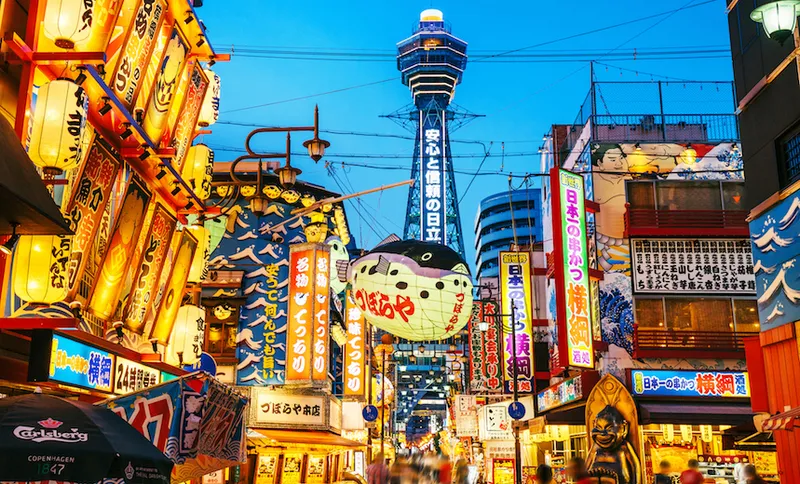
In the latest survey, 81% regard Japan as a friend; 1% see it as a threat. For Singapore, 77% say friend and 1% threat. For the Philippines it’s 61% and 2%, South Korea 61% and 7%, India 54% and 9%, Indonesia 47% and 5%. On North Korea, 69% say threat (down four points from the last survey) and 7% friend (up two).
Another part of the survey measures levels of trust in major and middle powers. Here, Japan is New Zealand’s most trusted power in Asia, with 70% professing high trust, up nine points from the last survey. Singapore registers 65%, India 23% (up three points) and China 19% (up five points).
The US is a smidgen ahead of China on this count, with 20% saying they have high trust, but that is down 13 points. And when it comes to distrust, the US figures higher: 54% of respondents say they have low or very low trust in the US. For China – where “neutral” ranks higher – 39% say they have low or very low trust.
Views of immigration
On immigration, the survey shows a small shift since the last full round of research, with 18% regarding migration from Asia as having a negative impact on New Zealand, up one point, and 52% saying it will have a positive impact, down by four points.
Considered across the last five years, however, the latest numbers are almost bang on average. However, “When you look back to when the survey began, it is trending in a positive direction,” said Massey University emeritus professor and sociologist Paul Spoonley.
“We are in an election year,” he added. “So you would expect there may be an increase in concern around immigration, on account of the attention being paid to arrivals from Asia”.
The most recent NZ Ipsos Monitor, published a fortnight ago, suggested that in contrast with some of the rhetoric of recent times, concern about immigration as a top issue has plateaued or fallen, and remains well below the levels of concern in Australia and the UK.
When it comes to the Asian countries considered most important to New Zealand’s future, China comes out on top. Our largest trade partner is considered important or very important by 81%. For Japan, it’s 71%, India 61%, Singapore 57% and South Korea 50%, though those last two might have been higher had the survey been in the field after bulletins began filling with stories about their importance to New Zealand as sources of refined oil.
Japan is the country in Asia where most New Zealanders (47%) fancy spending their OE. It is the biggest source of entertainment from Asia that New Zealanders consume, closely followed by South Korea. And all of that soft power appears to have knock-on benefits. A Kantar poll released yesterday once again named Toyota as New Zealand’s most reputable brand.

Toby Manhire
Toby Manhire is editor-at-large at The Spinoff. He loves to cast a pod, whether it's Gone By Lunchtime, At Large or Juggernaut. He is a former editor of The Spinoff and has worked as a journalist in NZ and the UK since the last millennium.


