Barbara Dreaver on the time she uncovered drug trafficking in Tonga

Barbara Dreaver on location. (Photo: Megan van Staden)
Made possible by


The new memoir from 1News’ Pacific correspondent reads like a thriller – it covers her early years growing up on Kiribati, the tragic death of her brother in 2013, being locked up in Fiji, detained in Nauru and endangered in the Solomons. In this excerpt, she covers exposing meth trafficking in Tonga.
The Pacific is changing rapidly, pummelled by the outside world. When you are immersed in an area as intensely and for as long as I have been, you see the patterns. They start as a flutter of unease, small red flags. These expand to complicated webs. If ignored, they fester and grow. One example is the transnational crime that has facilitated methamphetamine epidemics in many Pacific countries.
My first series investigating illegal drug trafficking in the Pacific was in 2012. I was given some documents that allegedly linked powerful people in Tonga to a Colombian drug cartel. I was astounded by what I read. Malakai Fakatoufifita, a Tongan noble and member of parliament known as Lord Tu‘ilakepa, had allegedly written a sponsorship letter on parliamentary letterhead to secure a visitor’s visa for drug lord Obeil Antonio Zuluaga Gomez. The letter, which had ended up in the hands of the Australian and Tongan police, also promised to house and finance Gomez: “I can vouch that the aforementioned is an honest trustworthy and law-abiding person.” It didn’t take a brain surgeon to know Gomez was none of these things.
I flew to Tonga with camera operator Leigh Fraser and got permission for Leigh to take shots of the sitting members, including Lord Tu‘ilakepa, inside parliament house in Nuku‘alofa. We then waited patiently for MPs to emerge from the building.
Suddenly, I spotted Lord Tu‘ilakepa striding across the parliamentary courtyard towards a sitting area for a morning cuppa. I scooted up to him, holding out my microphone. “Do you know the Colombian drug lord Gomez?” I said. His eyes bulged. “No, no, no. Can you talk to my lawyer please.” I fired off a few more questions. “No, no, no,” he repeated, adding, “Don’t talk to me like that.”
I had earlier gone to Canberra to talk to Commander David Sharpe of the Australian Federal Police. Sharpe and his team had been working closely with Tongan police, led by commissioner Grant O’Fee, on the drug question, part of a wider investigation they were conducting across the Pacific. “Tonga was targeted by the organised crime syndicate, there’s no doubt about that,” Sharpe told me.
The Colombian drug ring had arranged to bring 690 kilos of cocaine into Tonga on yachts from South America, using the country as a staging post before sending the cocaine onwards, to the lucrative Australian market. This was how Lord Tu‘ilakepa had come to the attention of Australian police. Charged with possession of guns and ammunition and exporting drugs, in the end he was fined only for unlawful possession of firearms. The drug charges were dropped because phone taps by the Australian police were deemed inadmissible under Tongan law.
The cocaine was never found. Lord Tu‘ilakepa continued to sit in the Tongan parliament.
It wasn’t only Lord Tu‘ilakepa I had questions for. I was also after the Tongan prime minister, Siale ‘Ataongo Kaho, also known as Lord Tu‘ivakanō.
A luxury yacht named Phocea had been detained in Vanuatu in August 2012, allegedly implicated in gun smuggling, money laundering and drugs trading. Thirteen members of the crew, which included Serbians and Czechs, had pleaded guilty to breaching Vanuatu’s customs and immigration laws and been fined. The Vanuatu police had then been told to discontinue their wider investigation into criminal activities and others who may have been involved.
Before heading to Vanuatu, the Phocea had been in Tonga. I had obtained footage from a confidential source that showed most of the Tongan cabinet, including the prime minister, going on board to meet with the man who claimed to own the yacht, Pascal Anh Quan Saken. Saken, a flamboyant Thai national, mysteriously held a Vanuatu diplomatic passport.
I was dying to ask Lord Tu‘ivakanō why he and his cabinet had boarded the Phocea. As with Lord Tu‘ilakepa, I caught him as he exited parliament building and walked across the courtyard to have a cup of tea. “We asked if we could use it for having our meeting, to discuss our stance on the vote of no confidence,” he told me. Tonga’s opposition had filed a motion of no confidence against the government two months earlier.
“I think they [the yacht and crew] were being guarded by the Ports Authority and there was nothing harmful about it,” he added. It was, however, a highly unusual move.
Saken had fled Vanuatu just before his boat was raided. He later accused the Vanuatu police of piracy and was angry they had walked on the yacht’s Persian rugs in shoes. No drugs or weapons had been found on the boat but the registration and crew documents were fake. The prime minister’s office said it was cancelling Saken’s diplomatic passport.
After being detained for eight months, the Phocaea was allowed to leave Vanuatu in March 2013. Nine years later it caught fire and sank off the Malaysian coast. Who really owned the boat and what it was up to in Pacific waters is another Pacific mystery mired in murkiness.
Passport sales have been a tempting way for some strapped Pacific countries to make quick bucks and they never end well. International concerns continued to be raised about Vanuatu’s passport sales being attractive to organised criminals: holders got visa-free access to EU countries and various other places. In 2024 the EU permanently revoked the visa-free access, calling the scheme “a serious security threat”.
In the 1980s and ’90s, Tonga sold thousands of passports, including to Philippines dictator Ferdinand Marcos and his wife Imelda. In 2003 Nauru sold passports to members of al-Qaeda and other terrorist groups.
In 2014 I flew to Tonga after being leaked a confidential document showing dozens of diplomatic and ordinary passports had been issued to Chinese citizens not entitled to them. One couple had received 22 passport in their names, six issued in 2012 alone. Other documents I obtained showed the prime minister was involved. In a leaked email, the government’s foreign affairs secretary and a senior staff member had discussed their concerns about his directive to issue a diplomatic passport “or else”.
After I broke the story, it caused an uproar. Lord Tu‘ivakanō lost the leadership in the election that November. In March 2020 he was found guilty by a jury for his role in the passport selling scheme and the following month given a suspended two-year jail sentence.
In 2017 ‘Akilisi Pōhiva, who had been elected prime minister in 2014 on a pro-democracy ticket, claimed some people who had bought Tonga passports were involved in methamphetamine trafficking. A year later I did my first series on meth in the kingdom.
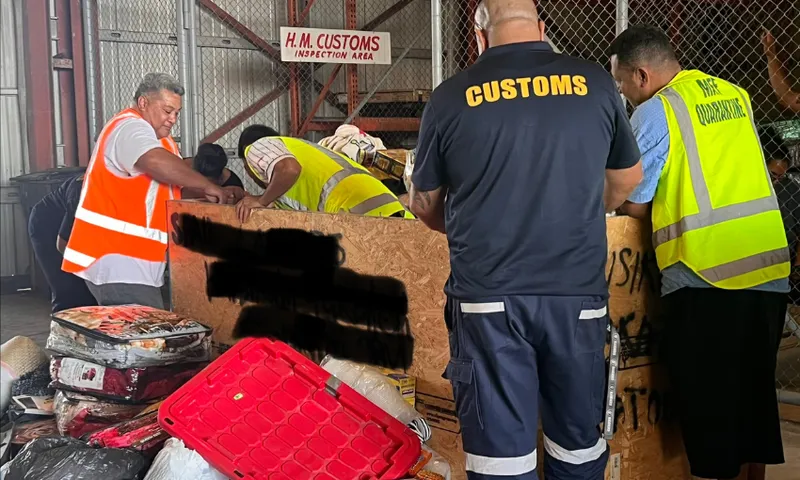
While in the country on an unrelated story, I had breakfast with a friend I hadn’t seen in a while. Almost as soon as we sat down my friend became extremely emotional. The methamphetamine problem in the country was very bad, he said. The stories he told me were horrendous: children being used as drug runners; schools having to lock their gates to protect their pupils; meth deals being done with money; drugs concealed in bibles. Criminals were making meth, albeit badly. People in high places were involved. Meth, my friend said, was everywhere. He had even been asked to counsel young kids who were addicted.
Over the next few months I collected information and corroborated it with the police, mental health workers, families, schools, local journalists and other sources. Through contacts I was able to persuade a major drug dealer to tell me how the system worked. This man was second-in-command of a syndicate; he had become addicted and for the sake of his family wanted out. Our meeting took a lot of careful planning. There were safety issues for him, for me and for everyone else involved. We had to conceal both his identity and the trail leading to him.
He told me a lot – the syndicates that were operating, where the meth was coming from, how it was getting into Tonga and how it was being distributed.
At TVNZ we went to air with a series of stories called “Kingdom of Ice”. When the series was broadcast, most of the Tongans living in Tonga knew the stories were true, but many who lived in New Zealand, not having heard there was a big drug problem, saw “Kingdom of Ice” as a slight on their homeland. Some also saw it as an insult to the monarchy. And so it started, a stream of abuse like a wave gathering momentum.
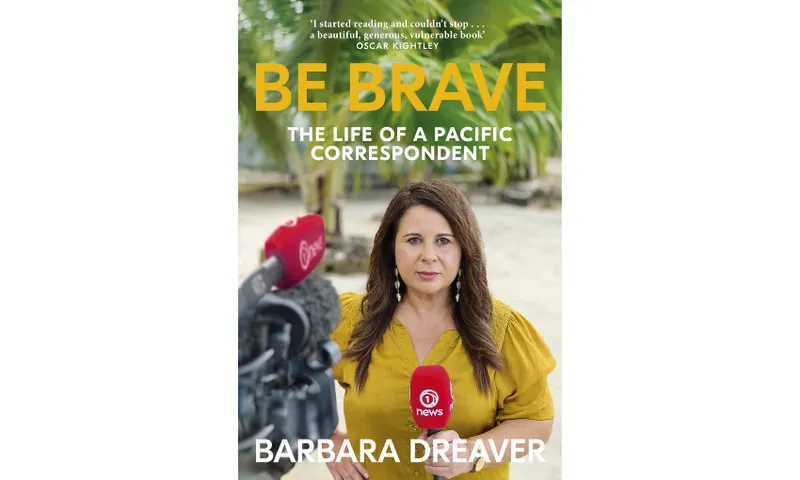
Be Brave: The Life of a Pacific Correspondent by Barbara Dreaver ($45, Awa Press) is available to purchase at Unity Books.
The Spinoff Books section is proudly brought to you by Unity Books and Creative New Zealand. Visit Unity Books online today.

Barbara Dreaver
Barbara Dreaver ONZM is a Kiribati-born New Zealand broadcast journalist and author of Be Brave: The Life of a Pacific Correspondent.


