We are all ancestors-in-training

We are just a link in the chain, argues Kingi Snelgar. (Design: The Spinoff)
The choices we make today determine how our descendants will view us, and the realities that will shape their worlds, writes lawyer Kingi Snelgar.
I often wonder about the world my tamariki are growing up in. I ponder how frequently big storms will hit our community as they get older, how the government will view te tiriti in their later years, and what the post-treaty settlement era will look like for iwi.
Society often leans on division instead of shared understanding; conflict rather than unity, and who seems right or wrong in the moment. My children will inherit the decisions we make in times like these.
The taiao is holding up a mirror before us: the cycles of our environment are becoming more extreme, much like our society.
Generational harm
I have spent more than a decade representing clients in the criminal justice system, including rangatahi in the Youth Court. The pain that walks into those rooms is rarely that of just the person standing in the dock: it is the shared pain of generations who stand behind them, and those to come. It is trauma passed down: a grandmother taken into state care because social welfare deemed the house she lived in was overcrowded; a mother whose addiction was the only way she knew how to cope with sexual abuse; a young person whose options were so narrowed by the time they reached me, the only question was when they would be involved in social harm.
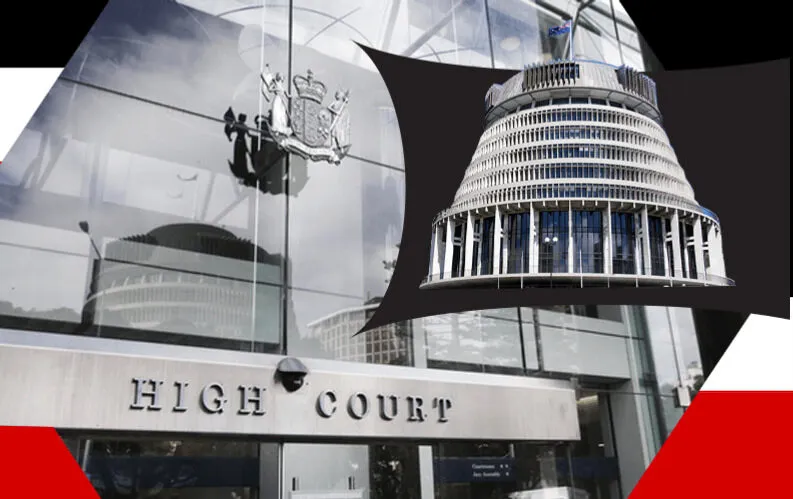
A 15-year-old boy once told me he wasn’t scared of being locked up. It was a badge he would wear proudly. Prison was where his brother was and his father had been. Despite his dad attempting to counsel him against criminal behaviour, the young man was already going down that path. Unless we have grown up in a similar environment – where violence and addiction are a daily occurrence – how can we judge someone like him?
That is what intergenerational harm looks like: generations of decisions that impact whānau and whakapapa.
The seven generations
We often collapse decision-making into news cycles, electoral cycles, share prices and comment threads. Maintaining kaupapa is difficult within these frames. Short-term focus rewards personality and sound bites but the deeper question is what are we leaving for the mokopuna we will never meet?
The Haudenosaunee – the Iroquois Confederacy of six indigenous nations in the east of Turtle Island – are credited with the seven-generations principle: every significant decision should be weighed against its effect seven generations into the future. Te ao Māori possesses the same idea, but in a different language.
For me, it is reflected through whakapapa. This is not lineage in the western sense of a family tree pinned to a wall, but a living chain of relationships placing you within something more expansive than yourself. Seven generations behind you and seven generations ahead. You are not the centre, you are a link. The decisions you make are answerable in both directions.
Te Tiriti o Waitangi was a seven-generation agreement – entered into by tūpuna for the benefit of mokopuna they would never meet and signed by rangatira on behalf of mokopuna whose names were not yet known.
This is partly why legislation being put before the House of Representatives feels confusing. The rollback of treaty principles clauses and regulatory recasting of public obligations are just two recent examples. These decisions are being made by politicians whose guiding timeline of three-year election cycles is much shorter than the seven-generation perspective.
Wealth that cannot carry whakapapa is not wealth
The test of whether something is genuinely abundant – for iwi, government, or anyone holding power – is whether it leaves the mauri of what it touches intact or enhanced. Assessing whether growth was genuinely beneficial for our future mokopuna is a foreign concept in western economic traditions.
A mining project can simultaneously produce economic growth, jobs and a depleted mauri. The first two things will appear on a graph, but mauri will not. When indigenous people insist mauri belongs in a conversation about economic decisions, we are not asking for a spiritual concession – we are pointing at something traditional accounting cannot see or feel.
This is why the climate issue and the seven-generations issue are one and the same. The awa that no longer runs in summer, the moana that is warming faster than science predicted, the persistent extreme weather events – these are mauri being depleted in real time. That is a worldview failure, as much as a policy failure.
We have built a society that relies on immediate gratification, fear and individualism. The political, media and algorithmic incentives run that way. Then we are surprised that long-view leadership feels almost impossible to mount.
Social media comments on a news article concerning Māori are a prime example of where these values surface. What strikes me when I read the comment threads is not the cruelty, but the fear underneath it. Commenters are thinking about scarcity and whether they are safe. Whether something that feels like theirs is being taken. Their comments are not about Māori, but more about the fragility of their existence. This is a structural condition more than a moral failing of the individual.
The way out is a longer view. There is discipline in asking not what this does for me, my reputation or my bank balance, but for the mokopuna I will never meet. Will they look back and see an ancestor, or a person who viewed their life as being about individual needs rather than collective wellbeing?
A governance board that asks this question makes different decisions. A government that asks this question cannot pass the legislation ours currently is. A person who asks this cannot post the comment they were about to post.
Parihaka asked the question and answered it with peace, and with a patience that outlived the Crown’s surveyors. The Kīngitanga has been calling for kotahitanga for 170 years. Late Māori lawyer and academic Moana Jackson asked it in every room he ever stood in. The tradition of mokopuna-centred decisions and leadership has always been alive in this country. It has only been quieter than the news cycle – and in our worst moments, we have mistaken volume for relevance.
Whether we like it or not, we are all ancestors-in-training. The only question is what we leave our mokopuna, and whether it carries mauri, or only the appearance of it.
Toitū te whenua, whatungarongaro te tangata. The land remains, the people pass on. This whakataukī tells us what to weigh a decision against – what serves the mokopuna of mokopuna, not what serves me, my term, brand, next social media post or bank balance.
If you sit in a leadership position, ask the seventh-generation question at your next meeting, and notice who looks uncomfortable. If you write legislation, draft it as though your mokopuna will read it back to you in 50 years. If you are about to post the comment, ask how your mokopuna would feel reading it.
When we die, we take nothing with us but the legacy of our choices. None of us owns the whenua; we are only holding it as caretakers for the mokopuna yet to be born. That awareness, repeated across enough of us, is how a country remembers.

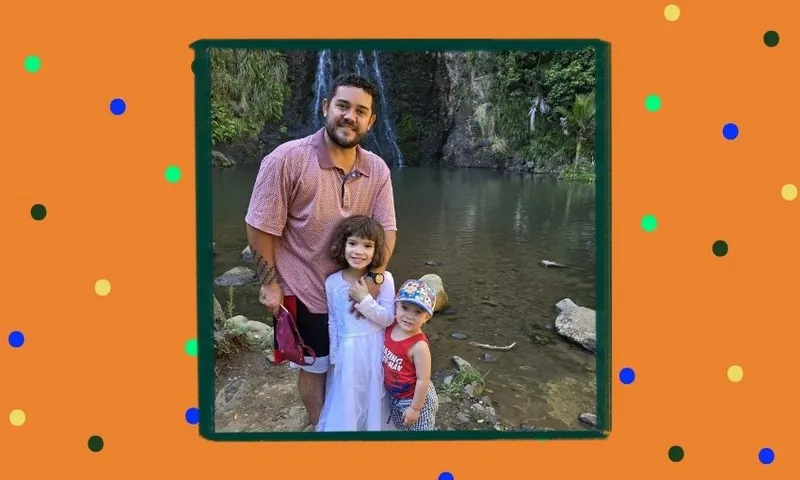
Kingi Snelgar
Kingi Snelgar (Ngāpuhi, Ngāti Whakaue, Te Whakatōhea, Ngāi Tahu) is a lawyer based in Auckland. He has also completed a Masters of Law at Harvard Law School as a Fulbright Scholar.


