The critical minerals debate is mired in confusion, duplicity and agendas

Resources minister Shane Jones (Image: The Spinoff)
Elements we can extract from our rocks promising riches and security may sound appealing, but the reality is far more complex.
There has been growing noise around “critical minerals” in Aotearoa for the last few years, starting in 2024 with GNS being commissioned to produce a minerals prospectivity report, and MBIE using that, among other sources, to inform its critical minerals policy. Now we’re trying to figure out how to cosy up to the current US president so he can have exclusive access to these critical minerals of ours and not slap us with more tariffs and insults, as Fox Meyer for Newsroom and Dileepa Fonseka for BusinessDesk have noted.
But from the start it has been a messy and opaque process. On the one hand “critical minerals” sound like they hold the promise of riches and security from elements we can extract from our rocks. On the other, though, the debate is mired in confusion, duplicity and agendas – not all our own – that come back in large part to a poorly defined set of minerals and a weak understanding of how these “critical minerals” work on the global stage.
Let’s start, then, with the obvious – just what the hell are these “critical minerals”? Right from the start, the story is not simple. Originally (back during the first world war), the term “critical minerals” meant those that were regarded as holding strategic significance for a country’s manufacturing sector and national defence. More recently, as renewable energy sources (solar, batteries, turbines) took off, the term became attached to minerals needed for – critical to – the “green energy transition”. In the last few years the two meanings have become messily entangled. As we’ll get to in a minute, we’ve added another slightly bizarre twist to the definition of critical.
And upfront, we do need to look carefully at the drivers of this interest in “critical minerals”. A recent paper has estimates – based on the scant data currently available – that at least 33% of chromium usage is for military purposes, which also absorb 11% of global copper supply, 18% of antimony, and not insignificant amounts of titanium and tungsten. Given the scale and rapid growth in global military spending, demand for military use outstrips that of “green transition” technologies for many of the identified critical minerals.
In addition, what is “critical” (or strategic) for one country at one point in time may not be critical to another. Hence each “critical minerals” list produced recently by countries (and the EU) has been slightly different – Australia has 31, the US 60, New Zealand 37. And just because they are seen as “critical” for manufacturing or security, this doesn’t mean we have them, or can mine them ourselves.
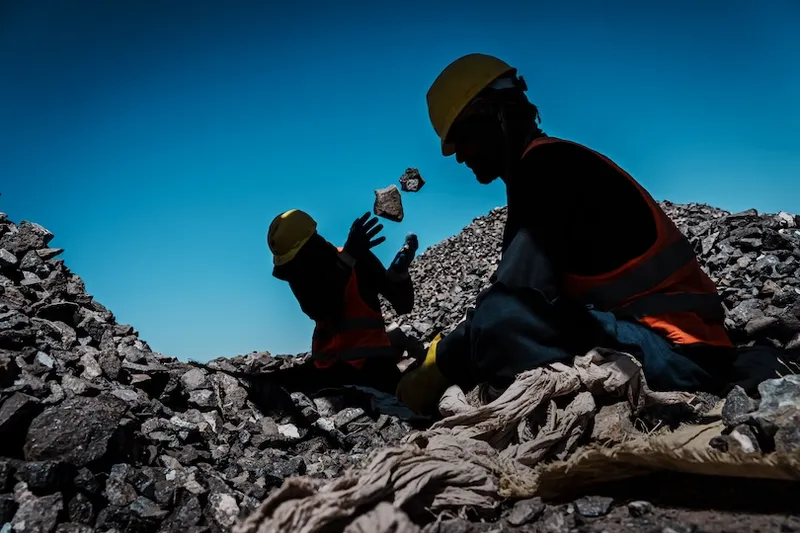
The combination of continued industrialisation (think China, India), global population growth – in the last 25 years we’ve added just over two billion additional humans to the planet – and new industrial and defence uses all add up. In the mining industry much of the talk is about a desperate need for large new copper deposits, and over the same period, global copper production has increased by more than 80%. Some are so critical to energy storage that the numbers are truly dazzling – global lithium production has increased by almost 1500% over the past 25 years and is now in global oversupply (and therefore is no longer considered a “critical” mineral).
That’s the global context, then. So where does that leave us?
Well, for a start, working off a different list to much of the world. Three of the critical minerals listed on New Zealand’s list are unusual in the global context: aggregates and sand, gold and metallurgical coal are not on the lists for the US, UK or Australia (the EU does include coal). The first of these, aggregates and sand, actually makes a lot of sense. We need these for construction and roading. Securing access to land for these is important nationally, and is increasingly contested in planning processes – the nimby syndrome often at work. BTW, the correct answer to the pub quiz question of “what is the largest and most valuable part of New Zealand’s mining industry” is these aggregates and the hundreds of quarries, large and small, around the country.
The second and third oddities on our critical minerals list are gold and coal. They are unusual as they don’t meet the original criteria: to be a New Zealand critical mineral originally you had to be “economically important and vulnerable to supply risk”. Despite industry advocacy, gold and coal were excluded, as they didn’t meet supply risk criteria, and even resources minister Shane Jones’ paper to his cabinet colleagues admitted as much. However, when the final recommended list went to cabinet, the criteria were broadened to include minerals such as coal and gold, which were “vital to New Zealand’s mining sector”. And in came the coal and gold interests. In other words, they are “critical” mostly to the industry and its future, not to our national interest or global supply chains.
Right, now we have a list. It is divided into 10 minerals we currently mine (that includes coal and gold), 11 we could potentially produce with a lot more exploration and investment, and 16 that we rely on other countries for.
So what can we offer the US president? Well, again leaving aside the “only-critical-to-the-sector” coal and gold, and going by the government’s own assessment from GNS, the answer at this time is “not a lot”. We currently do not appear to have critical minerals in abundance, especially, as Meyer for Newsroom points out, because the FTA panel has just declined – in draft, anyway – a permit for the most-advanced significant new source of titanium and vanadium, the controversial TTR seabed mining project of Taranaki.
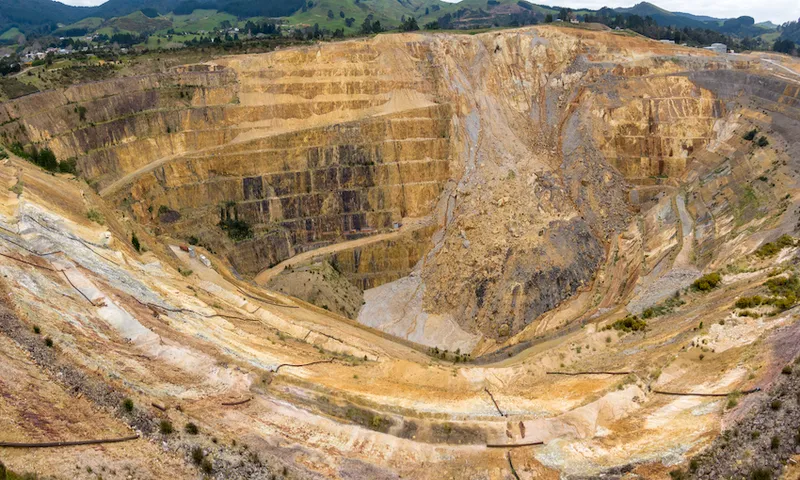
Meanwhile the GNS interactive critical minerals map appears to highlight terrifyingly broad swathes of critical minerals across the motu. But a closer examination reveals almost universally these are small outcrops or exposures that have been identified but never really pursued or assessed for their economics. A few are legacy areas, where mining has occurred in the past and could, with new technology, potentially be reopened. And outside of this map, some of the metals are found in waste products from other processes – vanadium in iron-ore slag, for example. There is also the question of lead times: GNS itself indicates a typical 15-year timespan between identification of a mineral outcrops, exploration, testing and proving up, feasibility, permitting and construction through to the start of production.
At the more peculiar end of the debate are calls for us to mine these kinds of minerals so we are able to be more economically self-sufficient. The reality, however, is that most of what we produce is or will be exported in its raw state, incorporated through complex processing and manufacturing process into global supply chains (mostly in China currently), and then the “critical minerals” we actually need/use are all embedded in the technologies and manufactured goods we import from, again, mostly China. We don’t, and can’t, mine, process and consume these minerals all in New Zealand.
Amid all of the debate, it is perhaps worth casting a glimpse over the ditch to the recently signed US-Australia critical minerals deal. Included in it are some good hints of what might be coming our way – direct government investment in minerals projects (the ministerial announcement late last week is a good example of exactly this), price guarantees and national security provisions around potential asset sales (which is diplomat code for not selling things to Chinese companies).
Perhaps most worryingly, the Australian agreement also notes that both governments “are taking measures to accelerate, streamline, or deregulate permitting timelines and processes”. A commitment to do similar here could have significant consequences if it means the fast-track process get faster or simply progress directly to a minister’s desk, as Minister Jones has suggested it should.
It is no wonder the debate in New Zealand we’ve had so far has been muddled, mired by speculation and political and sometimes moral double-speak.
Given the entanglement of the current debate in the American president’s global hunt for minerals to support the US manufacturing and defence sectors, and Jones’ desire for a firmer hand on the fast-track tiller, perhaps where critical minerals actually become critical for Aotearoa is as a geopolitical piece of virtue signalling wrapped around the thin end of the “Shaneocracy” wedge that might face us after the next election.
*This piece has been amended from an earlier version to clarify the role of GNS.

Glenn Banks
Currently a professor of geography at Massey University, Glenn Banks has worked as a researcher on and consultant to the mining industry in the Pacific for more than 30 years. This includes work at some of the world’s largest copper and gold mines in PNG and Indonesia, visits to nickel mines in New Caledonia, 18 months leading the development of a PNG national human development report for UNDP that focused on turning their mineral resource into more sustainable forms of human development, advice to governments in Fiji and the Solomon Islands, and a stint on a short-lived advisory group to OceanaGold, New Zealand’s largest gold producer.


