NZ First ditches members’ bill attempt to get definitions of men and women into law

It’s the second time the party has scrapped one of its flagship members’ bills to make way for a new one.
New Zealand First said it would be a “win for common sense” to legally define men and women, but the party has now removed its Legislation (Definitions of Woman and Man) Amendment Bill from the members’ bill ballot.
Instead, NZ First MP David Wilson has submitted an anti-scamming bill, which seeks to mandate banks to “do more to protect New Zealanders from financially devastatingbanking scams”.
Members of parliament, who do not hold ministerial positions, are allowed to lodge one bill at a time under their name in the members’ ballot, in the hopes it will be drawn.
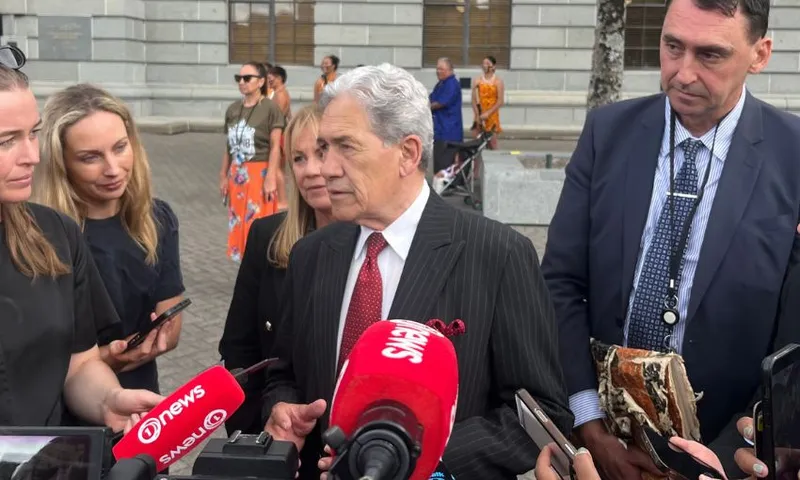
It’s the second time the bill has been removed in three months, after it was first ditched for a bill banning the public sale of fireworks.
The definitions of a woman and man bill was first lodged in April 2025, under the name of MP Jenny Marcroft, who had dropped her Fluoridation (Referendum) Legislation Bill to make way for it. She later withdrew the bill to submit another, and Wilson went on to re-introduce it.
The Spinoff writer Joel McManus has previously detailed NZ First’s members’ bill-go-round, saying it was “almost as if it were just performative virtue signalling and not a genuine attempt at legislative reform”.
Last year, NZ First leader Winston Peters said the bill was intended to “fight back against the cancerous social engineering we’ve seen being pushed in society by a woke minority”. He said there was a need for the legislation which showed how “far the deluded left has taken us as a society”. The move came after the UK’s Supreme Court ruled that only biological women meet the definition of “woman” under equality laws.
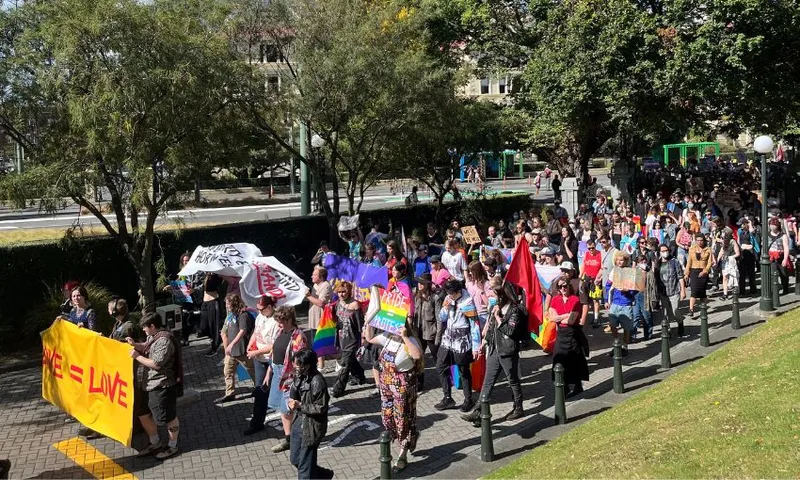
Peters has frequently criticised his political opponents, namely Labour leader Chris Hipkins, for stumbling when asked the provocative question of what a woman is. “He’s a sausage eater who doesn’t know what a woman is,” Peters said of Hipkins in May 2025.
Defining women and men as “adult human biological females/male” is a popular refrain amongst trans-exclusionary advocates and groups. It has been used by the likes of activist Kellie-Jay Keen-Minshull – also known as Posie Parker – and a lesbian-led advocacy group LAVA, which appeared in front of the Human Rights Review Tribunal last year to argue that their trans-exclusionary views should be protected as political opinion.

Lyric Waiwiri-Smith
Lyric is an award-nominated politics reporter at The Spinoff. She covers parliament from the press gallery, pens the weekly column One MP, One Pint and is endlessly curious about what makes our decision-makers tick. Off the clock, Lyric loves a live gig, a cold brew, and being a Wellingtonian (on a good day).


