The brilliant performative politics of NZ First’s fake members’ bills

NZ First is absolutely taking the piss with members bills.
NZ First MPs keep proposing laws they have no intention of passing, and the media falls for it every time.
On Tuesday, NZ First put out a press release with the subject line: “Winston Peters – NZ First Introduces Bill to Ban Public Sales of Fireworks”. It featured a beaming picture of Peters in front of a New Zealand flag, and extensively quoted Peters explaining why people shouldn’t be able to buy gunpowder blasters any more.
It was a well-timed announcement the day before Guy Fawkes Night. Every news site ran a story about it. It got a seven-minute slot on Breakfast and spurred a healthy dialogue on talkback radio.
The proposal was for a members’ bill. Every second Wednesday, members’ bills are randomly picked from a biscuit tin that someone bought at Deka in the 90s, and the selected bills are debated in the house. Sometimes these bills become law; this is how gay marriage was legalised in 2013.
But there’s a problem: under the standing orders of parliament, any MP may propose a members’ bill, unless they are a minister. The only MP mentioned in the press release is Winston Peters, but he legally can’t submit a bill because he is currently the minister for trains, racehorses and visiting other countries.
I emailed NZ First party president Julian Paul to ask what was going on, and he said the bill would be submitted by Jenny Marcroft.
Each backbench MP can only submit one members’ bill at a time, and Jenny Marcroft already has a bill in the biscuit tin of democracy: the Legislation (Definitions of Woman and Man) Amendment Bill, which sought to define the words “man” and “woman” in law on biological terms.
“Does that mean that bill will be withdrawn from the ballot?” I asked Paul.
“We have a range of members’ bills. However, only four of our MPs can have a bill in the ballot at any one time,” he replied. (NZ First only has four MPs outside of cabinet.)
“So does that mean the Legislation (Definitions of Woman and Man) Amendment Bill will be removed from the ballot?”
“Correct.”
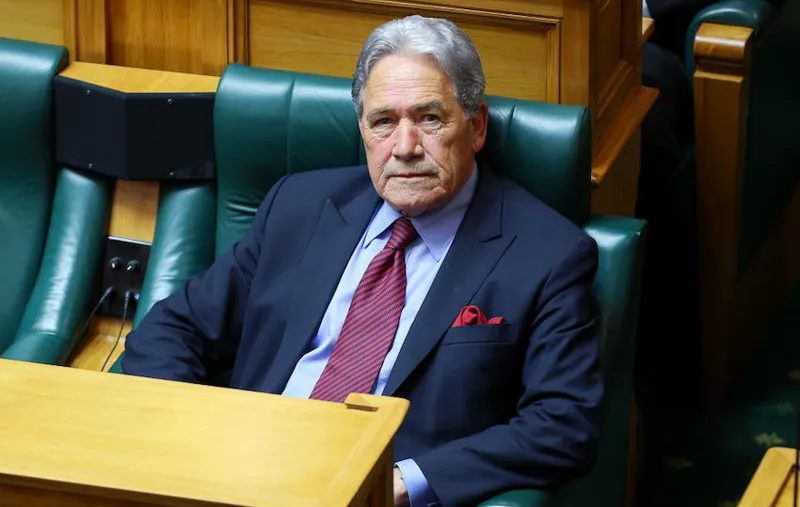
The definitions of woman and man bill was submitted in May and generated plenty of headlines, praise and criticism – including from The Spinoff. But NZ First was willing to drop it for some complaints about fireworks. It’s almost as if it were just performative virtue signalling and not a genuine attempt at legislative reform.
This isn’t the first time this has happened. To submit the definitions of man and woman bill, Marcroft had to abandon another bill that the party had proposed just four months prior, the Fluoridation (Referendum) Legislation Bill, which would have required councils to hold referendums before adding fluoride to the local water supply.
In March, NZ First MP Jamie Arbuckle submitted a bill to “remove woke ‘DEI’ regulations from public service”, but that too has been abandoned. Now, Arbuckle’s name is on a bill that would require businesses to accept cash for all transactions under $500.
David Wilson has another members’ bill chasing the anti-technology vote, requiring businesses to accept physical ID documentation rather than digital services. Just three months earlier, Wilson was pushing a bill that said government buildings could only display the official flag of New Zealand (clearly targeted at the tino rangatiratanga flag). That, too, has been sent to the recycling bin.
Andy Foster’s Protection of Free Speech Bill, which would “ensure that no organisation or individual, when acting within the law, is unreasonably denied use of a public venue for an organised event or gathering due solely to holding a differing opinion or belief”, has been quietly dropped in favour of a prostate cancer screening programme bill.
Possibly the highest-profile of NZ First’s fake members’ bills was the Fair Access to Bathrooms Bill submitted by Tanya Unkovich in May 2024, which sought to fine people who used bathrooms that didn’t match their biological sex. Unkovich resigned from parliament in July, and her bill has been lost to the ether.
Late on Wednesday, NZ First changed its position again, according to reporting by Henry Cooke. After some online criticism, the party decided to keep the definitions of woman and man bill in the ballot under David Wilson’s name. Wilson’s physical ID bill has been transferred to Andy Foster, and Foster’s prostate cancer bill has been dropped.
So far this term, NZ First has submitted 14 members’ bills and has abandoned 10 of them. The four that remain in the biscuit tin surely won’t be there long. Once another exploitable culture war issue rears its head, a new bill will take its place.
If NZ First genuinely cared about these issues, it would have more effective methods at its disposal. It’s a coalition partner in the current government. Winston Peters is a famously effective negotiator and could find ideological allies within cabinet to progress a government bill.
But he won’t do that, because that’s not the point. None of these members’ bills are about change. They’re a performance. NZ First has figured out that the press will give far more attention to a proposed bill than a statement or a policy paper, because it seems more “real”. Most voters don’t know the difference between members’ bills and government bills, so they assume the former are more legitimate than they really are. The result is that the voters NZ First is targeting see the party prominently pushing an issue they support, but are oblivious to the fact that the party has no intention of actually putting any real effort behind this legislation. Opponents who work themselves into a tizzy on social media just draw more attention to the issue.
As a PR strategy, it’s brilliant. As a form of parliamentarianism, it makes a mockery of the process. Members’ bills are the one way individual backbench MPs can make change (though most members’ bills still need to be approved by caucus). NZ First has essentially denied its MPs the chance to do this; instead, it’s using backbenchers as pawns for the party’s marketing arm.
That these fake bills, which exist solely to grab headlines, are getting in the way of actual legislative proposals is bad. The fact that the media keeps falling for it is even worse. The biscuit tin of democracy deserves better than this.

Joel MacManus
Joel MacManus is a senior writer for The Spinoff. He previously worked at RNZ and Stuff, and began his career at Critic Te Ārohi. His writing explores the political, economic and cultural systems that underpin modern New Zealand. He won the 2025 Voyager Media Award for Best Columnist, Opinion or Critique.


