How the government plans to ‘unlock’ papakāinga on Māori land

Hayden Hohaia outside his home at Te Aro Pā. (Photo: Supplied)
A raft of changes are being introduced with the aim of reducing cost and consent barriers to building on whenua Māori.
Māori land has long been notoriously difficult to develop. Banks have traditionally been hesitant to lend money on land with collective title. This has meant the roughly 1.3 million hectares of whenua Māori in Aotearoa has remained underutilised for decades, with many whānau Māori unable to build on their land.
However, the government has recently announced it intends to introduce new national environmental standards for papakāinga (NES-P), which it says will make it easier for whānau to build papakāinga on their whenua.
“We’ve heard from councils and Māori landowners that planning rules have made it too hard to develop Māori land,” housing minister Chris Bishop said in a statement.
What’s changing?
The proposed NES-P introduces a single set of national planning rules for papakāinga that will apply across the country, replacing the patchwork of council approaches that currently exist.
Papakāinga developments of up to 10 homes will generally be permitted on Māori ancestral land in rural, residential and Māori-purpose zones, provided they meet environmental and safety requirements. Larger developments will still require consent, but a clearer consenting pathway will be available.

“The current system has made it too hard for whānau to build homes on their own land, with rules varying widely between councils and slowing or even stopping development,” Māori development minister Tama Potaka said in the release.
The standards also relax some of the planning controls that have historically constrained papakāinga, including boundary setbacks and land coverage requirements. Small-scale commercial activities associated with a papakāinga will also be permitted, alongside educational facilities, visitor accommodation, health services, conservation activities and Māori cultural activities. Shared facilities such as kitchens, bathrooms, sheds, tanks and decks will also be allowed.
Importantly, the rules will apply nationally from July 2, meaning councils must use them regardless of what their district plans currently say.
Why the need for change?
The government’s argument is relatively simple: planning rules have become one of the barriers preventing Māori from living on their own land.
Currently, rules differ significantly between councils. Some districts have dedicated papakāinga provisions, while others require complex resource consent processes or impose zoning restrictions that make development difficult or prohibitively expensive.
According to the regulatory impact statement prepared by Te Puni Kōkiri, Māori landowners can face lengthy consenting processes simply to build multiple homes on a single block of collectively owned land. In some cases, papakāinga developments may not be possible at all.
The government says reducing those barriers will help increase the supply of affordable housing, strengthen intergenerational living arrangements and support Māori aspirations to reconnect with ancestral whenua. The policy is also intended to support Māori economic development by making it easier to utilise land with multiple owners.
According to research commissioned by the Ministry for Primary Industries in June 2025, whenua Māori currently generates an estimated $5.3 billion in direct GDP annually, but bringing underutilised blocks up to industry benchmarks has the potential to add up to $3.7b to the GDP and $8b in gross output over a decade.

The reforms are part of a broader government programme aimed at reducing planning barriers under the Resource Management Act, alongside changes relating to infrastructure, housing growth, granny flats and renewable energy.
“This broader programme is the biggest suite of changes to RMA national direction in New Zealand’s history,” Bishop said in the release.
Will the changes really make a difference?
That depends on who you ask.
There appears to be widespread agreement that planning reform is needed. More than 90% of submissions on the proposal supported the standards in principle, according to the government’s regulatory impact statement. The consultation process attracted 163 submissions, including from 55 iwi and 50 councils.
But even if consenting becomes easier, many papakāinga projects will still face familiar obstacles. Financing remains difficult on collectively owned land, though work is being done in this space. Infrastructure such as wastewater, stormwater, roading and power connections can be expensive, particularly in rural areas. Ownership structures can involve dozens or even hundreds of shareholders, requiring significant coordination before construction can begin.
While removing planning barriers may make development possible, it does not necessarily make it easy.
What are people saying?
Supporters have largely welcomed the move as a long-overdue recognition that Māori land should not be subject to planning systems that fail to reflect Māori patterns of land ownership and communal living.
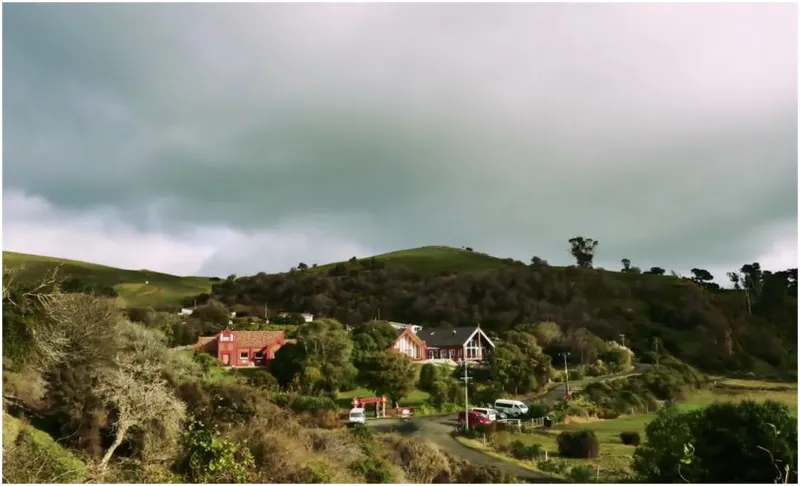
Many Māori housing providers appear to agree with the government’s assessment that the standards will help enable long term wellbeing, while cautioning that implementation will be critical.
The standards have also been designed to retain environmental protections. Rules relating to matters such as wastewater, stormwater, natural hazards, earthworks and significant infrastructure will still apply. Historic heritage protections, wāhi tapu protections and overlays for outstanding natural landscapes will also remain in place.
What’s next?
The new standards come into force on July 2 and councils will be required to apply them from that date.
For many whānau, the changes could remove one of the most frustrating hurdles standing between them and a home on ancestral land. Whether that translates into a significant increase in papakāinga development remains to be seen.
The government’s view is that it is unlocking Māori land. Housing providers largely agree the gate is opening. Their caveat, however, is that plenty of obstacles still lie on the other side.

Liam Rātana
Liam Rātana (Ngāti Wairupe/Ngāti Kurī) is editor of The Spinoff's Ātea section. He is passionate about indigenous and minority issues. Liam enjoys cooking, poetry, photography, and exploring the outdoors.


