Jenny Shipley says Waitangi Day has become ‘too political’

Former prime minister Jenny Shipley is the new chair of the Waitangi National Trust. (Design: The Spinoff)
The new chair of the Waitangi National Trust says she wants to rethink how politics intersects with the treaty grounds.
Jenny Shipley believes Waitangi Day has become “too political” and wants to rethink the relationship between politics and New Zealand’s most symbolically important national site.
The newly appointed chair of the Waitangi National Trust has suggested political debate could return to Te Tii Marae at the lower Treaty Grounds, where it was traditionally centred, and has asked whether politicians should feature at all in national commemorations on the upper Treaty Grounds.
“That’s not Waitangi’s story,” Shipley told The Spinoff.
The former prime minister believes Waitangi has increasingly become defined by a single day each year and the political theatre that comes with it. “On Waitangi Day, even I would agree it’s got too political,” Shipley said to The Spinoff.
Shipley replaces Tania Simpson as chair. The Waitangi National Trust Board is responsible for administering the treaty grounds, and more than 500 hectares of nationally significant land gifted by Lord and Lady Bledisloe in 1932.
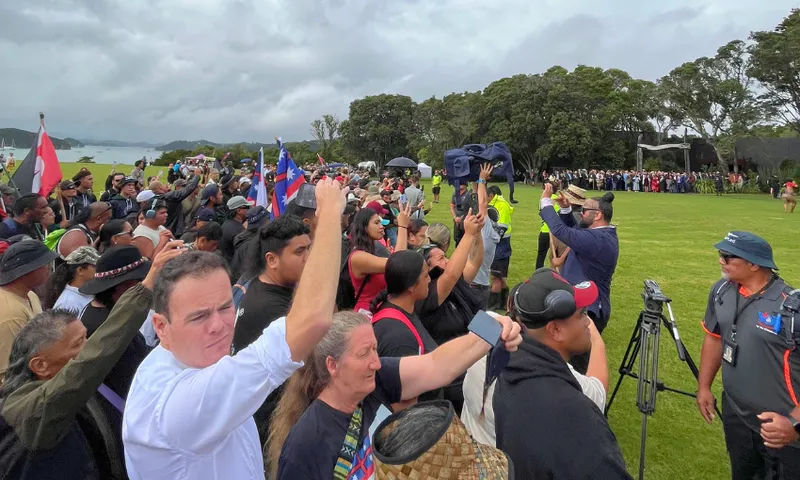
Shipley takes over at a pivotal moment for Aotearoa. The country is embroiled in fierce debates about te tiriti, Māori-Crown relations and national identity, and planning is underway for the 2040 bicentenary of the signing of te tiriti, and other bicentennial celebrations have begun around the country, marking significant events in the nation’s history.
Shipley said given recent Waitangi Day drama, the relationship between politics and the Treaty Grounds deserved fresh consideration. “We need to think carefully about how the political process interfaces with Waitangi. I’m sure I will spend some time thinking about that and talking to whoever is the government as we work our way through this, because Waitangi belongs to everyone, not just the political operatives.”
For some, that will sound like a call to restore Waitangi as a place of reflection, education and national identity. For others, it may raise concerns that efforts to “depoliticise” Waitangi will risk muting the very tensions that have defined Māori-Crown relations since 1840.
Shipley said she wouldn’t argue that politics should disappear completely from Waitangi, and that challenge and protest would always have a place. “Waitangi week has capacity for that. It is a place where those conversations are appropriate. Some of them will be loud, some of them will be quiet and considered.”
Waitangi, however, should not be reduced solely to its most contentious political moments, she said. For generations, much of the political confrontation at Waitangi has centred on Te Tii Marae, but in the public imagination, the entire area has become synonymous with annual clashes between politicians, activists and iwi leaders. Shipley wants New Zealanders to see something bigger, saying Waitangi belongs to everyone, not just politicians, Māori, or those who turn up during Waitangi week.
“Waitangi is part of our story,” she said. The wider story often gets lost.
The Waitangi estate includes museums, bush walks, beaches, a golf course, accommodation and recreational facilities, alongside some of the country’s most significant historic sites. “People who love early gardens, the early Māori stories of the chiefs and the struggles they had, the frustrations of Māori who lost their land – they are all stories of early New Zealand told honestly,” Shipley said. “They are stories that are wonderful, stories that are tragic, stories that make people angry, stories of joy… these are New Zealand’s stories.”
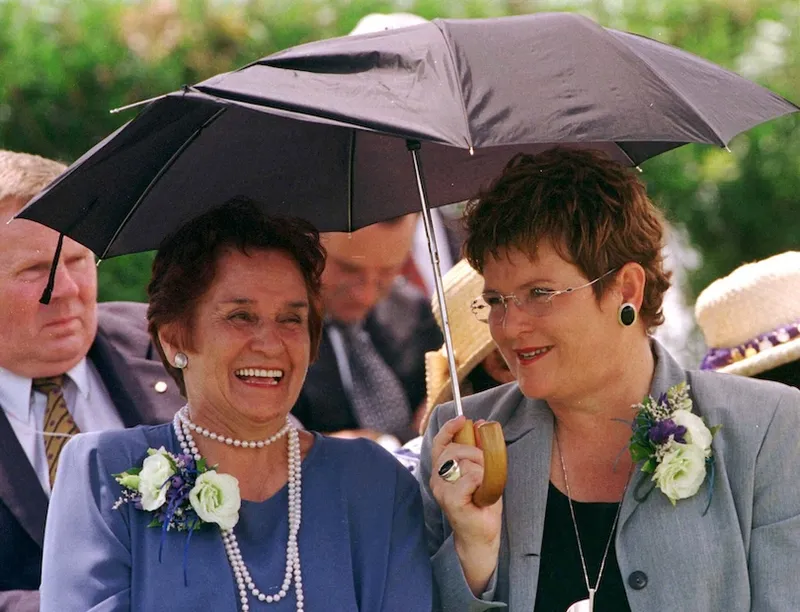
Shipley said she was not perturbed by stepping into the role during a fraught time in the country’s treaty conversation, saying she sees a longer historical arc. Having entered parliament in 1987, she argues the country has made significant progress since. “When I came into politics, the [Māori] language was almost lost.”
As well as the growth of te reo Māori, she pointed to the treaty settlement process and the development of Māori institutions as evidence of a nation slowly working through a legacy of colonisation. “I see that we’re a nation that is on a journey, but we mustn’t talk ourselves down,” Shipley said.
Her optimism is perhaps to be expected from a politician whose career intersected with some of the most significant moments in the treaty settlement era. Shipley was prime minister when the Ngāi Tahu settlement was signed and was part of a generation of politicians who oversaw major developments in Crown-Māori relations throughout the 1990s and early 2000s.
She said she was proud of those achievements. “Great nations don’t break their promises.”
Time will tell whether Shipley can keep her promise to show Waitangi to the country in a different light.

Liam Rātana
Liam Rātana (Ngāti Wairupe/Ngāti Kurī) is editor of The Spinoff's Ātea section. He is passionate about indigenous and minority issues. Liam enjoys cooking, poetry, photography, and exploring the outdoors.


