Why you should watch Hinemihi: The House with Golden Eyes

The fascinating story of Hinemihi is told in the new Whakaata Māori documentary. (Design: The Spinoff)
The new Whakaata Māori documentary tells the extraordinary story of a Rotorua wharenui that is now on its long-awaited journey home.
The first thing that struck me about Hinemihi: The House with Golden Eyes was is that it uses generative AI. There’s a montage just a few minutes in where old photos of the whare and tūpuna from Ngāti Hinemihi have been brought to life using modern technology.
I know it’s everywhere now, but this was the first time I had seen AI used in a primetime documentary. There’s something slightly discomforting about seeing these tūpuna move unnaturally in the photos, knowing it has been artificially created. I question the tikanga around making the dead appear to be living in such a manner, but these are not my tūpuna, so I decide it’s a matter for the filmmakers.
Thankfully, these pictures only feature briefly in what is otherwise a fascinating story about a wharenui that sheltered dozens during the country’s deadliest volcanic eruption on record, travelled to the other side of the world, and is now on a path to return home.
Produced and directed by Toby Mills and Rawiri J Tapiata, Hinemihi: The House with Golden Eyes recounts the story of Hinemihi o Te Ao Tawhito, a wharenui constructed between 1880 and 1881 under the instruction of Āporo Wharekāniwha, a rangatira of the Ngāti Hinemihi hapū and part of the Tūhourangi confederation.
Originally situated at the entrance to Te Wairoa, near Lake Tarawera, Hinemihi was carved by renowned carvers Tene Waitere and Wero Tāroi of Ngāti Tarāwhai. On 10 June, 1886, the whare saved the lives of at least 45 people during the violent eruption of Lake Tarawera, thanks in large part to its well-constructed roof, which held up under the immense weight of volcanic ashfall.
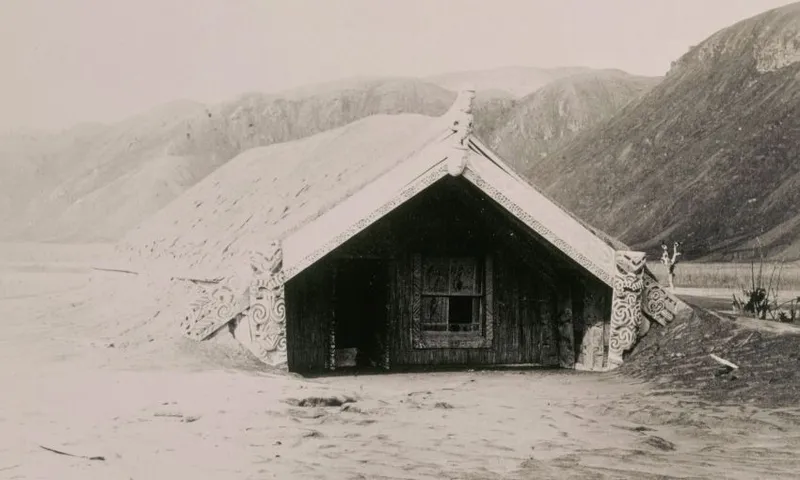
The documentary starts out delivering this remarkable tale through the eyes of the descendants of those Hinemihi saved. “If it weren’t for Hinemihi, it might have been a different story for me,” one says.
It lays the foundation for where the story goes next – the purchase of Hinemihi for £50 in 1892 by William Hillier Onslow, who served as governor of New Zealand from 1889 to 1892. “He thought it’d look good in his garden,” states a historian. That garden happened to be back in Onslow’s native England.
Hinemihi – which had stood at Te Wairoa for just 12 years – was subsequently deconstructed and shipped to Onslow’s property at Clandon Park in the southwest of London. Once reconstructed, it would remain there for the next 134 years.
Even if the sale isn’t covered extensively, the tensions arising from it are at the heart of the documentary. Advocates have been petitioning for Hinemihi’s return since 1974. The tapu and mana they bestow on the whare stands in stark contrast to how she’s treated by her new keepers. Archival footage of Rupert Onslow – the great-great-grandson of William Onslow – shows him referring to Hinemihi as an intriguing “playground” for him as a child. There are revelations the whare was even used as “a boat shed” at one point.
But then there’s the Ngāti Rānana London Māori Club. Founded in 1958, the group soon became Hinemihi’s unofficial caregivers, with the whare effectively functioning as an operational marae for them from 1995.
It wasn’t until watching this documentary that I fully appreciated the difficulties that come with being born and raised in a foreign land, disconnected from your tūrangawaewae. Interviews with multiple generations of Māori in England illustrate the spiritual significance of the whare. It’s where they connect with their taha Māori. It serves as a spiritual and cultural bastion for them.
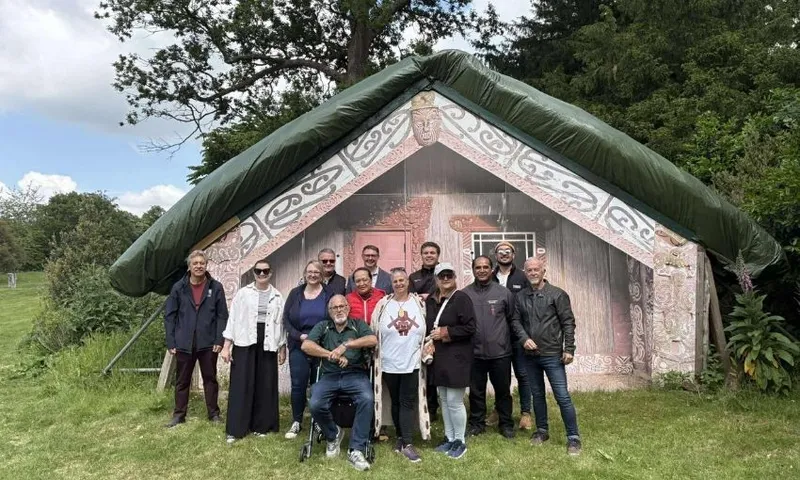
This revelation not only adds to the mana of the whare, but also creates a new tension between Ngāti Rānana and those fighting for the return of Hinemihi to Aotearoa. Combined with the bureaucracy of the National Trust, which now cares for Hinemihi, the documentary begins building towards the question of whether Hinemihi will return home or not.
Near the end of the documentary, it’s revealed that a new whare will be built for Ngāti Rānana in exchange for the return of Hinemihi. A win-win for both sides. While we don’t get to see the return of Hinemihi, we do see the signing of an agreement for its return. The relief and joy is evident. After 134 years, the whare that has been through so much, will finally be coming home.
Hinemihi: The House with Golden Eyes is available to stream now on Māori+.

Liam Rātana
Liam Rātana (Ngāti Wairupe/Ngāti Kurī) is editor of The Spinoff's Ātea section. He is passionate about indigenous and minority issues. Liam enjoys cooking, poetry, photography, and exploring the outdoors.


