What’s going on with all these gender bill submissions being rejected?

There have been more than 40,000 public submissions made on the definition of a woman and man bill, but what about the submissions that have been rejected?
Alex Gordon spent three weeks researching and writing their public submission against a new bill seeking to define a woman and a man in law. Being non-binary as well as the parent of a gender diverse child, Gordon moved to Aotearoa from the “pretty bleak” US nearly a year ago seeking a safer life for themselves and their family. But not long after they arrived here, the ban on puberty blockers for young people and a bill seeking to define a woman and man by biology painted a very different picture of the inclusive safe haven they were expecting.
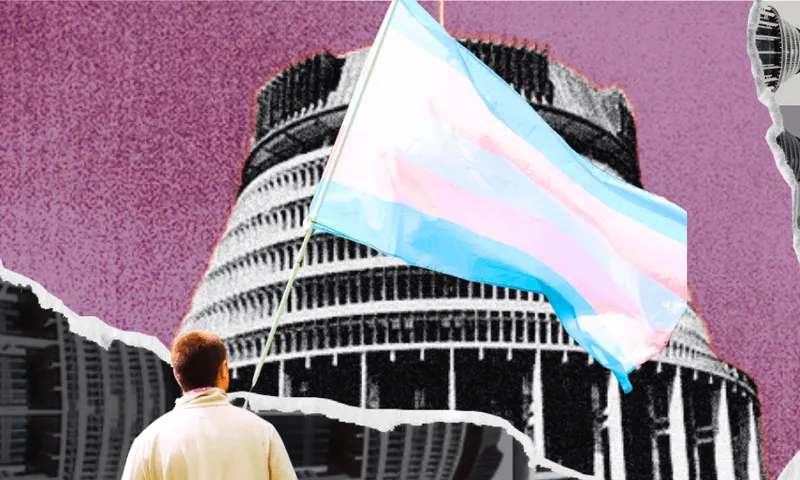
The Legislation (Definitions of Woman and Man) Amendment bill is a member’s bill in the name of NZ First’s Jenny Marcroft. It seeks to amend the act by defining “woman” as “an adult human biological female” and “man” as “an adult human biological male” across all New Zealand law. Despite opposition MPs calling the bill a “timewarp” that “achieves almost nothing in practical legal terms but it risks causing enormous social harm to trans and takatāpui communities,” the bill passed its first reading and opened to public submissions in July.
Gordon describes news of the bill as “devastating”. “I had started to build my life here, and my kids were homesick and heartbroken… I really wanted to share my family’s story in my submission because I wanted New Zealanders to see and understand how this bill can affect them, because there is this pervasive feeling of ‘she’ll be all right’.” Their original submission against the bill included an anonymised quote from Gordon’s child, who said that having their gender identity denied “makes me feel like a pebble inside and I don’t want to exist”.
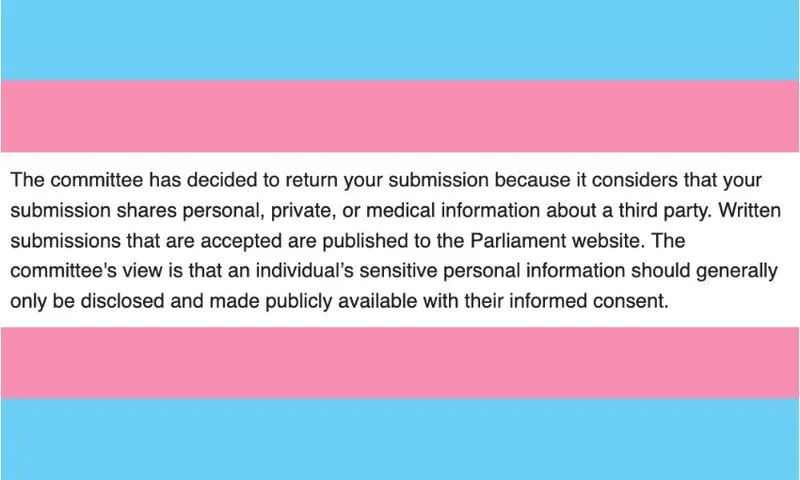
But just over a week after their submission was sent off, Gordon received a response from the social services and community select committee that their submission had been rejected because it contained “personal, private, or medical information about a third party”. After disputing the decision, the options presented were to write a letter confirming the child’s consent, anonymising the submission, or removing all third party information. An “exhausted” Gordon chose the latter – “it cut out the heart and the most emotionally impactful part”.
The Spinoff has spoken to five people who made mention of an unnamed gender diverse family member in their submission, and were all rejected on similar grounds. Dr Ed Hyde, an obstetrician-gynecologist specialising in rainbow care, drew upon both decades of medical experience and personal insights as a parent to a gender diverse person in his submission. “I felt it was really important to share that lived experience,” he says. “Some of the people who will be affected by this the most are young people, and many of those people are not going to be able to send a submission in.”
Hyde too had his submission rejected on privacy grounds. “Of course I understand the principle of not giving away people’s clinical information, I’m a fucking doctor,” he says. “I tried to be very professional in what I wrote, but it was also very personal to me as a parent. I’m all those things at the same time.” Like Gordon, he chose to remove the mention of his family due to being time poor. “It made me feel really icky that I had to take it out,” he says. “It says to the trans and gender diverse community that they don’t matter, and their parents and families don’t matter either.”
There’s also a double standard, says Hyde, in what other public submissions have been permitted to include. “If this was a disability bill, would they still turn around and say ‘we’re going to exclude all the parents who have written about their disabled child?’.” The Spinoff has seen published submissions on the recent disability support services bill which make mention of third parties and their lived experience – including children. “That is a massive asymmetry,” adds Hyde. “It is basically eliminating the very people who are most affected by the bill.”
Kristin* submitted on behalf of her collective for the families of gender diverse rangatahi, and also wrote one in her personal capacity as a mother. “I got both kids’ consent before I did that, and I fired it off without another thought,” she says. Her personal submission was rejected, but her organisation’s submission was accepted, despite them containing similar third party information. “This doesn’t seem to have been done as a part of a consistent practice,” she says. “The fact that it can and has been done, but then was not done here, makes you ask some questions.”
Other submitters highlighted the irony of the grounds for rejection in the wider context of the bill. Jayne Home, parent to a gender diverse person who also had her submission rejected, says it is “dismissive and disingenuous” to suddenly express privacy concerns in the midst of a debate entirely about, well, “what is in everyone’s pants”. “This whole thing is about putting in law that you have to define yourself by your private, sensitive, medical information,” she says. “It seems extremely at odds that now I can’t even say I have a family member who’s transgender.”
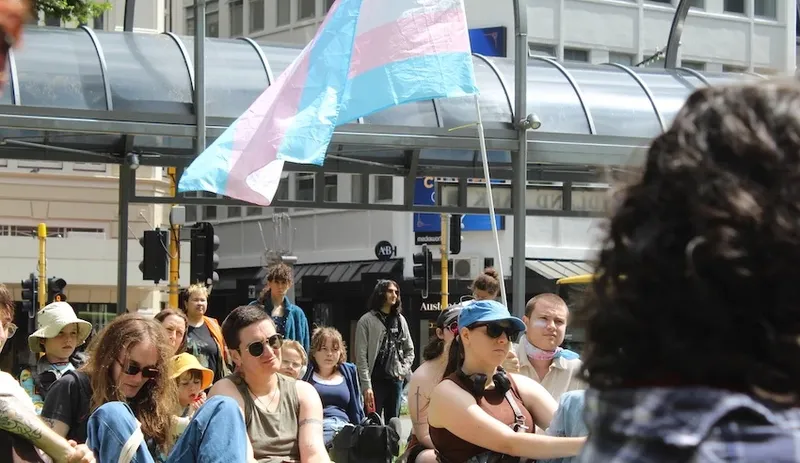
It’s not just parents who have had their submissions rejected. Bianca McCullough made mention of being in a long-term relationship with a trans woman in her submission. “Through loving my partner, I have met many trans and non-binary people, most of whom have become dear friends and are a significant part of our life together,” she wrote, later adding “my partner already avoids public swimming pools and clothing stores, does not play competitive sport and is hesitant to visit our GP because she has experienced discrimination in these places”.
After her submission was also rejected on the grounds of privacy, McCullough made similar inquiries as to how she could dispute the decision, and reluctantly chose to redact any mention of her partner in the original submission. “The message that it sends is that it’s shameful to be trans, and that transness should be hidden,” she says. “By weeding out submissions that say ‘my child is trans’, or ‘my partner is trans’, it is erasing trans experience from the submissions on the bill, when those voices and that lived experience should be at the front.”
While local advocacy groups have confirmed instances of rejections in the dozens, the total number remains unclear. The Spinoff approached the social services and community committee and chair Joseph Mooney last week with a series of questions about submitters’ concerns around the process, and was told they could not comment until the committee met again on Wednesday, July 29. When that date rolled around, the committee responded to The Spinoff to say they would not be commenting further but had decided to issue a press release.
The release confirmed that over 40,000 written submissions had been made on the bill, and there had been over 1500 requests to make oral submissions. On the decision to return submissions that contain “sensitive, private, or personal information about identifiable parties,” the committee said someone is considered identifiable “if they are named or if the submitter has a close familial relationship with them”. The statement also acknowledged that “many submissions” have opted to include this kind of information.
While the committee appreciated that people might want to share details from their own lives, they also stressed a need for caution around third parties. “Submissions are publicly available and will remain online permanently,” they said. “We need to consider whether publishing a submission might risk harm to a person, or frustrate their reasonable expectations of privacy.” They added that children were of particular concern, mentioning another select committee who refrained from publishing “detailed accounts of a child’s mental health challenges”.
The legislation (definitions of woman and man) amendment bill will be reported to the house by November 20. In the meantime, the committee staff are continuing to “to address our concerns” with those who have had their submissions rejected. Nothing in the media release explained why the very same select committee accepted public submissions for the disability services bill, in which parents wrote about their children.
Gordon has since had their redacted submission approved, but describes the whole process as “ass-backwards” and just another hurdle for the gender diverse community during a particularly challenging few years. “It feels like just another way to silence us – we can have a censored statement in there, but it will take twice as long as everyone else.” Still, they haven’t given up yet.
“I want fight as much as I can against this hateful piece of legislation, because it will make the difference of whether my family can stay and build our lives here.”
*Name changed for privacy reasons

Alex Casey
Alex Casey is a senior writer at The Spinoff with over a decade of experience writing about popular culture and social issues in Aotearoa. She lives in Ōtautahi and likes watching reality TV and walking the dog, occasionally at the same time.


