Puberty blockers ban anxiety grinds on as ‘very, very worried’ children and families look for support

Image by Tina Tiller
Fears have been running high among the gender diverse community since health minister Simeon Brown announced a ban on puberty blockers.
Paton remembers the anxiety spreading through their students as news of the government’s ban on puberty blockers reached schools late last year. The same young people who had previously been “glowing” in their gender diverse identities were left panicking and distraught. “It’s soul destroying,” says the Wellington High teacher. “They watch this government try and deny their existence and tell them that they don’t matter. These teenagers are fragile little butterflies, and you see it just destroy a magical part of their soul.”
At another high school across town, Francis was comforting a 15-year-old gender diverse student also devastated by the decision. “They were like, ‘no one cares what I have to say, or what I’ve gone through’,” recalls the Onslow College teacher. “It’s a lot of shame, pain and unfairness to be loading onto these kids that are already carrying a lot.”
Fears have been running high among the gender diverse community, and those on the frontline of gender-affirming care, since health minister Simeon Brown announced a ban on new prescriptions for puberty blockers for young people seeking treatment for gender dysphoria last year (people already taking them could continue). “We are putting in place stronger safeguards so families can have confidence that any treatment is clinically sound and in the best interests of the young person or child,” Brown said at the time, citing “a lack of high-quality evidence that demonstrates the benefits or risks” of the treatment.

Supporters of the ban expressed relief. New Zealand First leader Winston Peters called it “commonsense to put a pause on these unproven and potentially damaging drugs for children”, while Act’s Karen Chhour said “young people should be supported to love themselves, not change themselves with experimental medication”. Lobby groups, like Speak Up For Women, which only wants biological females recognised as women and girls, said it supported the ban but thought it should extend further to include young people already on puberty blockers.
Many medical organisations condemned the ban. Elizabeth McElrea, a GP specialist in gender-affirming care and vice-president of Professional Association for Transgender Health Aotearoa, said puberty blockers “have been prescribed safely for decades” and banning their use will lead to “profound distress”. The Association of Salaried Medical Specialists president Katie Ben called it “completely inappropriate”, and the chair of Royal Australian and New Zealand College of Psychiatrists Hiran Thabrew said it could “cause significant additional harm”.
But as politicians, lobbyists and organisations all debated the impact of the ban publicly, gender diverse people across the country were left to struggle with the news privately. Three months on from the announcement – and following legal action that has temporarily stopped the ban from from being enforced – they continue to live with creeping dread, anxiety and anger over the decision.
Charlie, an 18-year-old who identifies as trans-masculine non-binary, is worried about the harm being caused. He was one of more than 8,600 people who made submissions during the consultation period on the ban, which ran from November 2024 until January 2025. As found in this report compiled for cabinet, most public submissions and all affected groups supported continued access to puberty blockers for gender-related health needs. The report also noted that just under 100 young people started on the treatment in 2024.
Charlie was infuriated by the government’s decision to continue with the ban against the majority of feedback from the public. “It just pissed me off so much,” he says. “Why are we supporting this level of government overreach and why do we support its usage for cisgender children, but not transgender children?” (The ban does not apply to young people requiring puberty blockers for early-onset puberty.) “Why do you care about such a tiny minority?” he continues. “If it’s not hurting you and it’s not hurting the kids that are on it, why do you care?”
Clinical psychologist Kayla Mackie was also involved in the Ministry of Health consultation process, and says it was “disappointing and frustrating” to see the ban announced without any warning. “We had a lot of very panicked families calling in to try and find out what on Earth was happening,” she says. “People were very, very worried about what that would mean for the young people who were on waitlists to see us, and there was also a lot of panic from our existing clients about whether they would lose access to their prescriptions.”
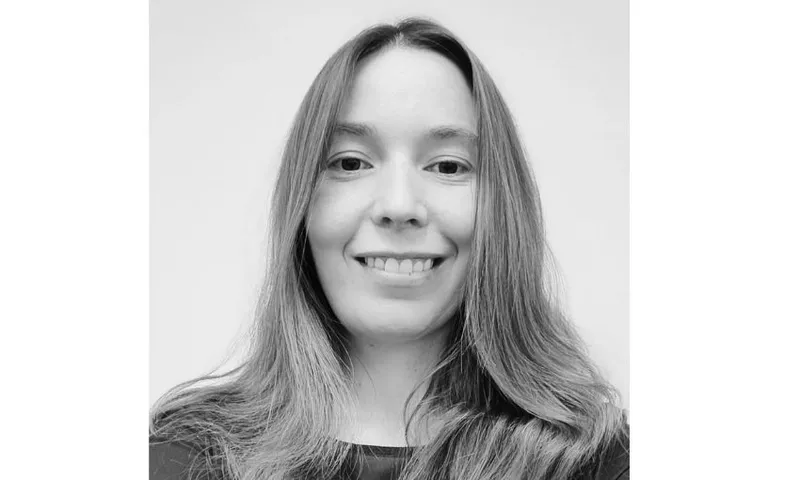
Ahead of the December 19 date the ban was set to come into effect, Mackie held urgent clinics for those who were still on the waitlist to be seen in 2026. “We were very careful not to change our processes, so people did still have to see the psychologists and the doctors and have a fully informed consent process,” she says. “While we would never let that pressure mean that people were making decisions that they weren’t prepared to be making, it did rob people of some time that they should have had to be able to decide whether they wanted the treatment or not.”
Just two days before December 19, the High Court granted an interim injunction sought by the Professional Association for Transgender Health (PATHA) and stopped the enforcement of the ban until a judicial review is heard in May. Judge Wilkinson-Smith said “the total ban appears to make negative consequences inevitable for some transgender youth and there is an argument that it is discriminatory”.
While they await the court proceedings, educators say they are supporting their gender diverse students any way they can. “It can be a very beautiful but difficult experience,” says Sean, another teacher at Onslow. “It’s really beautiful when they’re able to be authentic, but it’s difficult when the kids realise that there are these oppressive policies looming that they have no power over.” Paton at Wellington High says anxiety is still running high. “It feels like we’re living on a razor blade just waiting and hoping that it’s going to get overturned.” And if it doesn’t?
“I think we’re going to see a big spike in those horrible statistics that come with being a queer kid,” says Paton.
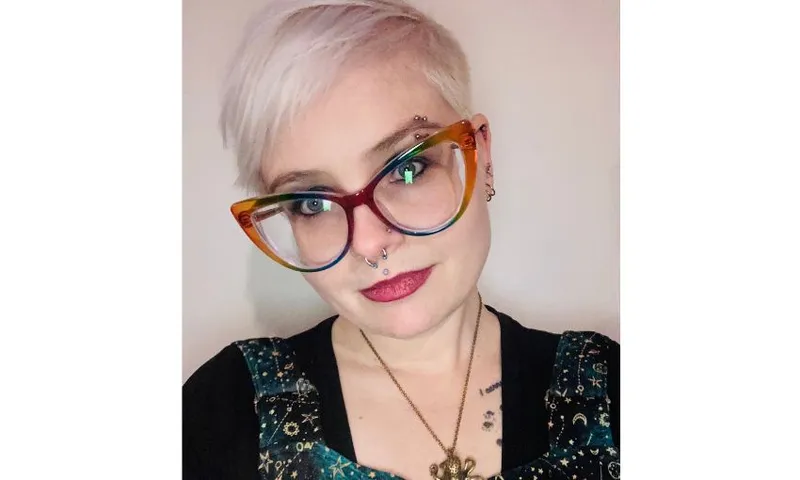
Charlie knows how hopeless it feels when you can’t access the gender-affirming care you need. “I’d look in the mirror and I didn’t see myself – it’s like my mind is one thing and my body is another,” he says. “That disconnect makes you kind of feel like you’re almost a video game character, like you’re just piloting this animatronic character.” He consulted with his GP about accessing puberty blockers at the beginning of high school, but was told he was already “too far along” for someone assigned female at birth for it to be worthwhile.
Too old for puberty blockers and too young to go on testosterone, Charlie says he struggled with suicidal ideation and self-harm during his early teenage years. He had to wait until he turned 16 to start the referral process with his GP to go on testosterone, which took nearly two more years. “Being trans is just a repeated experience of having no autonomy. I don’t have autonomy over my body being my own. I don’t have autonomy over what health care I receive, and I don’t have autonomy over how people perceive me,” he says.
Having been on testosterone for nearly a year now, Charlie describes the “incredible” impact that it has had on his life. “One of my big points of dysphoria was my voice, and my voice has now dropped massively, which I’m very happy with,” he says. While it isn’t a “magic fix-all” and there are still things he’d like to change, Charlie cannot overstate how accessing gender-affirming healthcare has saved his life. “I’m the happiest I’ve ever been in my body, which is awesome,” he says.
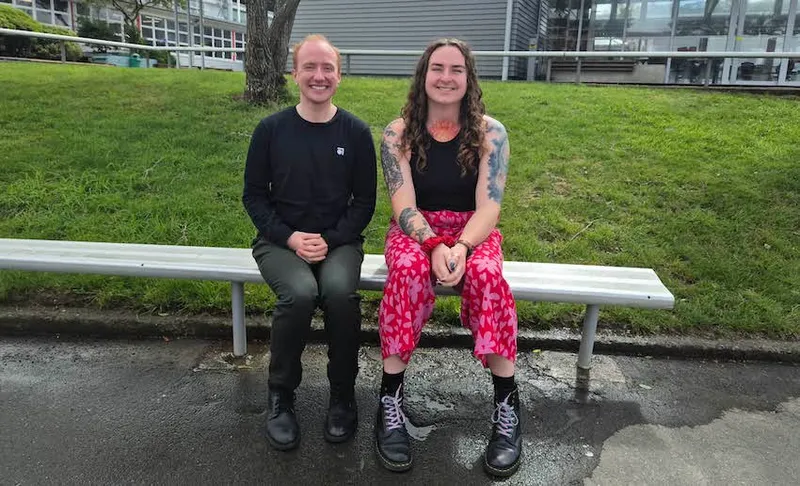
Educators Paton, Francis and Sean know this feeling all too well. “It’s about the joy on students’ faces when we can just make the littlest changes to support their identity,” says Paton. “When we can update their name on the system, when we can change their pronouns, when we can help them communicate to their teachers who they are.” Francis recalls a student once so withdrawn and tired that they could barely lift a pencil who, since becoming more open with their gender identity, is now soaring academically and socially.
As a psychologist, Mackie has also seen how access to puberty blockers has positively affected her clients’ lives. “They give gender diverse kids a chance to explore who they are and figure out what they really want for a little bit longer,” she says. “It can be really helpful with reducing school avoidance, because gender dysphoria contributes to anxiety that causes kids to not want to go to school.” She adds that it can be a beneficial way for families to start an open conversation around gender identity, complete with regular check-ins from health professionals.
Beyond the individual impact of the ban, there is also widespread concern that this could just be the beginning of further controls over trans people’s lives. “In places like the UK, they’re now targeting hormone replacement therapy, especially for minors and young adults. In the United States, it’s also been a pipeline to targeting the right to access hormone replacement therapy,” Charlie says. “That’s the main worry: that it is going to become the start of a pipeline to further culture war rhetoric affecting our rights to access healthcare as young adults.”
Mackie agrees. “I’ve seen a massive uptake in distress from my adult trans clients as well, because the idea that treatments can be taken away specifically because they’re transgender is just distressing for everyone.” She adds that even those outside the trans community should be concerned. “This is a massive government overstep into healthcare that we’ve never seen the likes of before,” she says. “If the government can just decide that certain populations aren’t allowed certain medications where it’s politically worthwhile for them, then that’s quite scary.”
When approached for comment about the anxiety and distress the ban is causing, the office for Simeon Brown said that “it would be inappropriate to comment as the matter is currently before the courts”, before directing The Spinoff to his original press release from November 2025.
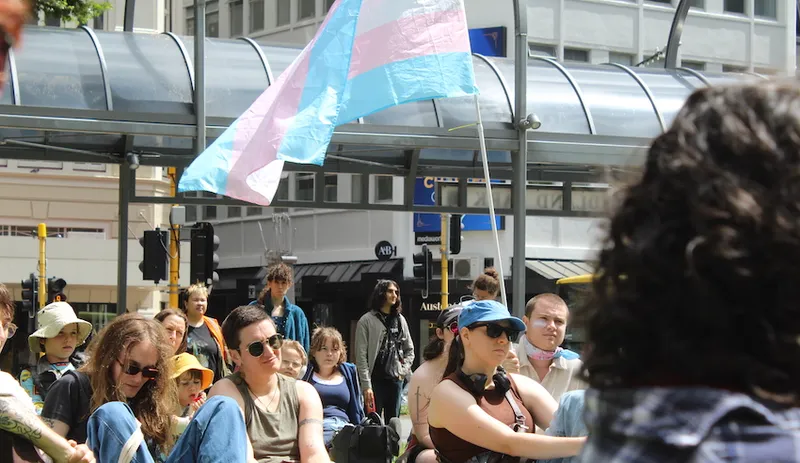
In the meantime, those on the frontline of gender-affirming care are continuing to show up for their community however they can, including a recent demonstration in Pōneke over the weekend featuring signs such as “Dear Minister Brown, mind your own body and let them mind theirs” and “human rights for transgender people.”
“We can have all these band aids, support and community building,” says Francis, “but at the end of the day, what we need is access to healthcare.”
Helplines:
Outline
0800 688 5463 (0800 OUTLINE)
Provides support to Takatāpui, MVPFAFF+ and Rainbow communities, their friends, whānau, and those questioning.
Confidential telephone support and online chat support between 6pm and 9pm every day.
Rainbow Youth
Support and information for rainbow young people, their whānau and communities
Need to talk?
Free call or text 1737 any time for support from a trained counsellor.
Lifeline
0800 543 354 (0800 LIFELINE)
Youthline
0800 376 633, free text 234 or email talk@youthline.co.nz or online chat.
Samaritans
0800 726 666.

Alex Casey
Alex Casey is a senior writer at The Spinoff with over a decade of experience writing about popular culture and social issues in Aotearoa. She lives in Ōtautahi and likes watching reality TV and walking the dog, occasionally at the same time.


