March 15 taught me how to read the world

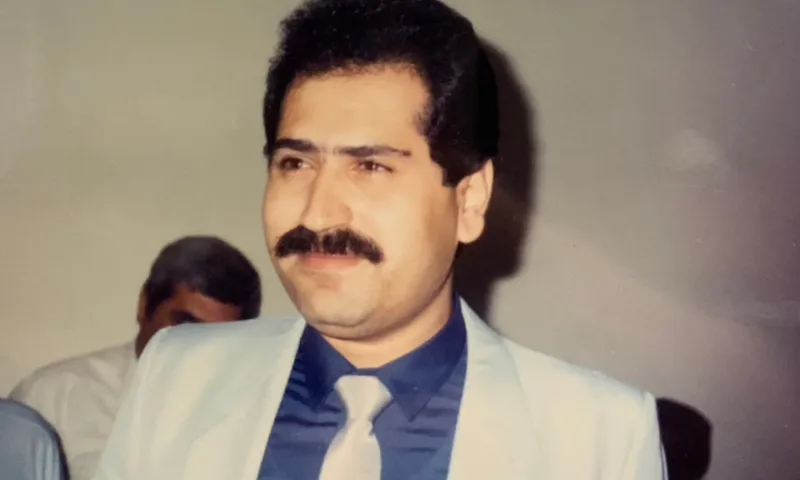
Sara Qasem and her father, Abdelfattah Qasem
The day of March 15 never ended for Sara Qasem, who lost her father in the Christchurch mosque attacks. On the seventh anniversary, she writes about how that day changed the way she reads the world.
Some days the news arrives like
smoke– thin at first,
then everywhere.
Every March in Christchurch, the light changes slightly. I know this by the fasting window in Ramadan this year. The air still holds the last stretch of summer, but the mornings carry a thin edge of autumn. People begin speaking about remembrance again. Flowers appear. Politicians releasing statements. Newsrooms preparing their anniversary coverage. My phone starts to ring.
For a long time I believed the anniversary was the story. That the day itself – March 15 – was where grief lived. Over the years I have realised something else: for families like mine, the day never ended. It became the lens through which we learned to read the world – and recognise another grief that has been painted in similar colours.
Morning fog stretching
across Hagley
across Deans Avenue– beyond–
a headline–
another border–
a manifesto.
I notice it in headlines first. The bombs falling on Gaza. The girls’ school in Iran. Cities collapsing into statistics while the world debates language. Kuwait. Lebanon. The UAE. Jordan. Qatar. Then the language shifts closer to home. A debate about immigration. A speech about “border protection”. The same questions appearing again and again: who belongs, who doesn’t and how many is too many.
Each time, I recognise something – who the language is meant for. The girl under the collapsed school roof. The man standing in a mosque doorway completely unaware. The child in the back seat of a car, waiting for the tanks to leave. The words are always familiar: rights, protection, safety. Words that quietly begin to mean for anyone, except people who look like us. March 15 changed how we read. It rearranged the map. It highlighted the pattern: violence, language and dehumanisation as a means of condoning.
We learn to read the air the
way our grandparents read weather–
a shift in wind– a
silence in birds– a
sky that suddenly feels foreign.
Last year I was making a cup of tea when a news alert appeared on my phone. The man responsible for the attack was seeking to reopen his case. I stood in the kitchen staring at the screen longer than I expected to. Not shocked, exactly. Not even angry. Just tired.
There are wars that push people out.
And there are wars that wait for them when they arrive.
For years this country made a promise that felt sacred: that we would not centre the terrorist, that we would not give his hatred the attention it demanded. And yet the machinery of law eventually turns again. Since the attacks, I have learnt that survival sometimes means choosing where your attention goes. The legal system may have to entertain him – we do not.
People often ask me about resilience. I point them to the people in the Middle East. New Zealanders are proud of the story they tell about that day – of kindness, unity and flowers covering the entrances of the mosques. They should be. Those things were real. But resilience is not the soft word people imagine it to be. Nor is it always a choice.
My parents carried one kind of war
when they came to New Zealand. For a
long time I believed we had
escaped it.
It’s attending another memorial when your chest is still trying to process the last. It is explaining your grief to strangers who have just discovered your story for the first time. It’s recognising that you are one of 92 others whom also lost a parent in the attacks. It is watching wars unfold across the world – in places you once called home, or learned to call home while those places were under attack, too. It is recognising the language of hatred before anyone else does. Holding your despair in one hand and soothing it with refusal and hope. Because this never started with you – but with the long history of wars, illegal occupations and displacement that began long before I arrived. Every auntie in Beirut grieving the loss of her son, is my auntie. Every family in Kuwait that is reacquainting one another with the sound of sirens of 1990, is mine. Every daughter in Palestine, the West Bank and Gaza, grieving the loss of her Baba, is me.
I invite people to consider one thing: that violence rarely appears without warning. It whispers first – in speeches, in comment sections, in policies that quietly divide people into “us” and “them”. When we ignore it long enough, it shouts. The question becomes: what are we allowing to take root on our own soil, long before it grows loud enough to be recognised as violence – and how those same seeds travel beyond our borders.
I am still learning how to read the air.
Every March the country pauses again. There will be speeches. There will be flowers. There will be moments of silence. Those things matter. But remembrance is not only about looking backward. It is about learning how to see the present clearly – everywhere. It is recognising the sound of hatred before it grows loud enough to become another memorial– whether it arises here, or elsewhere.
March never left
Some days the news arrives like
smoke– thin at first, then
everywhere.
Morning fog stretching
across Hagley
across Deans Avenue– beyond–
a headline–
another border–
a manifesto.
We learn to read the air the
way our grandparents read weather–
a shift in wind– a
silence in birds– a
sky that suddenly feels foreign.
There are wars that push people out.
And there are wars that wait for them when they arrive.
My parents carried one kind of war
when they came to New Zealand.
For a long time I
believed we had escaped it.
I am still learning how to read the air.
-Sara Qasem

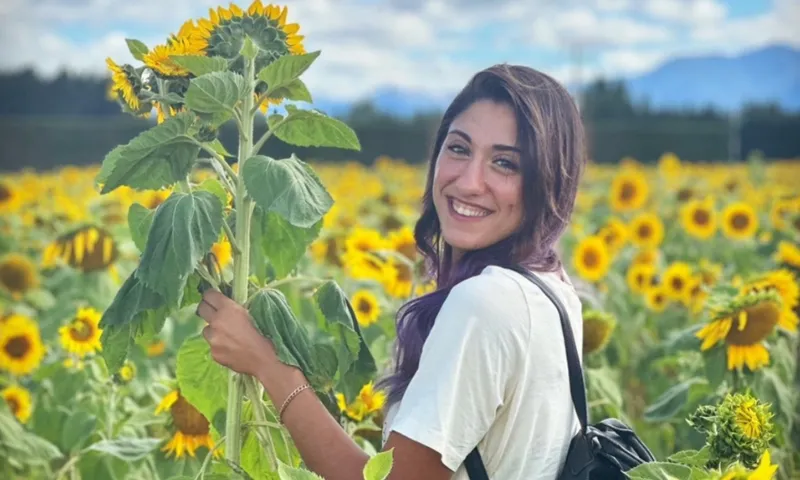
Sara Qasem
Sara Qasem is a Palestinian poet, community advocate and educator based in Ōtautahi. Her work explores memory, diaspora and resistance, and has been published and performed across Aotearoa, centring the stories of her community while writing toward the places where grief and resilience meet.


