Who invented the word ‘skux’? A Spinoff investigation

The word is much older than you think, and has a famous inventor. Madeleine Chapman solves a 30-year mystery.
It’s 1997. Two teenaged boys, Strathmore neighbours, sit in front of the TV, cracking jokes. During the ad break a familiar scene appears: two beautiful Italians sitting across from each other in a dimly lit saloon, playing chess. The woman wears a black, low-cut dress and unsheaths a Moritz ice cream. She takes a bite and a piece of chocolate lands on her décolletage. The man, with his floppy brown hair and leather jacket, steals a glance at it. “Tocca a te,” says the woman, seductively sucking on another piece of chocolate. It’s your move. The man sweeps the chess pieces off the table, strides two steps and straddles the woman, his leather jacket squeaking. He takes the Moritz from her hand, smiles and says, “scacco matto” (checkmate) before taking a bite.
Scacco matto. To the non-Italian ear, it sounds a lot like “skarkoma”.
The two boys laugh at the ad and make jokes about who is more like the hunky Italian saying “skarkoma”. They’re both Samoan and they wonder what the Samoan equivalent would be. A catchphrase that is both a transliteration of “skarkoma” and describes a Samoan stud who’d say such a thing. Very quickly they have it.
“Sikaki.”
Speak to any 40-year-old Polynesian man from Wellington and he’ll claim to know who came up with the word skux. The coolest word in New Zealand had to have started somewhere, and there’s no shortage of suburbs, schools and formerly young men thrown out as its inventors.
It’s agreed that the word skux entered the lexicon around the turn of the century, and while most national trends begin in Auckland, everyone knows skux is a Wellington baby. But beyond that, there’s endless debate.
Rongotai College and St Pat’s Town are the two schools that claim the word. Porirua locals argue the most Polynesian city south of Auckland must surely be its birthplace, and some absolute dreamers even throw out Wainuiomata for a laugh.
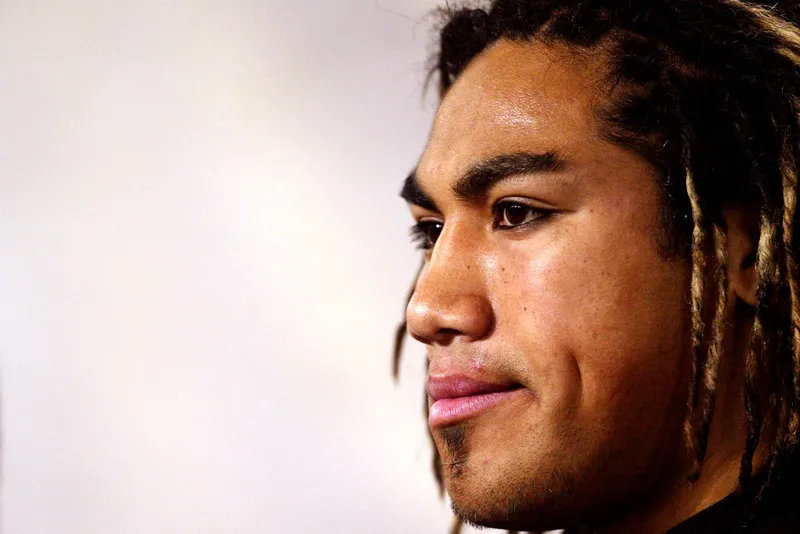
As for people, one name resurfaces again and again. Ma’a Nonu. It’s the perfect origin story. For years, Ma’a Nonu was the poster child for skux – an All Black who bleached his dreadlocks, plucked his eyebrows and wore eyeliner during matches. His official nickname as an All Black was skux. But was Nonu, who these days plays for RC Toulon in France, just the most famous skux or was he the original skux?
I decided to start my investigation by speaking to the 40-year-old Polynesian men I knew: my cousins. At our family reunion, I explained to one cousin who fit the demographic that I was launching an investigation into the origins of skux, hoping to finally find the single person who brought such a beautiful word to our people. Did he know anything at all about it or could he point me to anyone who did?
He didn’t know anything, he knew everything.
Those two neighbours watching the Moritz ad in 1997 were Fa’atonu Fili and Ma’a Nonu, and they lived in Strathmore, Wellington. As close friends they delighted in their new catchphrase “sikaki” – pronounced a little lazily as “skaki” – and their first thought was to use it to mock others. The game was simple: at lunchtime (Fili at St Pat’s Town, Nonu at Rongotai College), an unsuspecting student would be chosen by their group of friends. Someone would yell “sikaki!” and if the victim turned around, they’d be met by a group of Samoan boys posing like models and cracking up. The implication was if you turned around when someone yelled sikaki it meant you thought you were a stud and that was funny.
It also helped that sikaki is the Samoan transliteration for study so the many Island boys who attended the Newtown PIC study group were familiar with the otherwise uncommon word. “Sikaki = study, sikak/skux = stud” has been used to explain how the word itself was invented but is simply a happy coincidence.
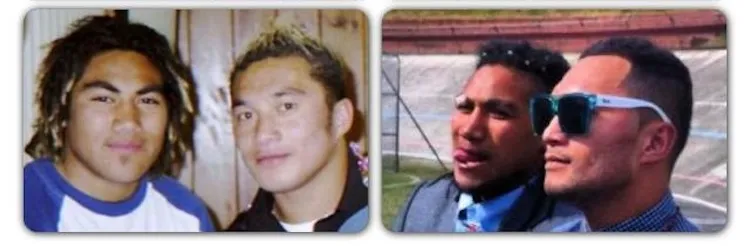
Fa’atonu Fili declined a sitdown interview with The Spinoff but did confirm this version of events. After repeated requests for an interview, a spokesperson for RC Toulon said, “Ma’a Nonu is not available for interviews and does not wish to take part in any media engagements”. Even Neemia Tialata and Piri Weepu, notable Hurricanes and skuxes from the early 2000s, would not respond to requests for comment. Such reluctance from former celebrities could point to conspiracy, but more likely suggests the men’s reluctance to claim credit for a word that has become a global phenomenon. But they don’t need to claim it, it’s simply the truth.
Over the next few years, the word evolved from a catchphrase yelled out as part of a prank, to a term used to genuinely describe a particular type of young man. And as with all New Zealand slang, many variations were formed to keep things interesting. Skukky, skuk or skak, and then the inevitable final boss of New Zealand etymology (adding an S sound to words for no reason), skux.
So what does a skux look like? By the time sikaki had become skux – around the turn of the century – there was a distinct look being sought by Polynesian boys in Wellington. It would later be known as the super saiyan aesthetic. The goal? Bleached blonde hair spiked as high as possible to look like super saiyan Goku from Dragon Ball Z. For boys at the time, the cost of a hairdresser and Dax hair wax was prohibitive. So a skux was more likely to sport orange hair (achieved through minimal use of hair dye on jet black hair) spiked with plain old hand soap. When the weather was nice, the skuxes were out in force. And when it rained, the hair soap streaked down their faces and necks, leaving white trails on brown skin.
But really, a skux had these defining features because if you cared enough about your appearance to even attempt to bleach your hair and spike it up with soap, then you were a skux.
The word was everywhere in the lower North Island. And thanks to Fili and Nonu attending two large all-boys schools and playing in rep rugby teams with island boys throughout the region, the word spread quickly. Palagi kids at primary schools in Featherston in the early 2000s were all over it. Kids’ basketball leagues were rife with wannabe skuxes.
And as the originators of the word graduated from college and went on to play rugby for Samoa (Fili) and the All Blacks (Nonu), the influence spread. When Nonu was selected for the All Blacks in 2003 at just 21 years old, he was still very much a skux. Only now he was a skux on the world stage.
While Auckland kids visiting their Wellington cousins in the late 90s learnt this new word, it didn’t permeate the country’s biggest city until years later. This could be thanks to Nonu’s All Blacks stardom and/or the launch of C4 Live the same year, which allowed teens from Wellington to text in “Tre is a skuxxx” and have it run along the bottom of the screen while a Dei Hamo music video played.
Even as skux spread around the country the original sikakis were still role models. Ma’a Nonu’s official All Blacks nickname became skux and he carried it right through until his tight-shirted departure from the team in 2015. In 2010, Neemia Tialata uploaded a Youtube video of his Wellington Lions teammate Fili in the locker room after a match. Fili is shirtless, playing an acoustic guitar and soulfully singing ‘What A Wonderful World’. Extremely skux behaviour.
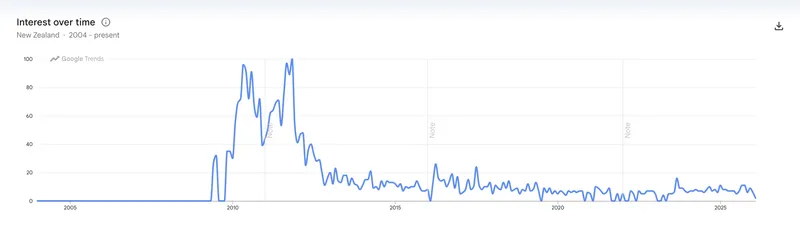
By 2010, however, the definition of a skux had evolved. No longer exclusively a blonde or spiky aesthetic, the skux look leant towards ghd hair straighteners, swept fringes and skinny jeans. As poet Tayi Tibble described in 2019, a skux in the early 2010s required a “skux bang; emo-esque, but side-swept with more swag”. Where David Beckham had shifted football and men into the stadium of metrosexuality, skux did the same in New Zealand for rugby. Why rugby? It’s the sport brown men played. Rugby was a symptom, not a cause.
Case in point: There’s only been one true skux in the history of the Black Caps and that’s Heath Davis, who was skux before the word even existed.
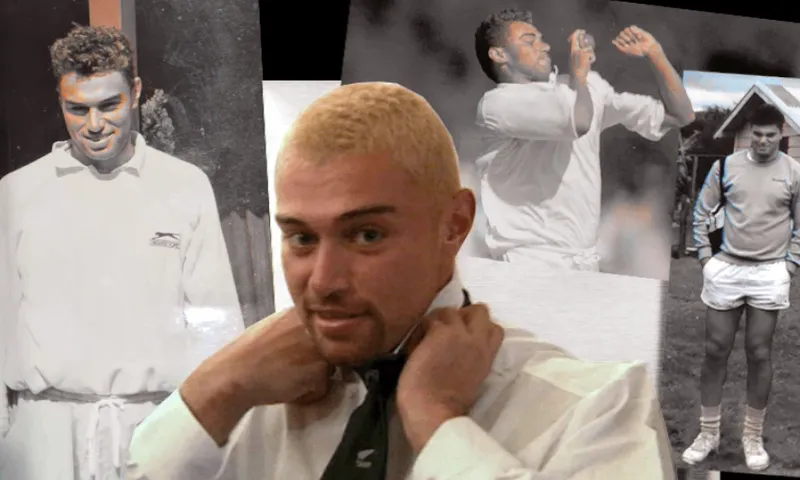
By the time Taika Waititi wrote skux into Hunt For The Wilderpeople in 2016, the word was well on its way out. Overexposure had led to its adoption by crowds who had potentially never met a skux in their life. In 2012, Otago University’s student magazine Critic launched a column titled “Clubs and Skux”, in which its two palagi authors frequently used skux as a verb (“to skux”) and even deemed “skuxability” a thing. One could argue the word was already dead but this sort of carry-on didn’t help. Drake using the word multiple times during an Auckland concert and in a 2015 new years eve post was simply dancing on its grave.
It wasn’t just overexposure that killed skux, it was the fairly rapid extinction of genuine skuxes in New Zealand. As the brown emo boy phase filtered out, so did the skuxes. My cousin, who remembers being an early victim of the sikaki game, asked me if people still used the word skux in 2026. I said not really, but not because it wasn’t cool any more. I just haven’t met a skux in years.

Ma’a Nonu, for what it’s worth, is a skux frozen in time. Where every single one of his early skux compatriots has long since retired from rugby, Nonu still plays. At 43 he holds the records for the oldest player and oldest try-scorer in Top 14 history. He still has his dreads and undercut, his beard is healthy, black and well-groomed, and his eyebrows look shaped. He still wears his playing tops very tight. He may not look skux to many New Zealanders, particularly those under the age of 35, but he still looks like the original skux.
Before the Super Rugby 2026 season kicked off, the Hurricanes official Instagram account posted a carousel of former players, all with bleached blonde hair. The caption was challenging current players to bleach their hair in honour of the late Jerry Collins (who, ironically, was not a skux) ahead of their pre-season match at Jerry Collins Stadium. Included in the carousel were notable skuxes like Neemia Tialata, Cory Jane (a rare fair-skinned skux) and of course, Ma’a Nonu.
We may soon see the return of brown boys straightening and bleaching their hair, wearing bandanas and skinny jeans, and getting familiar with makeup.
And when we do, skux will be back.

Madeleine Chapman
Madeleine Chapman is a contributing editor. She was editor of The Spinoff 2022-2025.


