Matariki 2026: Your guide to celebrating

Matariki is upon us again. (Image: Supplied).
The best ways to celebrate the Māori New Year.
The time of Matariki is upon us. While the official public holiday is on July 10, the period of Matariki lasts about a month. Traditionally, the start of Matariki was marked by the rising of the cluster with the morning sun.
While Matariki means different things to different people, it’s generally considered a time for reflection, remembering loved ones who have passed away, and planning ahead.
Some of us will be going on holiday, visiting family, or simply enjoying a sleep in.
With the holiday now firmly cemented in our national identity, there is no shortage of ways to celebrate the occasion – from public hautapu ceremonies around the country to wānanga, creative workshops, and even concerts – there’s something for everybody.
Here are some of our top tips for celebrating Matariki, as well as links to events happening across the motu.
When’s best to look at the stars?
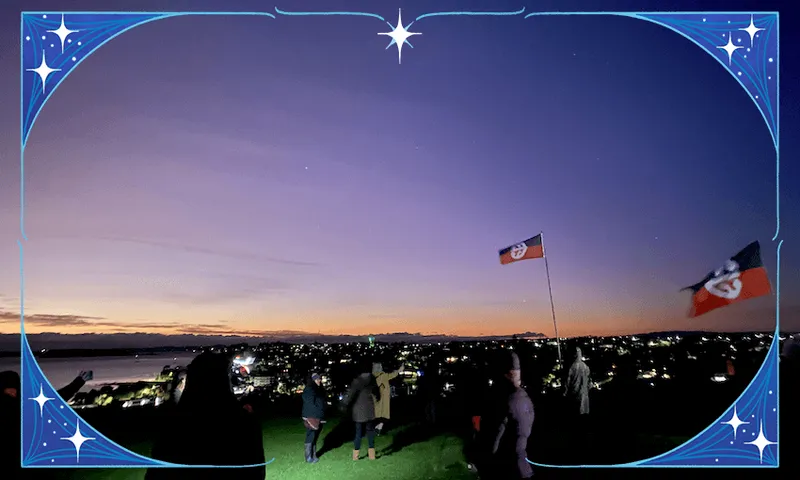
If you’re looking specifically for Matariki, you’ll want to be up before the sunrise and looking towards the northeastern horizon. Ideally, you want to be somewhere without a lot of light pollution, or anything obstructing your view. On top of a mountain (or hill) is usually best. For those along the West Coast, you might be looking for Puanga instead.
The public holiday is tomorrow morning, but Matariki is expected to rise any time between July 8 and 11. Check our brief guide to the stars of Matariki if you’d like to know more about what each star represents.

I’m not Māori. Can I still participate in traditional ceremonies?
Yes. This year’s Hautapu ā Motu – the national Matariki hautapu ceremony – is being hosted by Ngāti Whātua at Takaparawhau, Auckland. It starts at 5.45am and anyone is welcome to attend. If you’re not in Auckland, there are lots of other hautapu dawn services happening across the country.
If you’re not in Auckland, you can tune in to the official broadcast on TVNZ1, Whakaata Māori, Māori+, or via the official Matariki website.
What’s a hautapu?
A hautapu usually involves several karakia, chants and waiata as Matariki rises with the sun. At some point, people may be invited to say the names of loved ones that have passed on since last Matariki. Eventually, kai will be offered to the atua – the rising of steam from a hāngī is usually symbolic of this offering. As the ceremony finishes, you may be invited to partake in the sharing of kai – this is an important part of the process, as it helps return you from a state of tapu to a state of noa.
I’m not really a morning person, are there other ways I could honour the occasion?
Of course! While hautapu are the more traditional way to celebrate Matariki, there are lots of other events that you can attend. We’ve compiled a some top picks below.
It’s also completely fine if you’re not really keen on doing too much either – resting is actually a big part of Matariki! Traditionally, Matariki was about hunkering down with whānau during the coldest part of the year, sharing food, resting and chatting about the year ahead.
How can I learn more about Matariki?
There are lots of amazing resources available to learn about Matariki and Puanga. A good place to begin is the official Matariki website. It has information about the occasion, events, stories, and more resources for anyone interested. Your local library can also be a valuable resource, and most councils will have some information about Matariki events happening in your rohe too.
However, there is no better source of information specific to your region than your local tangata whenua group. This could be a marae, hapū, or iwi authority. If you already know who that group is, feel free to reach out to them about Matariki and see how they could help you learn more. If you don’t, a simple search engine query or exploring something like Māori Maps can be useful.
Any other tips?
As Māori scholar Rangi Mātāmua says, the best thing to do is “go with what your puku tells you to do and say what’s in your heart”.
If you are attending a hautapu ceremony for the first time, it’s usually best to follow the direction of others.
Whatever you do, remember that Matariki is a time for reflection, introspection, and respect for the beauty and gifts of nature. Give thanks however feels right to you.
Matariki events

Liam Rātana
Liam Rātana (Ngāti Wairupe/Ngāti Kurī) is editor of The Spinoff's Ātea section. He is passionate about indigenous and minority issues. Liam enjoys cooking, poetry, photography, and exploring the outdoors.


