
Te Pāti Māori co-leader Rawiri Waititi shares a laugh on the campaign trail ahead of the 2026 general election. (Photo: Aukaha News)
In the sixth of The Spinoff’s leader profiles, the co-leader of Te Pāti Māori on a tough campaign, a rollercoaster of a term and staying grounded.
Te Pāti Māori co-leader Rawiri Waititi seems pretty calm for someone in the middle of an intense election campaign. Labour is gunning for six of the Māori electorates, Green Party MP Hūhana Lyndon is leading polls in Te Tai Tokerau, Te Pāti Māori MP Oriini Kaipara recently faced criticism for attending a Mongrel Mob-hosted hui, and Waititi has been shouldering the responsibilities of his co-leader Debbie Ngarewa-Packer, so she could care for her dying mother. The tough campaign comes after Waititi steered Te Pāti Māori through a shitstorm over the last term, as the party threatened to implode. Then there’s the toll of opposing what he labels “the most racist and fascist government we’ve ever had”.
How do you carry that sort of stress and responsibility?
“I go into the moana and I cleanse myself that way. I go back to my wharenui, ring the bell and I go have karakia. I get back to the tēkau ma rua – the spiritual day of our [Ringatū] hāhi. I continuously get counsel from my pakeke. I try to spend as much time with my babies as I possibly can… I'm still performing at Te Matatini.”
There’s a tīrariraka chirping in the background as Waititi talks to The Spinoff over the phone. They’re revered as tohu in te ao Māori – spiritual indicators held in high regard. It seems fitting as Rawiri is a deeply spiritual person.
He’s at home on his whānau farm in Whangaparāoa, or Cape Runaway, situated two and a half hours east of Whakatane, along State Highway 35, famous for its coastal scenery. He’s looking towards the deep blue of Te Moana-Nui-a-Kiwa, he says, and has just finished celebrating his 46th birthday, and the 40th anniversary of Te Whānau-a-Apanui kapa haka, a group he spent close to 20 years performing with at the highest level.
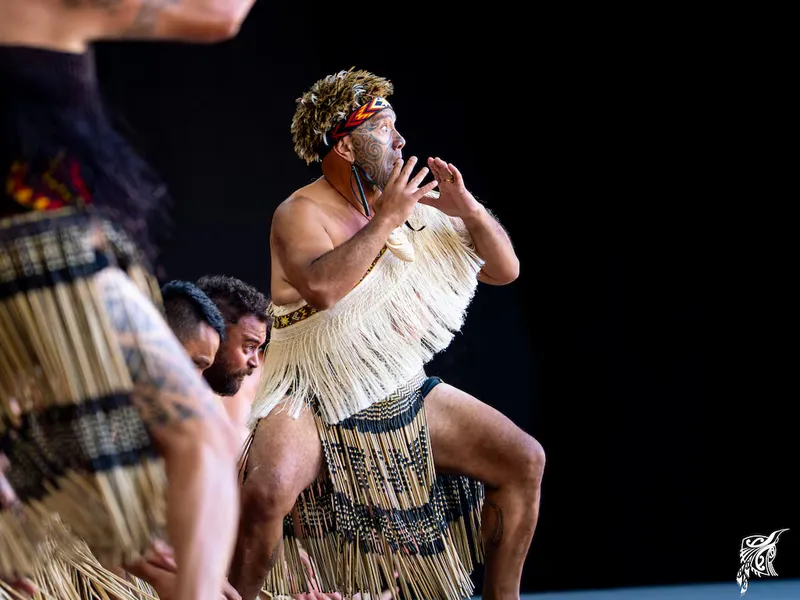
It would have been a welcome break from politics. The past three years have been tumultuous for Te Pāti Māori and Waititi, who has been co-leader since 2020. After the 2023 election, the party was riding high, with more MPs than ever in its history. Support for its kaupapa only grew after the nation’s largest hīkoi, which saw tens of thousands of people march to parliament in protest against a raft of controversial government policies targeting Māori, including the treaty principles bill. The group behind the movement and other large activations seen across the country, Toitū Te Tiriti, included Rawiri’s wife Kiri Tamihere-Waititi and Eru Kapa-Kingi, son of Te Tai Tokerau MP Mariameno Kapa-Kingi.
But things can change rapidly in politics.
One of the party’s MPs, Takutai Moana Natahsa Kemp passed away in June 2025. After an outpouring of grief, there was a byelection to organise in her seat of Tāmaki Makaurau. Then rolling calamity. MPs Tākuta Ferris and Kapa-Kingi were expelled after a very public falling out with the party. Eru lashed out at the party and Toitū Te Tiriti, fractured. The party was accused of running a dictatorship model and calls were made for a change of leadership. Legal challenges were launched.
The party looked to have imploded. Waititi said that trust needed to be rebuilt with some of the party’s followers. He vowed the party was ready to do that. “I regret that it had happened, and the way it happened, and the way it polarised our people. I regret that we got to a point where relationships were fractured,” he says now. “We dealt with it [in a way that was] very Māori, very public and very raw,” Rawiri says.
When the going got tough, Waititi returned to his wairuatanga. He called “his tohunga” Rikirangi Gage, the chief executive of Te Rūnanga o Te Whānau, the tribal council for Te Whānau-ā-Apanui. “Rikirangi has had a heavy influence on my life, and I appreciate his counsel and guidance… whether they're political phone calls or even spiritual phone calls, he's a tohunga when I need spiritual guidance in those particular spaces,” Waititi says.
Not many people from outside of the tribal boundaries of Te Whānau-a-Apanui would know Waititi is a minister of the Ringatū faith. It’s a role that sees him carry out karakia and services at funerals, hospitals, marae gatherings and more. Rawiri’s mother’s family were of the Ringatū faith and he was exposed to the church in his early years growing up in Whangaparāoa. But Waititi only pursued the faith later in life.
“Rawiri and his whānau have actually been instigators of building the Ringatū faith and extending its reach into the Cape Runaway area, where it had been missing for a long time,” Te Whānau-a-Apanui kapa haka leader Tamati Waaka says over the phone.
Central to the faith is founder Te Kooti Arikirangi Te Tūruki. Te Kooti is a widely regarded prophet, visionary, and spiritual leader. He was renowned for his guerilla warfare tactics during the New Zealand Wars, leading a daring escape from the Chatham Islands in 1868 and evading colonial forces for years.
If Rikirangi helps shape his spiritual life, Rawiri’s political life has much broader influences. His political idols include Malcolm X, Martin Luther King Jr. and Nelson Mandela. He likens the actions of Malcolm X to an enactment of the rights guaranteed to Māori under the second article of Te Tiriti o Waitangi – asserting the right to exercise authority over their own lives, communities, institutions and resources. The civil rights movement led by Martin Luther King Jr. however, was more aligned with the rights in the third article of te tiriti, Rawiri says. King's campaigns against segregation, voter suppression and discriminatory laws provide clear illustrations of article three's promise of equality. He sought to make the American state honour its existing constitutional commitments to black citizens.
Northern Māori MP Matiu Rata, a driving force behind the establishment of the Waitangi Tribunal, is also on his list of influences, as one of the “most underrated MPs” in our nation’s history. “He has been probably one of the best, if not the best political influences,” Waititi says.

But there has also been influences closer to home. Waititi moved to live with his father’s sister, June Mariu, in west Auckland’s Te Atatū North at 13. She was a prominent figure, having captained the Silver Ferns, represented New Zealand in basketball, and served as the national president of the Māori Women's Welfare League and a member of the Treaty of Waitangi Fisheries Commission. She was also instrumental in establishing Te Whānau o Waipareira, which started in 1982 to address urban Māori challenges from rapid urbanisation, high unemployment, low incomes, and poor education in west Auckland. Waititi was now regularly in contact with some astute political leaders.
“I remember [former prime minister] Helen Clark ringing Aunty June up for some advice around some issue. I can't remember what it was. People like Dame Georgina Kirby and Yvonne Willering would often ring too,” Waititi says.
Tuku Morgan, an MP and future president of Te Pāti Māori lived on the same road. So did MP Tau Henare. Cindy Kiro, who would go on to become governor-general, also lived on the street. “I would say it was the little street that could,” Waititi says proudly.
Even with a neighbourhood of political minds, however, it was the Tamihere whānau living in the house next door that would have the biggest impact on Waititi’s life. John Tamihere was chief executive of Te Whānau o Waipareira and considering a career in politics. In 1999, Tamihere successfully stood as the Labour Party's candidate for the Māori electorate of Hauraki, before winning the newly created seat of Tāmaki Makaurau in the following election. Kiri, his daughter, would eventually marry Waititi.
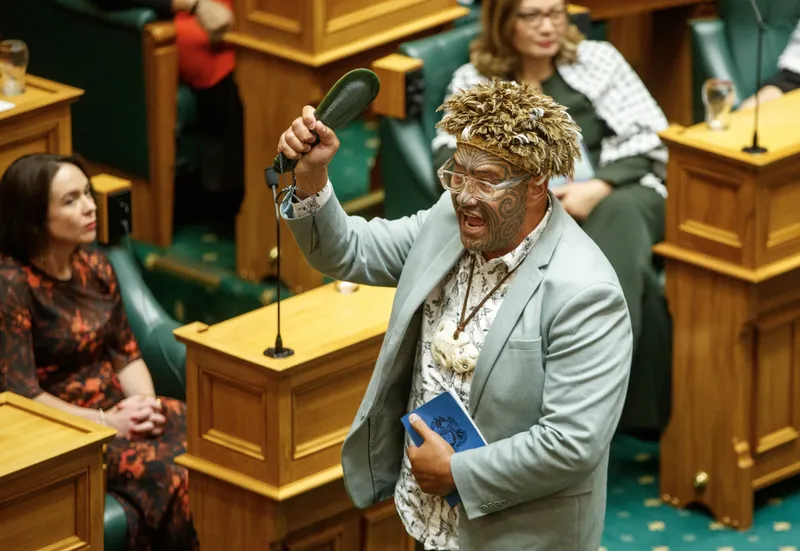
“They’re chalk and cheese, those two,” says Waaka of the couple. “She's been like how she is now from way back: You know, lay down the law, and from then until now, he [Rawiri] does what he's told,” Waaka says with a cheeky East Coast laugh. He should know, having performed with them for Te Whānau-a-Apanui kapa haka for 12 years.
After high school, Waititi joined Mariu working as a te reo teacher at his alma mater Rutherford College. Mariu encouraged Waititi to complete his degree in teaching, but he decided to join John Tamihere at Te Whānau o Waipareira as a cultural advisor and later the first manager for Whānau Ora. That’s when Mariu-Komene says Tamihere “took over”. Rawiri moved out of the Mariu household to live with Kiri and began a masters of Mātauranga Māori at Te Wānanga o Raukawa.
Under Taimhere’s guidance, Mariu-Komeme says she saw Waititi’s confidence grow. Listening to him today, you could almost mistake Rawiri for Tamihere. They both believe New Zealand’s constitution should be centred on te tiriti, that Māori never ceded sovereignty, and they’re vehemently opposed to the erosion of Māori rights. It makes sense that Waititi followed Tamihere into politics.
“Rawiri put his hand up when his father-in-law was in the Labour Party. It's quite an obvious, easy pathway for him into that world,” Waaka says.
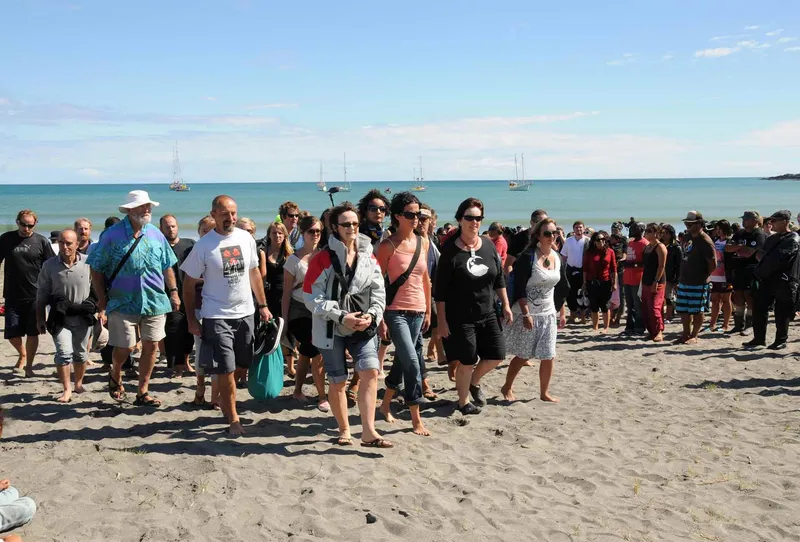
Waititi was particularly motivated after being heavily involved in protests against potential seabed mining off the East Coast of the North Island. “Petrobras threatening the seabed here in Te Whānau-a-Apanui was the catalyst that really catapulted me into this space… It really woke many of us up to the importance of participating at a central government level and not having the support or political advocacy at that particular time,” he says.
He wasn’t about to run for Te Pāti Māori. Back in the late 2000s and early 2010s, the party was supporting John Key’s National government via a confidence and supply agreement. Waititi says many in his rohe felt as though they weren’t being supported by either Te Pāti Māori or National in their opposition to the potential drilling.
Rawiri ran for Wairiki in 2014 but couldn’t beat incumbent Te Ururoa Flavell. Three years later, Te Pāti Māori was exiled from parliament after Flavell lost the Waiariki seat to Labour candidate Tāmati Coffey, and the party failed to cross the 5% threshold. In the lead-up to the 2020 general election, Te Pāti Māori president Che Wilson approached Waititi to see if he would stand again in Waiariki, this time as a candidate for Te Pāti Māori.
“He wasn't too sure whether he wanted it because of his tamariki being real young. I actually told him that he was the perfect man for the job… If anyone could win the Waiariki back for Te Pāti Māori, it was him,” Waaka says.
Rawiri was hesitant because he had seen the demands placed on his father-in-law during his time as an MP and government minister. “I said no a few times because I'd already smelt and felt it through the 2014 campaign with Labour, and I thought geez, I don't think I like this world,” Waititi says.
Eventually, Waititi threw his hat (he often wears a cowboy one) into the ring to stand again in Waiariki. Labour won six of the seven Māori seats that election, with Waititi the sole successful candidate for Te Pāti Māori, defeating Coffey by 836 votes. His father-in-law, who was at that point a co-leader of Te Pāti Māori, missed out on the Tāmaki Makaurau electorate by 956 votes. Waititi was joined by Debbie Ngarewa-Packer, the party’s sole list MP to make it in that election.
“His legacy will be bringing back Te Pāti Māori. I'll probably be teaching about him for my whole career, because he'll be in the history books for doing that,” says Lara Greaves, associate professor of politics at Victoria University of Wellington.

When he first entered parliament his vision was for Māori to be in their “rightful place as the indigenous peoples of this country and not sitting at the back of the queue”. Six years on, is his dream closer or farther away? “We're further away. It's actually got worse over the last three years,” he says without hesitation.
Since entering parliament, Waititi has been in opposition. He believes the party has notched up some wins after influencing the previous Labour government, saying Te Pāti Māori was the only party that campaigned on the establishment of a Māori health authority and pushed hard for electoral law reform. Despite this, Waititi acknowledges a lot of the wins achieved by Māori over the decades have been undone by the current coalition government.
Getting to a point to be able to influence policy decisions wasn’t easy, he says. “We went into that house with nothing. We had no systems. We had no caucus manuals. We had nothing.”
In 2022, John Tamihere became president of the party. The following year, Te Pāti Māori picked up six of the seven Māori seats at the general election – a historic result that delivered the most MPs the party had ever had in parliament. The party then developed a policy manifesto, had a haka go viral, and continued to grow its support.
Then it all imploded. It was a messy and stressful period for Waititi and his family. Things came to a head at the party’s annual meeting in December last year, with many airing their grievances about what had happened.
“Once it got to the media, we lost all control of it. I would have liked to have kept it in house and continued to have those discussions. Many of the other parties go through this, and some of them even worse. But they're able to contain those things a lot easier, and they don't have the pressure of the media wanting to see Māori continuously fail,” says Waititi.
He will admit some responsibility though. “I acknowledge that maybe we could have done things differently,” he says.
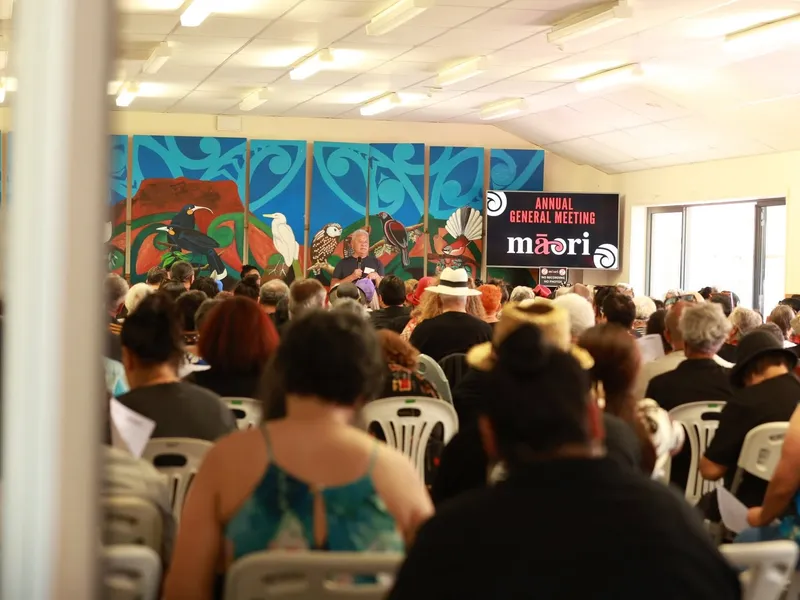
Despite calls for the party’s leadership to resign, the group managed to survive. Greaves says the challenges galvanised Waititi’s leadership and gave him a renewed sense of assuredness. “He's grown a lot of confidence over this time, compared to where the party was a year ago. It's been a quite positive upward trajectory,” she says.
Waititi credits his support networks – his close whānau, friends, and elders – for helping him get through the trials and tribulations of parliament and life as an MP and party leader.
“When he comes home, he’s haunga kāwanatanga,” Gage says. It’s a cheeky reference to Waititi stinking of the government when he’s been away in parliament. And it’s these sorts of remarks that help keep Waititi grounded when he’s been away. Gage says “sticking to the kaupapa” is both Waititi’s biggest political strength and weakness, something he reminds him of regularly.

Liam Rātana
Liam Rātana (Ngāti Wairupe/Ngāti Kurī) is editor of The Spinoff's Ātea section. He is passionate about indigenous and minority issues. Liam enjoys cooking, poetry, photography, and exploring the outdoors.


