What even is an ‘Asian’? And why are we bundled together?

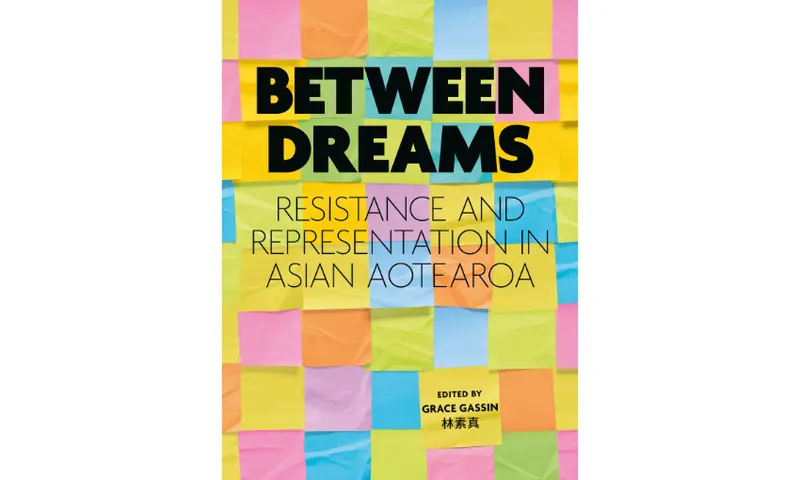
The cover of Between Dreams lies over top of a photo of ‘The Exodus from Vietnam’, maker unknown, c.1992. Museum of New Zealand Te Papa Tongarewa GH018489. Gift of Dinah and Richard Towle, 2022.
Made possible by


Tze Ming Mok introduces a new book that explores through art, activism, research and lived experience what it means to be Asian in Aotearoa. The following has been abridged from the original introduction to Between Dreams.
During the “Inv-Asian” migration wave of the early 1990s, you could see the Asians at school clustering together in class and lunch break. We didn’t know if we liked each other yet, because we didn’t speak the same languages or dialects. There was just an unspoken agreement that we wouldn’t try to hurt each other.
This is how you make friends, I think.
Spivak’s strategic essentialism is one way of Being Asian, but it also requires thinking through what your strategy is in aid of. To not get bullied, yes. What about the rest? Can we imagine something better? To make a real life for ourselves, with agency, humanity and validation of our specificity?
What even is an “Asian” and why are we bundled together, at lunch, in statistics, in books, in a blur of ill-fitting stereotypes? On the streets of Aotearoa, “Asian” is a racialised term specific to East Asians or “yellow” Asians. Meanwhile, Stats NZ defines “Asian” through a far vaster sweep of continental geography that takes in 60 percent of the world’s population – from Samarkand to Chennai, from Pyongyang to Bali. What about West Asia? You’ll have to ask the Iranians.
At a grassroots organisational level, pan-“Asian” community activism in the diaspora is often based on strategic alliances within state-determined funding of diversity, policy and community initiatives – the confines and definitions of which can be grating. But activism and community work inside these confines can also be generative, collaborative and specifically dependent on articulating difference within our tenuous alliance. We grind away for recognition of the term “Asian” as not simply inherently absurd, but – in the way we need to use it – as inherently diverse. We do so in order to deploy it meaningfully in public policy, in political analysis, in collective struggles and in our histories of ourselves.
“Asians” do not always have a shared ethnic history, language, religion, tradition or migration cohort. Oft-times, our homelands have been or are still at war with each other, even as others cannot tell us apart in the suburbs of Auckland. But more often, we do have a common history or experience of migration, arrival, settlement and daily life that has been governed by a racial and colonial logic marking us out for a clear purpose, which I will state bluntly: To return an advantage to colonial capital through replacing more expensive and better-organised labour.
The historical arrival of Asian peoples in Aotearoa is inseparable from the British drive for colonial expansion through Oceania, with New Zealand being just one outpost. Aotearoa Asians inhabit multi-levelled, multi-cohort, multinational diasporas connected by what Ballantyne would call the “webs of empire” – the giant bureaucracy of governance and trading interests – or what Wallerstein would call the capitalist world system – where legacies of racial ideologies, oppressive rule, and extraction of value from bodies and stolen lands in one part of the system wash up repeatedly on the shores of another.
Asian presence in Aotearoa is often the historical result of being filtered along these webs, in order to return value to the imperial centre. The historical transportation of Asian bodies to the Caribbean, South-East Asia and the South Pacific, including Aotearoa, was required to extract valuable material and agricultural resources from freshly acquired colonial lands – sugarcane, cacao, rubber, tin, gold. A century later, national immigration policies extract valuable human resources from the erstwhile Asian periphery and reallocate it to the neocolonial core that has grown up around the New Zealand settler state – nurses, doctors (including my parents in the 1970s), builders, teachers, IT workers.
Stories of New Zealand Asian achievement and nationalist dedication abound, but leave a bitter taste. Audre Lorde says you cannot dismantle the master’s house using the master’s tools. But, we whisper to ourselves, with our postcode envy from Mount Roskill to Botany, but – but – but what if I am the tools?
Is this all we have been doing this whole time? Tooling away industriously, hewing to the structure of white supremacy? Inhabiting the role of “middleman minority” used by the white state as a political, economic and administrative buffer against other groups denied power? To the contrary, this book shows how organising, agitating, joining rebel alliances and going in deep cover to challenge the dominant order has also always been the story of Asians in Aotearoa.
Much of our early story here takes place at the shifting borders of the periphery, where existing accounts repeatedly reveal natural alliances between those who were “together on the margins”. This includes ease of intermarriage between Asian labour and Indigenous people under white colonial rule that excluded and oppressed them both, as shown by the commonplace nature of Chinese ancestry among Aotearoa Samoans due to the history of indenture, or the well-documented whānau relationships and community connections between Māori and early Asian market gardeners similarly marginalised within the Pākehā settler-state.
Stories in Between Dreams include the recent reconnection between old-generation Chinese and the iwi who extended kaitiakitanga to the Ventnor remains, as explored by fourth-generation Chinese New Zealander Christopher Fung, bringing this relationship full circle over a century. Matua Moana Jackson’s example of the Taranaki Parihaka exiles in the caves of the South Island creating a protective cordon around Chinese gold miners inspired activist group Asians Supporting Tino Rangatiratanga (ASTR) in their kaupapa of reciprocity, mutual aid and solidarity with Māori. Fung is one of several ASTR alumni and affiliates who are contributors to this book, and to the 2021 public submissions on the New Zealand history curriculum consultation that inspired it.
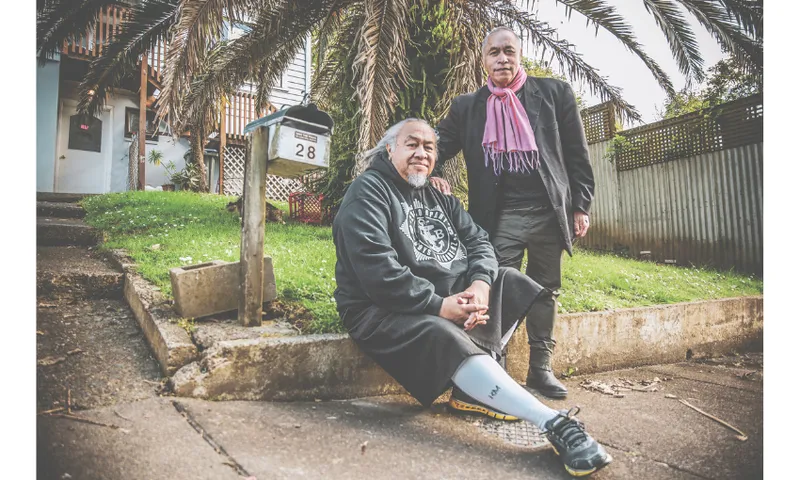
Post-war social movements had undercover Asians working alongside Māori and Pasifika in new ways. In their story of their Chinese-Samoan father – the unionist, community leader and broadcaster Sofi Pua – activists Mua Strickson-Pua and Sofi Pua Junior sense the echoes of indenture in Sofi Pua Senior’s advocacy against the Dawn Raid deportations, and their own protests against the Springbok tour. As part of a 1970s intellectual and radical milieu, Pua was a friend of James K Baxter, as was former Jerusalem commune member “Burma Bill” Maung, a political exile and former senior Burmese government administrator. Maung famously leveraged his cultural capital and high-level connections to become an intermediary between the New Zealand government and dispossessed Māori in gangs in the 1970s. Instead of representing the interests of the white elites as a middleman, Maung literally acted as an agent of Black Power.
The removal of New Zealand’s informal “White New Zealand” immigration policies in 1987 led to a rapid increase in Aotearoa’s Asian population. This initially led to an ugly surge in anti-Asian racism in the 1990s, mirroring that of a century earlier. In the 1990s, Manying Ip, a 1970s generation Hongkonger and academic, was the most prominent anti-racist advocate to speak out against this backlash, although the Chinese community in particular was split between new migrants with little political voice, and older communities trying to distance themselves from the new “rich foreigners” being targeted.
This new idea of “rich Asians” taking over Aotearoa was a totalising fantasy intended to mobilise the savage political force of racial resentment. This fantasy has been erasing the reality of Asian working-class and migrant labour struggle for decades. In a unique and important contribution to Aotearoa’s history scholarship, unionist Sun-Min Elle Park and curator/union delegate Grace Gassin highlight our long history and ongoing record of fighting for workers’ rights in Aotearoa, both within and outside of a trade union movement that has not always welcomed us as members.
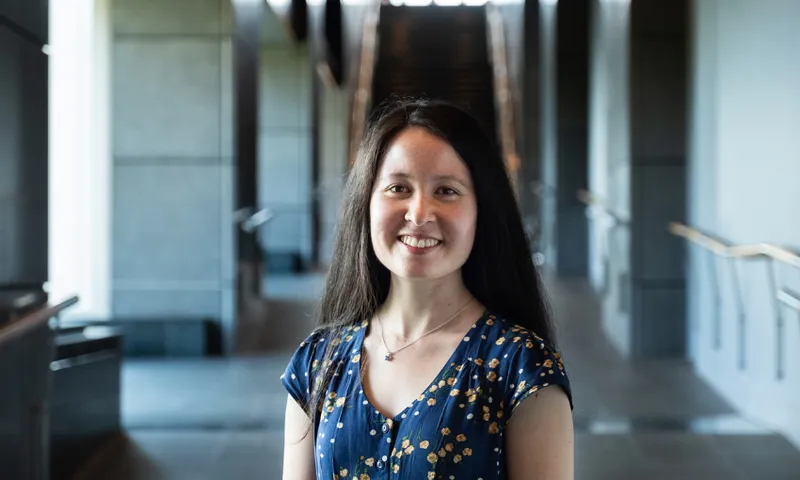
Aotearoa Asian communities built and consolidated throughout the 2000s, creating new alliances across the migrant cohorts, with a crucial bridging role played by 1.5-generation migrants coming to adulthood. The increasing ease of online communication had coincided with a demographic tipping point, and previously isolated progressive and radical Asians rapidly began forming networks throughout media, academia, community-based activism, the public and third sector, and the arts – a critical and diverse “Embedded Asian Underground”.
At this point in 2026, the majority of Asians in Aotearoa have no direct ancestral or familial connection to early Asian settlers and their stories of survival and solidarity. Post-1987 community histories underline the modernity of the Asian diasporas. Staying connected to identity in a politically and socially conscious sense is less about upholding an unattainable ideal of cultural and linguistic authenticity frozen in time, and more about continuing to engage in solidarity with the contemporary social and political life of countries in the Asian region itself – as much a part of normal day-to-day life as the extended family group-chat. The nature of Ong & Nonini’s diasporic “ungrounded empires” should not only be seen as the transnational relationships created by capital flows – but also networks of resistance to dictatorship, authoritarianism and colonial capitalism.
Stories and objects from these newer generations in this collection show that to be Asian in Aotearoa is to also participate and resist in ways that are specific to Asia and the Asian regional context. Sometimes this relates to the West’s imperialist or neoimperialist legacy of war, as Rebekah Jaung explores in her chapter on the memorialisation of the Korean war. Sometimes it is about our own homelands’ imperialism over others in the region.
Pan-Asian solidarity here is a precarious balance between historical colonisers and the historically colonised, transported to a new colonial framework in the Pākehā settler state. The Asian region’s geopolitical shifts in the last twenty years have ensured that bland liberal generalities are inadequate for even understanding what has historically been the largest single Asian population in Aotearoa, the ethnic Chinese. In a piece that strikes at the heart of the matter, former journalist Keith Ng reflects on his return to Hong Kong to join the city-state’s 2019 street revolution – a final mass show of defiance and identity before the descent of a new Iron Curtain.
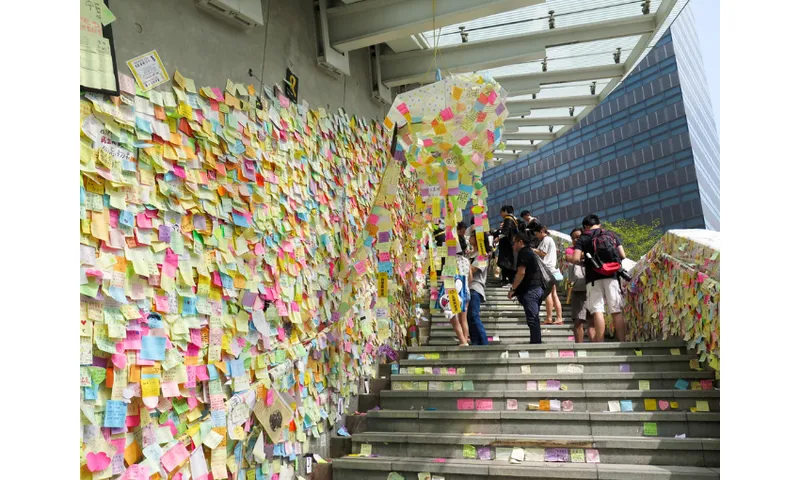
New moves from the old Biggest Empire in the region may already be splitting “Asian” solidarity unless we redefine the terms on which solidarity is based. Aotearoa has seen emerging, contingent alliances between those affected by the Chinese government’s new claims on the Chinese diaspora, and by its repressive rule at home. Similarly , those against the current Indian government’s turn to Hindutva fundamentalism, its persecution of Muslims, and the dismantling of Asia’s oldest secular democracy, have been coming together in a rebel alliance. We are still part of an intergenerational struggle to build, win and maintain post-Cold War democracy across East, South and South-East Asian countries, and to uphold those values in the diaspora. “Out here”, these once regional progressive solidarities have transformed into a global, transdiasporic collectivity – sometimes jokingly referred to as the Milk Tea Alliance, or simply the Asian anti-authoritarian left.
As I write this, a quarter of a century after the historical turning point of 9/11, we are witnessing a global resurgence of the far right, a collapse in democratic political norms, and a rapid decline in reality-based social and political discourse in the West. Political institutions only upheld by convention have proved no match for bad actors capitalising on the rapid peak and decline of the mass public sphere promised by social media. The canaries in the coal mine are dead; fascism is here.
Yes, the post-war consensus has collapsed. But that consensus – around liberal democracy, human rights and a humane welfare state – was never one that extended to Asian countries or Asian people. We had to fight for it, and some of us fought and lost – if not us personally, then our parents, our grandparents, our aunts and uncles, our cousins, our old neighbours and our friends. Aotearoa needs, right now, to learn from those of us who know what it is to fight for justice and lose. To give up and leave. We’ve seen things you people wouldn’t believe. We have gathered like dew, disappeared like mist and re-formed as tears.
All these “losers” and descendants of losers can tell you what the true cost of surviving is. But some also still hold on to what drove us to get into trouble in the first place, and what the purpose of survival is at all: to keep our identity, our values, and our stories alive. Even if it has to be in some other place – even in some place like this.
Between Dreams: Resistance and Representation in Asian Aotearoa edited by Grace Gassin ($50, Te Papa Press) is available to purchase from Unity Books. Gassin is delivering the Julie King Memorial Lecture at WORD Christchurch on Sunday August 6, details here.
The Spinoff Books section is proudly brought to you by Unity Books and Creative New Zealand. Visit Unity Books online today.

Tze Ming Mok
Tze Ming Mok is a writer, researcher and sociologist, best known in Aotearoa as a cultural and political commentator on racism and human rights issues, particularly those affecting Asian communities.


