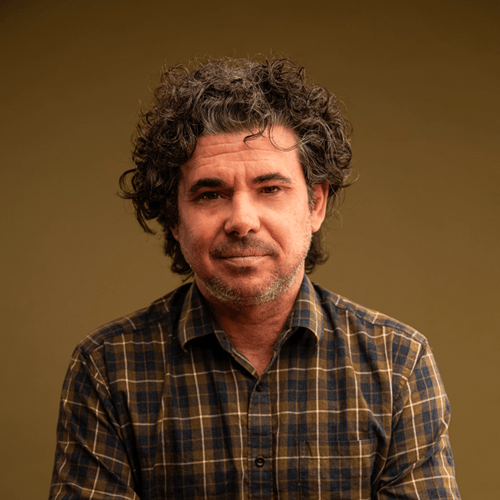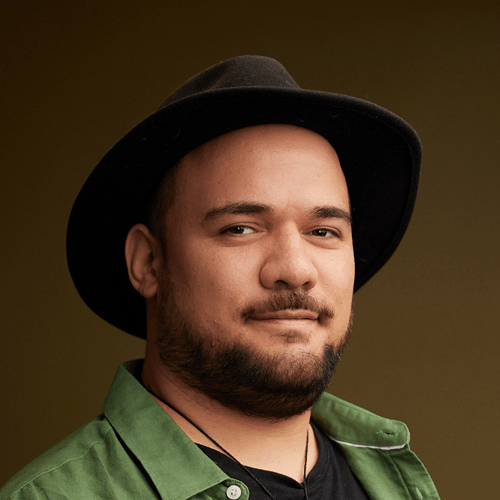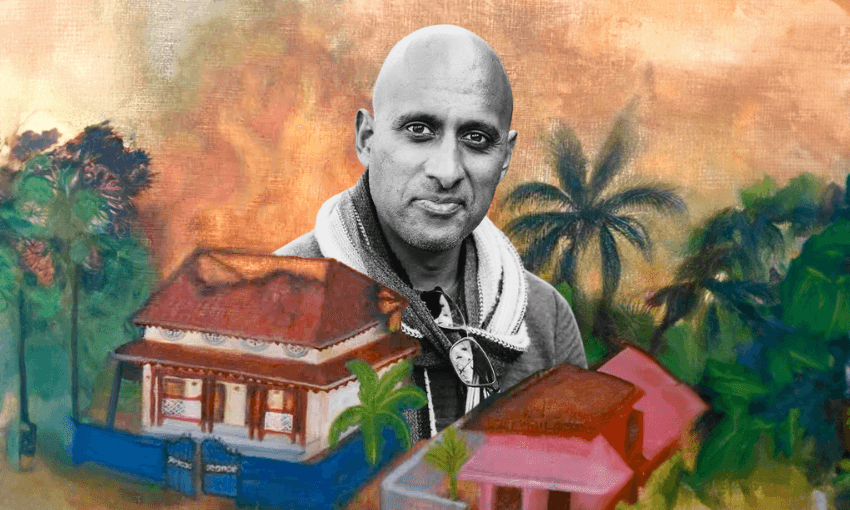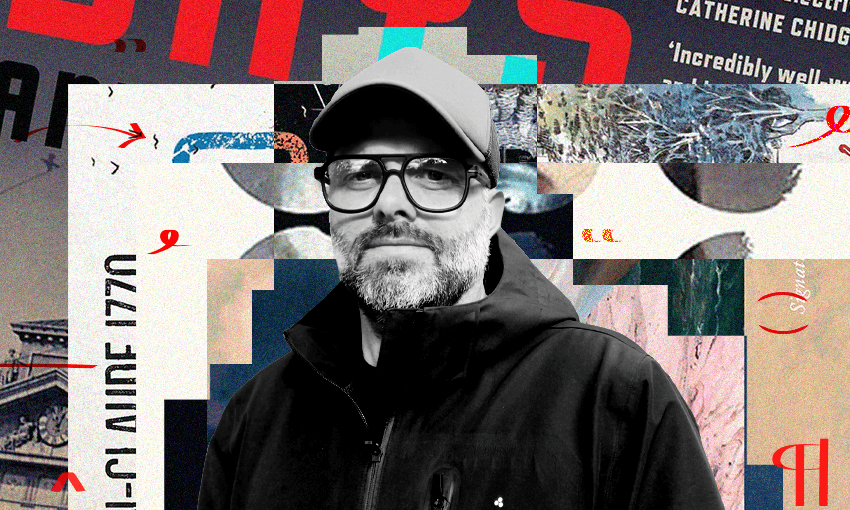

Welcome to The Spinoff Books Confessional, in which we get to know the reading habits of Aotearoa writers, and guests. This week: Anthony Byrt, author of Dying Days, a thriller set towards the end of the second World War.
The book I wish I’d written
I never really think about books like this because it’s so hard to write my own, let alone someone else’s. But if I have to choose, any of Peter Temple’s crime novels. Jack Irish (see below) is one of the great characters, and I think his arrival changed the game for Australasian crime writing. Having said that, Temple’s masterpiece is probably The Broken Shore, which isn’t actually one of the Irish books.
The book everyone should read
A Perfect Spy by John Le Carré because it really is perfect. It’s Le Carré’s best book, and more of a slow burn than the Smiley novels. Both the narration and the structure are really slippery, and it takes the full length of the thing before you’re confident you’ve got to the bottom of the story. At the level of the sentence Le Carré is as good as anyone, and this is some of his best prose. If you lean more towards literary fiction and have doubts about spy novels, this is the one that’ll convert you.
The book I want to be buried with
I’m terrified of burial. I remember watching the original Dutch version of The Vanishing when I was quite young – my parents must have rented it from Videon or something when that place was packed with arthouse tapes. I’ve spent my whole life watching horror films and that’s one of the only things that’s ever scared the crap out of me. The English-language remake with Kiefer Sutherland and Sandra Bullock was pretty good too. It’s cremation all the way for me.

Utopia or dystopia
Dystopia. But because I’m not really a sci-fi reader, my interests tend to be in the grimness of historical events. I’m a firm believer in history continuing to repeat itself so I’m always looking for the contemporary resonances in those moments. That’s why I’ve been focused on the origins of fascism and Nazism over the past few years: it’s a no-brainer that we’re going through something similar – the only question still to be answered is where it’s leading us.
Fiction or non-fiction
As a reader, fiction. I didn’t read a lot when I was a kid, but movies were a huge part of my life. In my teens, a bunch of us would go to double features at Charley Gray’s Cinema (now Capitol) on Sunday nights. I remember seeing some totally amazing stuff there – Brazil, Eraserhead, Cronenberg’s Naked Lunch, the Three Colours trilogy. Once I got to university I started to read fiction more seriously and it was mainly the Americans that excited me – I guess they were in similar spaces to the directors I’d been drawn to: Bret Easton Ellis, Paul Auster, Don DeLillo and so on…
The book that haunts me
I go back to Moby Dick every few years to try and get my head around it. Every time I do, it just gets more wild – it feels like the greatest piece of postmodern experimentation ever, but it was published in 1851. It’s nuts.
The book character I identify with most
I don’t know if I identify with him but in my 20s I fell for Tom Ripley. Patricia Highsmith made him so believable and easy to recognise: a young American trying to climb in the world, wanting to travel and experience new things. Europe was full of guys like that when I was travelling, probably still is. Her great move was to overlay a psychopathic edge but always have Ripley’s violence seem like a necessary inconvenience – something he wouldn’t do if he didn’t feel he had to. I’ve always loved that complexity. Later, I fell in love with Jack Irish, who is an altogether kinder and warmer guy but has a similar complexity and desire to touch the world.
The most underrated book
The Marseilles Trilogy by Jean-Claude Izzo. Izzo died fairly young in 2000 and this is his masterpiece – a series of three crime novels set in 1990s Marseilles. The main character Fabio Montale is a classic European detective: an outsider who hates corruption, hates his colleagues, and loves interesting women. He also hates racism – as the son of Italian migrants, he has a natural empathy with the young North Africans who are routinely persecuted by the local French cops. It’s a brilliant look at Mediterranean cultural politics, inside a hard-boiled wrapper. The first book, Total Chaos, is incredible.
Encounter with an author
When I lived in London, I wrote a lot for the Listener. I was really lucky in that Philip Matthews was the arts editor then and he’d commission me to interview prominent European authors. I once spent a whole day drinking wine at John Banville’s place just outside of Dublin, then staggered out to the airport for my midnight Ryanair flight home. But the most memorable encounter was with Javier Marías. He’s one of my absolute heroes. I spent about two hours with him in his Madrid apartment. He smoked and drank Coke the whole time, and we just talked about the craft of writing. He told me that he never plotted out his books, just found them as he wrote. At the time, I didn’t quite believe it. But when it came to writing Dying Days, I did something similar. It works.

Greatest New Zealand book
The Luminaries by Eleanor Catton. I think it’s one of New Zealand’s greatest works of art, in any field. It’s genius.
Greatest New Zealand writer
See above.
Best food memory from a book
Also from The Marseilles Trilogy. Montale likes to decompress from his extremely stressful police job by fishing then cooking a bouillabaisse or grilling a fresh bream and washing it down with a chilled local rosé, usually in the company of one of the intelligent and complex women who, despite his innate kindness, he can’t seem to hold onto for longer than about a hundred pages. It’s just so cool and simple and sexy. I love it.
Dying Days by Anthony Byrt ($37, Affirm Press) is available to purchase from Unity Books.