Why we don’t have a 24-hour commerce culture in New Zealand

A diminishing array of Denny’s are keeping New Zealand’s 24-hour culture alive.
It’s only partly because of our hobbit-esque love of a cup of tea and an early bedtime.
On January 16, Kaikohe Bakehouse Cafe made a surprise announcement on its Facebook page. The store was extending its opening hours. No longer would it only serve customers between 5am and 8.30pm. It was shifting to a full 24/7 service, offering its full menu of pies, steaks, stir fries and cooked breakfasts round-the-clock starting January 26. “As part of the celebration we are offering a special deal: any customers spending $50 or more get a free 1.5L of Pepsi range drinks or any free large coffee,” it added in a later post, saying the offer was only available from 5pm to 4am, aka the perfect time to drink 1.5 litres of Pepsi or a large coffee.
Ask bakehouse manager Stella Bizarras, and she says the decision to go 24/7 was just practical. They sell a lot of food every day and staff are always at the store in the early hours prepping sandwiches and pies anyway. “We decided, why not just put one person at the front and if someone wants to order a meal, the guys out back doing preparation can make it.”
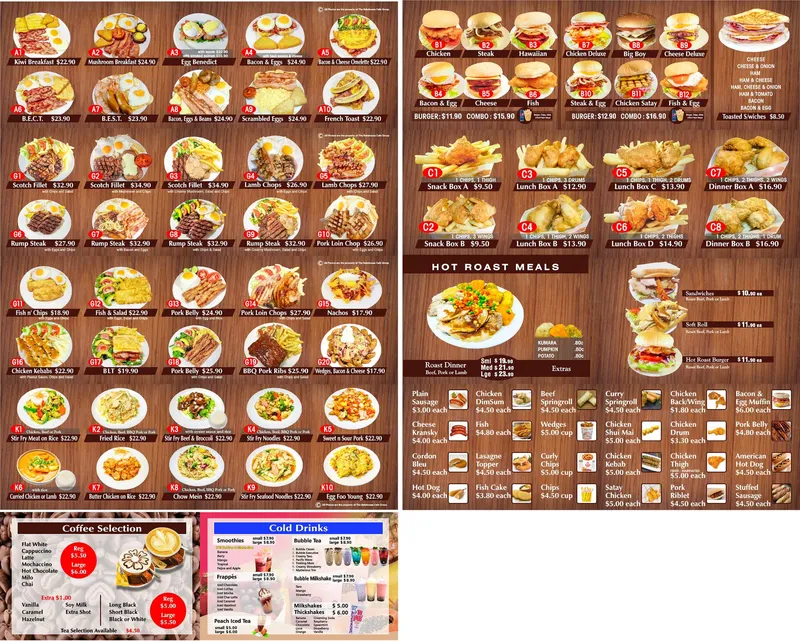
Even if there was an intuitive logic to it, the move was brave. Kaikohe’s population is around 4700. There are no other 24-hour eateries for hundreds of kilometres. None in Paihia. None in Kerikeri. Bizarras is from the Philippines, where customers have plenty of shopping options throughout the day and night. Most of the other staff come from Asian countries where late or 24/7 opening hours are commonplace. “So when we asked the staff, they were okay with it,” she says. “We are all used to the idea of opening late, plus now we can minimise our food waste.”
Kaikohe Bakehouse isn’t just an outlier in Northland, but New Zealand as a whole. Most of the country’s shops still shut around 6pm. There are few all-night or even late options on offer compared to countries in Europe or Asia, particularly when you venture outside our biggest cities. It’s not hard to find social media posts from disgruntled tourists who’ve wandered up to a closed café in mid-afternoon. “As an American in New Zealand, why do everywhere but bars, restaurants and supermarkets seem to close at 4 or 5 pm?” says one such entry from 2024.
Ancient elder Millennials might recall a time when it felt like things were changing. In the mid-2000s, Woolworths opened many of its Countdowns across Auckland 24/7. Denny’s famously became a 24-hour haven where patrons in various states of mental and physical dishevelment could drag themselves into the egg-filled arms of a budget breakfast at 3am.

But lately, just as they have in so many other parts of the economy and life in general, those small green shoots of late-night commerce have withered and died. Woolworths closed its 24-hour stores during the pandemic and never reopened them. Its director of retail Jason Stockill says the decision was motivated by an increase in anti-social behaviour in the central city, a change in customer shopping behaviour and reduced demand. “We have no current plans to reintroduce 24-hour trading,” he says. Even Denny’s has pulled back from its cross-the-board 24-hour service, saddling five of its seven New Zealand outlets with a midnight closing time. The situation deteriorated further recently, with a fire in a convenience store on the floor below forcing the closure of one the diner’s two remaining all-night options on Hobson St in Auckland.
Matthew Lane, general manager of the country’s oldest 24/7 chain Night ‘n Day, says New Zealand’s lack of a 24-hour culture comes at a cost. His company’s first ever store on Regent St in Dunedin is known affectionately by locals as the two-four. He sees its outlets providing an important service to people who need basic items after 10pm, including truckies, paramedics, inebriated pie-hunting teens and parents flailing in the face of unexpected poonamis. “Fundamentally, people need access to panadol, to nappies, to those core items,” he says.
Despite that, if it wasn’t part of the store’s core brand, Night ‘n Day wouldn’t be opening 24 hours. Lane says its stores lose money in the wee hours of the morning. Though some pin the blame for New Zealand’s short opening hours on our hobbit-esque predilection for a cup of tea and an early bedtime, he thinks it comes down more to a pure numbers game. “If you go to a place like Dunedin, there’s only a finite amount of people, whereas if you go somewhere like Chicago, you have 80-storey buildings around you, so you can have more places open.”
Retail expert Juanita Neville-Te Rito agrees New Zealand’s lack of late night commerce is more down to commercial discipline than culture. Between 10pm and 6am, retailers are having to shoulder increased security costs while dealing with smaller and more random purchases, she says. Though in places like London, that might be offset by alcohol sales, here licensing settings are more restrictive. “Late-night retail is not a cultural debate. It is a margin equation.”
Neville-Te Rito doesn’t see all that much wrong with the comparative dearth of 24/7 shops. “Part of what makes New Zealand unique is our culture. Family and whānau is important. Balance is important. We are not a hustle culture and that does make us laid back. I always think we should embrace that,” she says. Plenty of people agree that early closures can pay off for workers, who can benefit from predictable hours and the lack of pressure to become partially nocturnal. But Lane cautions against that. Though it’s sometimes hard to find staff for late shifts, there are plenty of people whose lifestyle is suited to working in the quieter hours, he says.
If our lack of late-night culture is an issue, the solution is the same as for a host of ills from carbon emissions to the cost of rent: build more apartments. There are pockets of 24/7, or at least late-night, commerce in New Zealand. They’re centred where urban density is the highest. In Auckland’s city centre, you can get a pedicure at 10pm or pizza at 4am. Those businesses are sustained by a mix of higher foot traffic, vibrant student culture, shift work and night life. The issue for New Zealand is that these sorts of areas are still relatively few and far between, with sprawling, single-house development still dominant. As Auckland mayor Wayne Brown recently told Newstalk ZB: “This is the world’s largest suburb and it has to become a city.”
Or does it? Though the density rule holds true most of the time, Neville-Te Rito agrees there’s a chicken and egg aspect to early closing. Shoppers aren’t around late because no shops are open. No shops are open because there aren’t any shoppers. John Moughan, co-owner of the Hamilton bar Last Place, says that cycle can be self-perpetuating. “The offering gets worse and then there are fewer people around and the places that are open do worse, on and on.”
But sometimes all it takes is a circuit breaker; a few brave souls ready to risk some money to find a new customer base. Moughan is committed to opening late as much as possible and trying to contribute to an overall improvement in quality and quantity of late-night commerce in his city. Up in Kaikohe, Bizarras and her colleagues are on more of a one-business crusade. She says there’s a quiet period between 1 and 2am, but outside that, they’re still getting a steady stream of customers. Young people stop in on their way home from a party. Police or paramedics order 2am coffees. McDonald’s workers visit after their late shift. None of them had somewhere to go before but they do now. “Some people say ‘oh, you guys are crazy. Why are you opening for us?’,” she says. “But it’s working pretty well at the moment. So far, so good.”

Hayden Donnell
Hayden Donnell is a senior writer for The Spinoff. He previously worked at RNZ, TVNZ and the New Zealand Herald, alongside other media companies that have since closed down or been renamed. His primary passions are local politics and the Big Fresh animatronic fruit and veggies.


