New Zealand just posted its best economic results in three years. But there’s a catch

The economy is going great! Or is it? (Image: The Spinoff)
Our economy was healing. Then the Iran war began.
Reading the latest quarterly GDP figures, released by Stats NZ on Thursday, leaves one with a bittersweet feeling. They’re the most optimistic numbers in years, but by the time they landed they were no longer true. It’s like finding out your old crush liked you when it’s too late to do anything about it.
The data shows GDP rose by 0.8% in the first quarter of 2026, the highest quarterly growth since September 2023. It was a higher rate of growth than in Australia or the United States, and well above OECD average. It wasn’t a random statistical aberration either. There’s a clear trend line suggesting the economy bottomed out in the June 2025 quarter and has been gradually building itself back up ever since.
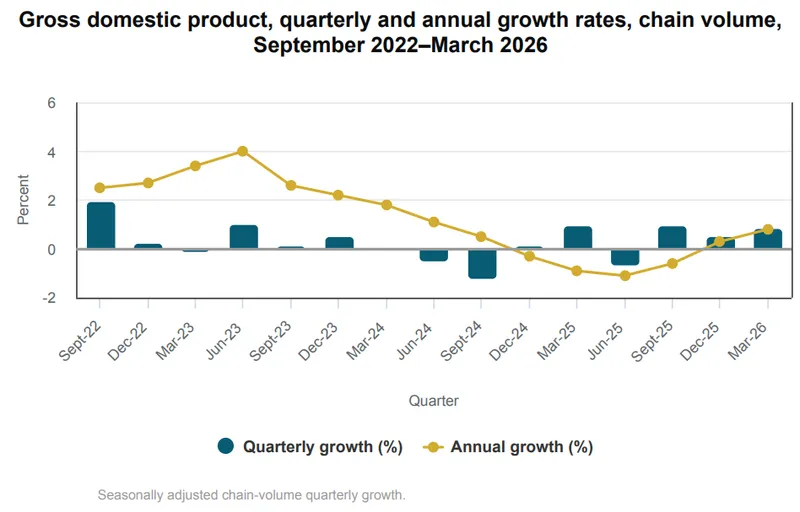
The problem is that GDP figures are backwards-looking. The numbers released on Thursday cover the January-March quarter, which mostly predate the Iran war. New Zealand’s economy was healing. Then the war began.
The conflict in Iran and the subsequent closure of the strait of Hormuz sent petrol, diesel and fertiliser costs skyrocketing. It took a toll on New Zealand through two channels simultaneously: businesses faced higher freight costs and tighter margins, which may have delayed some investment decisions, while households tightened their belt due to petrol eating up a higher portion of their income.
Next quarter’s figures won’t look as pretty. But that doesn’t make Thursday’s numbers meaningless. This is the clearest evidence yet that the “green shoots” politicians and commentators kept talking about were real. The question now is whether they survived the frost. Now that the US and Iran have signed a peace deal, can New Zealand get back to the business of growth, or have we lost our opportunity?
The most encouraging sign from the GDP figures, beyond the headline statistics, is where the growth is coming from. Previous quarters were buoyed by primary industries riding high farm-gate milk prices during a global food commodity boom. This quarter, primary industries are down slightly. The growth is coming from goods-producing businesses and the services sector – which, despite what politicians like to say, are the actual backbone of the New Zealand economy.
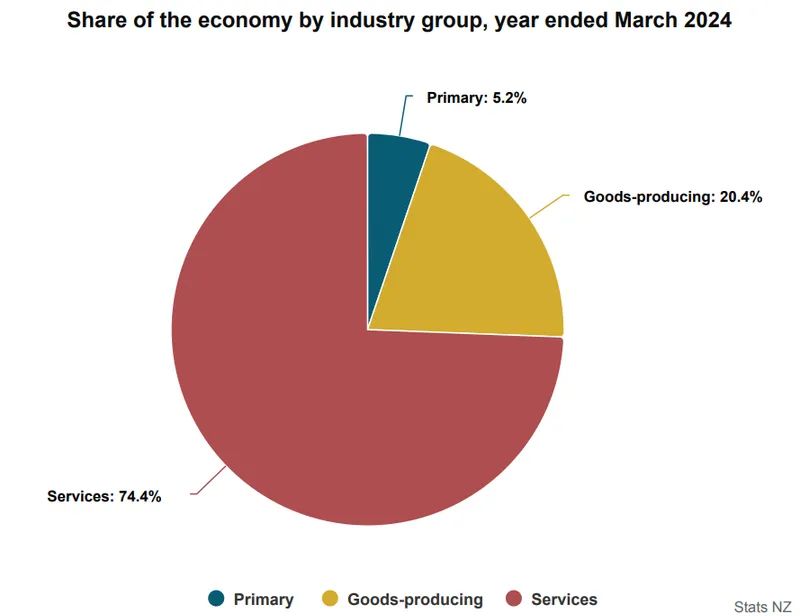
Manufacturing was the largest-growing sector in dollar terms, followed by business services, with wholesale trade growing fastest in percentage terms. Growth in these sectors is a promising signal. Businesses investing in new equipment and signing wholesale deals are not businesses in survival mode. It’s a sign that they’re gradually pivoting to grow rather than consolidate, and helps to create a range of jobs across income levels.
On the household side, there are more positive, if fragile, signs. Household consumption rose 0.5% for the quarter and 1.5% for the year, with retail trade and real estate spending both ticking up slightly. The largest spending increases were in grocery food, secondhand cars, and audiovisual equipment. When an economy is emerging from recession, this is exactly what early recovery looks like: people making careful, calculated purchases before they start splashing the cash.
The most serious concerns are the areas that aren’t growing, despite regulatory reform and active support from the government. Mining is down 11.6%, continuing a multi-year trend despite a brief uptick towards the end of 2025. Construction and financial/insurance services also suffered big drops. These are cyclical industries which benefit from low-interest-rate environments, which New Zealand doesn’t have right now.
The longer-term concern is structural. When demand returns to both sectors, New Zealand may not have the workforce to meet it. Construction has lost tradespeople to Australia at record rates, accelerated by a wave of business liquidations. The same thing is happening in financial services, with bankers and analysts leaving higher-paying markets overseas. The only difference is that they wear suits, not hi-vis.
The next GDP figures, which will capture the full weight of the war, are due on September 17, seven weeks before the November 7 election. They will almost certainly be ugly, and the timing is unfortunate for the government, though largely outside its control.
It might make for some bad headlines, but ultimately most normal people (ie not the obsessives and nerds reading this article) don’t form their opinions on the economy from three-month-old data releases but from what they feel in their back pocket. If the peace deal holds and fuel prices keep falling, that lived experience may tell a more optimistic story than the September numbers will. If it doesn’t, no amount of pointing to the March quarter will save the government from what’s coming.

Joel MacManus
Joel MacManus is a senior writer for The Spinoff. He previously worked at RNZ and Stuff, and began his career at Critic Te Ārohi. His writing explores the political, economic and cultural systems that underpin modern New Zealand. He won the 2025 Voyager Media Award for Best Columnist, Opinion or Critique.


