Burtfield’s & Co’s salted butter is cheap, but is it any good?

Is the American butter a pale imitator or worth the savings? Graphic: The Spinoff
The Spinoff team tests new, cheap American butter Burtfield & Co against old Kiwi favourite Anchor.
Wait, what’s the latest in butter news?
Didn’t you hear? Pak’nSave is selling butter for $6.99! Burtfield’s & Co salted butter comes all the way to our shores from the United States. It’s imported and branded by Dairyworks, a Christchurch-based dairy manufacturer owned by New Zealand company Synlait.
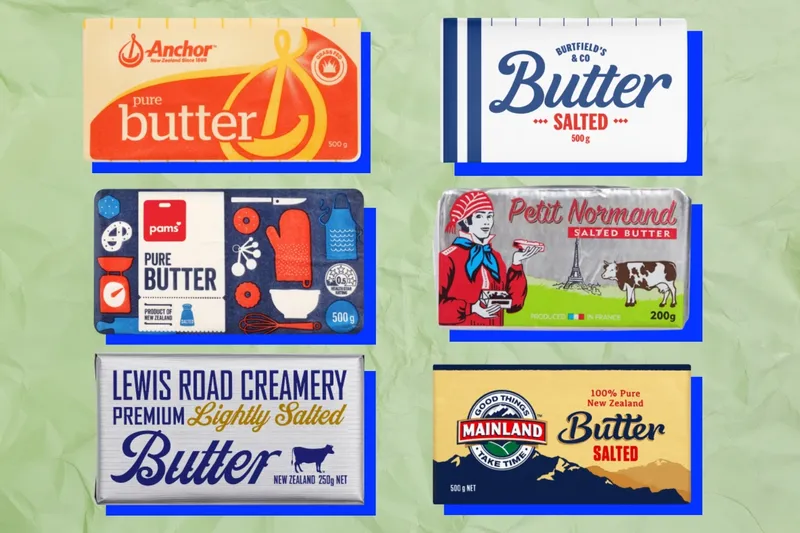
The Burtfield’s blocks arrived at North Island stores last week. South Island supermarkets get them this week. The butter is a “short-term addition” to the Pak’nSave range, according to the supermarket’s parent company, Foodstuffs.The rest of Pak’nSave’s butter range is dominated by New Zealand products, which are all more expensive than the new US block. Per 100g, they rank like this: Lewis Road Creamery is most expensive at $3.36, Mainland is second at $2.60, Anchor is third at $1.72 and Pam’s is fourth at $1.44. Burtfield’s price shakes down to $1.40/100g.
Why is this imported butter cheaper?
The butter was bought at a fortuitous time for the market, when US butter prices were trading below New Zealand’s export-linked pricing. It was acquired for a “very competitive price”, according to Foodstuffs, which is reflected in how much the supermarket is selling it for.
“Dairyworks had an opportunity to secure a supply of US butter at a great price several months ago, so we jumped on it,” confirmed Dairyworks’ general manager of sales, Mark Simpson.
So what does it taste like then?
Good question! The Spinoff bought some and compared it to good old New Zealand brand Anchor. We wanted to know just how different butter brands could be, given they only contain salt and cream (in New Zealand milk fat must be over 80%), and the levels of salt were near identical, with 643mg/100g for Burtfield’s, compared to 600mg/100g for Anchor.
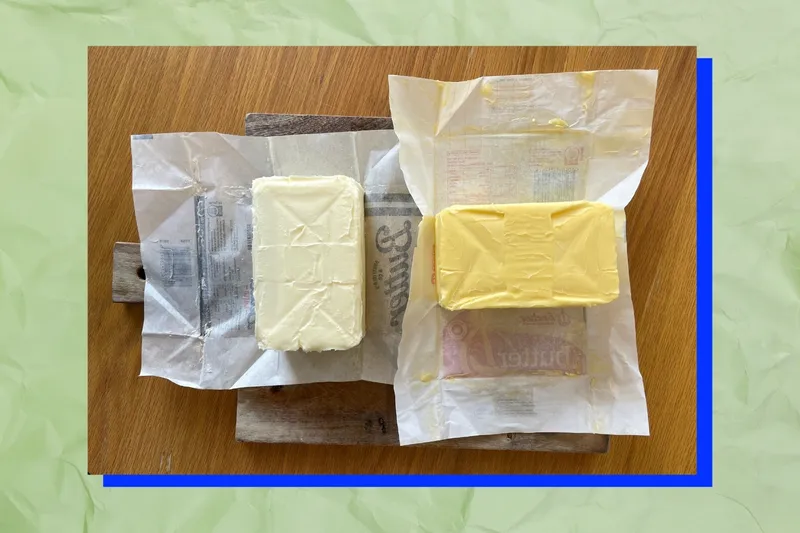
Well, the differences began to show immediately. The Burtfield’s block felt softer than the Anchor butter, even when both came straight from the chilled dairy aisle. The Burtfield also had a noticeably softer texture and spread more easily on bread. It also seemed glossier.
The difference in colour was stark. The New Zealand butter is a sunny yellow while the US stuff is so pale, it was almost white. As the Spinoff team gathered around to stare in wonder at the new butter in town, one staffer likened the appearance of the American butter to lard.
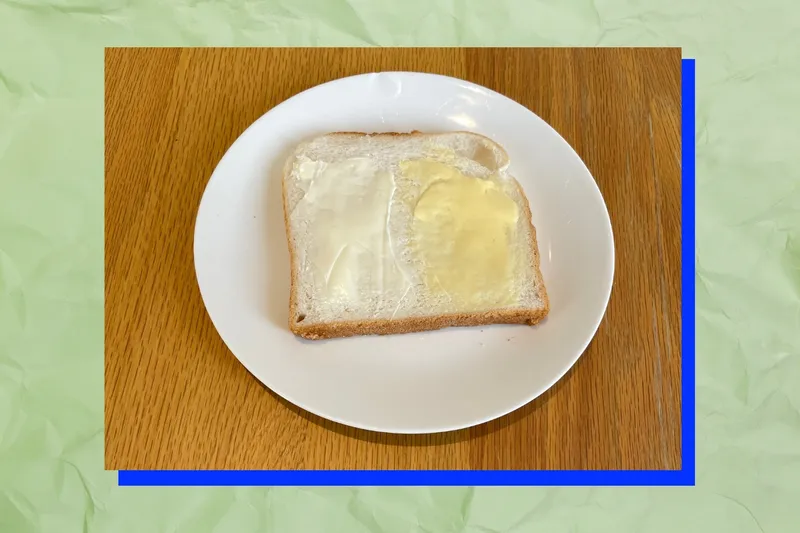
Not everyone was bothered though. “As a New Zealander who grew up on the wrong side of the great 1990s margarine/butter divide I am not fazed by the paleness, in fact I find it kind of nostalgic and comforting,” said production editor Calum Henderson.
Spinoff editor Veronica Schmidt wasn’t having it. “It’s so very white, ghostly even. Maybe it’s made from ghost cow?” After tasting it, however, she softened. “If I hadn’t seen it and only tasted it, I wouldn’t have known the difference. And with everything costing eleventy million dollars now, I’d absolutely buy this to save some money.”
Putting that to the test, The Spinoff moved to a highly-scientific blind trial, involving closing our eyes. The control was… well, there was no control. Nonetheless, we’ve decided the test conclusively proved the butters were much of a muchness taste-wise, based on the fact people mostly couldn’t tell the difference.
It’s true that some of the team banged on about how the NZ block seeming slightly better, but then at least one staffer declared the US interloper the winner.“It’s got a richer flavour profile. I can taste the butter more,” said podcast manager Te Aihe Butler.
What about its provenance? Gemma Spring, burdened with the role of HR and finance support for The Spinoff, said she would “hesitate to buy it because it’s imported”, but admitted the price made it appealing.
New Zealand butter is too expensive for Bec Murphy, from The Spinoff’s commercial team, to remain patriotic. “When you have a big family, price can outweigh making more conscious decisions like costs to get the butter to our shores, carbon footprint and quality,” she said.
It was Ātea editor Liam Rātana who possibly summarised the minute taste difference best. Burtfield’s “tastes like butter,” he said and the New Zealand block “tastes like the butter I know”.
So, it tastes like, well, butter, but why does it look so different to NZ butter?
The colour of any butter depends on what the cows are eating, says Alistair Carr, associate professor in dairy technology at Massey’s School and Food Technology and Natural Sciences. A very pale block “would be a fair indication” that the butter comes from grain-fed dairy cows, he says.
Only 16% of US dairy farms are pasture-based, although some estimates put the figure at 5%. In New Zealand the dairy cows tasked with supplying milk to Fonterra are 96% pasture-fed. The yellow colour of our butter comes from the beta-carotene in grass.
Studies have shown consumers can discern a difference in flavour between butter from grain and grass-fed cows, says Carr. It’s possible this means The Spinoff team are not very discerning people.
OK, what else is different about the US dairy industry?
Genetically modified (GM) crops and hormones.
The US Food and Drug Administration reports that 95% of animals used for meat and dairy in the US eat GM crops. New Zealand has banned the growth of GM crops for three decades, however GM foods are imported and sold in our supermarkets. Some experts and industry bodies think our rules are stifling innovation and back the government’s gene tech bill, which would make changes.
Some hormones banned in New Zealand are allowed in US farming. Recombinant bovine somatotropin (rbST), a synthetic growth hormone that increases milk supply, is FDA-approved and widely used in the US. Although it’s not approved in New Zealand, our standards don’t apply to the animals used for imported dairy products, says Carr. “But the food coming in must comply with food standards.”
Is this whole imported butter thing new? Is that why we care?
No. Lurpak from Denmark has been sold in our supermarkets for years. This isn’t even the first time American butter has been sold in New Zealand, Carr says. In the 1980s the New Zealand Dairy Board bought 100,000 tonnes of surplus butter from the US. Initially packaged as Fernleaf, it was rebranded as Twin Flags. “The trial did not last long and the product Twin Flags did not capture much of the market,” Carr says.
The reason we care this time is because Burtfield’s is cheaper than the other options and recently the increasing cost of butter has become symbolic of our cost of living challenges.
So are we going to see more lower-priced American butter around?
Maybe. Foodstuffs wants to see how shoppers respond. “If customers like it and we can source it at a competitive price, we’d certainly consider it again, but there’s no decision beyond this initial supply.”
Dairyworks is also keeping an open mind. “If it sells well and the prices align in the future, we’ll look to do it again,” says Mark Simpson. “It’s different to what we’re used to, and we know Kiwis are passionate about dairy so we expect there’ll be some debate.”

Emma Gleason
Emma Gleason is a staff writer at The Spinoff and an award-winning fashion journalist. But it’s not just clothes that interest her, you’ll find her exploring tasty cheese, influenza outbreaks and more important things right here. She has experience with some of the country’s leading media outlets as well as the toaster in our kitchen.


