‘Just useless’: What it’s like working with Burger King’s AI assistant

Image: Getty (Addition design by Tina Tiller)
Burger King’s AI assistant Patty has been brought in to ‘support’ the human workers – but some say it is doing the precise opposite.
It was the most curt drive-thru greeting I had ever heard. “Place your order,” said the posh British woman, who sounded a bit like Veruca Salt all grown up, without so much as a “hello” or “please”. As my notoriously mumbly husband started to order chicken bites, she cut him off mid-mutter. “Can you speak up?” she said. “Can you speak up?” Without warning, she then started listing off dipping sauces, and it was only when I clocked her experimental pronunciation of “aioli” (eye-oh-lie) that I realised: we hadn’t been talking to a real woman at all.
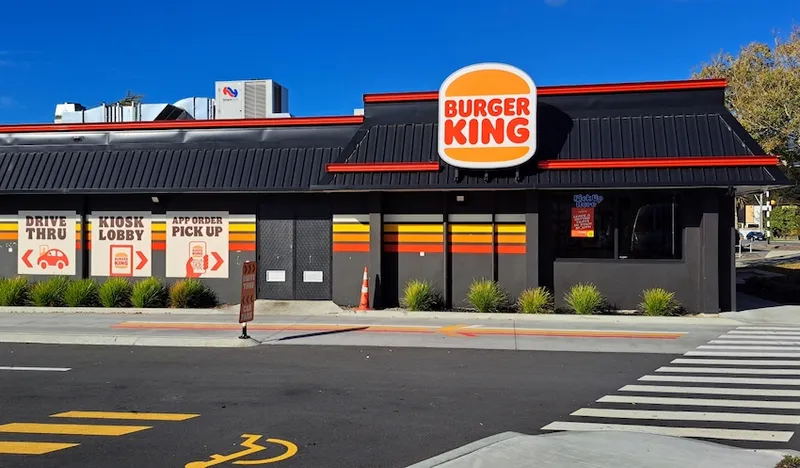
This was my first interaction with Patty, Burger King’s AI assistant that first arrived in select Auckland locations back in 2024, and is now brusquely taking orders at the drive-thru in 40 restaurants nationwide. “It allows our team members to focus on preparing great-tasting food, maintaining speed of service and delivering friendly hospitality,” a Burger King representative told The Spinoff. “We see AI as a tool that supports our people and enhances the drive-thru experience; however, our team members are still key in serving our customers.”
One such team member is 18 year-old Zaria, who worked at the Wainuiomata Burger King for over three years, including during the introduction of Patty just a few months ago. “When it first came in, it was so stressful because none of us had any training on it, so no one actually knew what was going on. There was no pre warning or anything – it was just shoved in our faces,” she says. “We were told ‘we have an AI person at the drive-thru to take the orders now, here’s the headset’ and then I was just left trying to figure out all the new buttons.”
Immediately, Zaria began to encounter problems with her new colleague. “If you have a slightly different accent than whatever British English it is set to, it can’t properly understand what you’re saying,” she says. “Obviously there’s so many different accents in New Zealand that it was just useless.” Zaria started double checking everyone’s orders at the payment window, and estimates only one in five orders taken by Patty would be correct. She would then have to redo the orders, which sometimes meant discarding food that had already been made.
Order customisations and customers using codes from the Burger King app also caused issues. “The AI can’t deal with anything like that, so it just sits there and freaks out,” says Zaria. “It would just scream gibberish into my ear, but it wouldn’t actually say what the customer was needing help with.” Other times, team members would not be made aware that the customer even needed any help. “The AI wouldn’t notify us at all, so then the customer is sitting at that speaker for five minutes getting pissed off, because we have no idea they need help.”
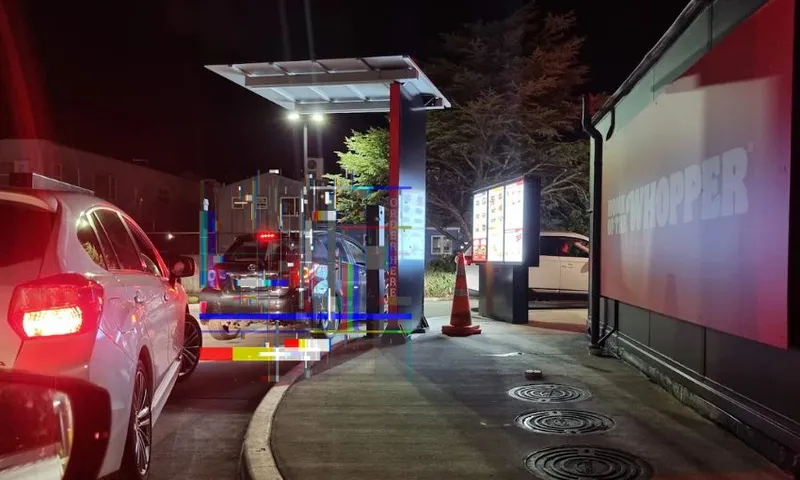
Sometimes the hurdles Patty encountered were not even human in nature. “When the AI first got put in, we could only use one of the two drive-thru lanes because she kept glitching out at absolutely everything in the second lane,” Zaria says. “There was a bird in the lane, and she just kept going, ‘Place your order. Place your order. Place your order’ to the bird, so we had to close the whole lane.” That meant that cars became backed up, which added extra stress on staff. “It was brought in to help speed up service, and it has done the complete opposite.”
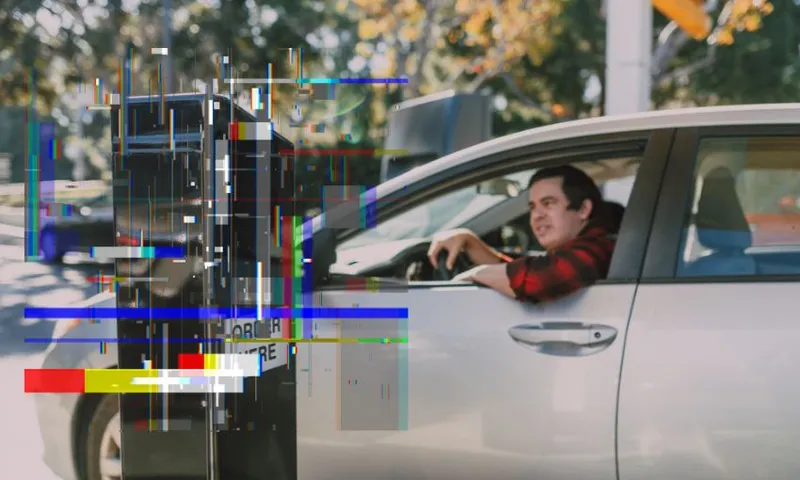
Customers also found their interactions with Patty to be unpleasant. “Because the AI doesn’t have good customer service skills, people would think that it was me being really rude to them,” says Zaria. “I have heard a couple of people who actually refuse to work the drive-thru now because of it.” One customer told The Spinoff that they too had to be less polite to order efficiently. “We had to start not saying ‘please’ or ‘thank you’ when ordering because it understood it better, and then I accidentally did it with a real person and felt like a right A-hole.”
A representative from Burger King NZ said they were “disappointed” to hear of these negative experiences with Patty, and maintained that team members were adequately trained in its use. “Introducing new technology always involves a learning period, and we recognise there can be challenges as new systems are embedded,” they said. “Our expectation is that team members are supported throughout that process, and we will review this feedback with the relevant operational teams to determine whether any additional coaching or training is required.”
While Burger King disputed that Patty has increased both wait times and food wastage – claiming Patty has an order success rate of more than 85% on average, and that wait times have not changed since its introduction – they acknowledged that limitations remain. “Patty does not yet process Burger King App codes, and improving this capability remains a high priority,” they said. “While Patty continues to improve and can occasionally struggle with some orders, our testing has not identified any particular accents that it is unable to understand.”
Zaria says the introduction of Patty added a lot of stress to an already stressful job, and she and her colleagues tried to find ways to turn it off on their shift. “It would have been a hell of a lot easier just to have kept it how it was.” Ultimately, Patty contributed to Zaria’s decision to leave her job at Burger King entirely. “I think it’s just totally unnecessary,” she says. “Why do I need a robot to do my job for me when I was doing it perfectly fine for the last two and a half years? And what’s the point of us being here if we’re only doing half the job?”
Gerard Hehir, national secretary for Unite Union, is concerned by feedback from union members that Patty is increasing the level of frustration at the drive-thru. “One of the big things that causes customer aggression and abuse is long wait times and delays, so if the AI is not understanding you, or getting your order wrong, of course that could increase it,” he says. “Understaffing is always a huge problem, particularly in winter when people get sick. So anything that might cause further delays is a concern because there’s already a lot of problems at play.”
At least for now, Patty isn’t outright taking anyone’s job in fast food – in fact McDonald’s ended its trial of a similar AI technology in the US after a litany of problems including hundreds of McNuggets being added to an order. “The actual taking of the order through the speaker is only a tiny fraction of one job at that place,” says Hehir. “When you actually look at the physical complexity combined with following all the right processes and monitoring temperatures and things, these fast food jobs are actually complex enough that there’s plenty of occupations that’ll go before those ones become fully automated.”
In the meantime, Zaria is taking a small stand by avoiding her fraught former colleague when she visits Burger King these days. “If they’ve got the AI in, I won’t use it,” she says. “If I want food, I’m going to go in and talk to a person every time.”

Alex Casey
Alex Casey is a senior writer at The Spinoff with over a decade of experience writing about popular culture and social issues in Aotearoa. She lives in Ōtautahi and likes watching reality TV and walking the dog, occasionally at the same time.


