The greatest hits of Matthew Hooton, the new editor of The Post

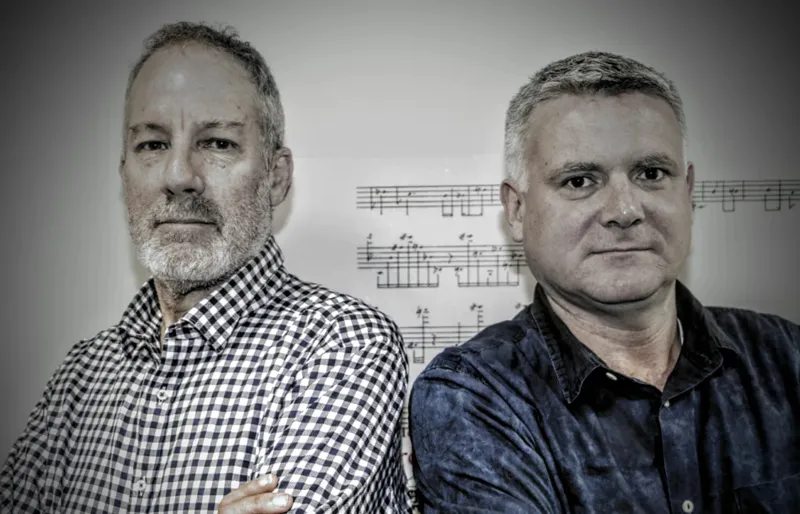
Matthew Hooton, incoming editor of The Post. Photo: Tina Tiller
Who is the new editor of Wellington’s newspaper? He is many, many, many things.
The seismographs of Wellington bounced off the walls this morning, triggered by all the jaws hitting the floor. The new editor of the city’s daily newspaper, replacing Tracy Watkins, had been announced: Matthew Hooton.
With a back catalogue spanning political speechwriting, corporate PR, commentary, scheming, philosophy scholarship and Mongolia, Hooton can boast a captivating CV. But, as the title he is about to take charge of pointedly noted this morning, “there’s one thing missing from his list of credentials: journalism. Hooton has never trained as or been a journalist, yet he’s now the new editor-in-chief of The Post”.
Controversial, combative and never dull, Hooton has a chunky list of greatest hits. These are some of them.
November 1991 – a teen in the Beehive
Having completed schooling at Auckland Grammar, Hooton had gone on to Auckland University, but by the second year found himself “drifting”, he told the Spinoff last year in an interview for the Juggernaut series. He heard of a job going in the office of the education minister, Lockwood Smith.
Said Hooton: “I just announced myself as the best speech writer in the world and said, you know, he had to hire me. He didn’t immediately agree with that proposition. So I rang his senior private secretary, Beryl Bright, every Wednesday, just after question time, to say, has he made a decision yet? And after six months, I think she got sick of me and gave me what was meant to be a summer job, but turned into a seven-year job.”
He was 19 at the time. “It was illegal to drink in the 3.2 [bar] in the Beehive when I started. So I was an illegal drinker at the very heart of government for a month or two.”
Hooton served as press secretary and speechwriter. He became friends with Todd Muller, at the time a staffer in Jim Bolger’s office. “It was a dream come true.”
November 1996 – wanderlust
Hooton left parliament to travel. “I got very bored with the coalition negotiations in 1996, they just went on and on,” he said. “We were forbidden from doing any work for constitutional reasons. I got sick of that, so I bought a one-way air ticket to India.“
2000 – the private sector
Having returned to New Zealand and after a short second spell in Smith’s office, Hooton took up the role as head of communications for Fonterra for a couple of years.
2003 – boosting Brash
In a freelance capacity, Hooton worked with Don Brash and helped him in his efforts to become leader of the National Party. Hooton later appeared in Nicky Hager’s 2006 book The Hollow Men, based on correspondence that details National campaign strategy in the lead up to the 2005 election.
January 2005 – the grinfuck industry
Hooton founded Exceltium, a PR and lobbying firm, with a range of corporate and iwi clients. “We designed strategy-led communications programmes that shifted opinion and policies to support the business plans of our clients,” he says on Linkedin. Staff members will include Ben Thomas and Brooke Van Velden.
The most important client in the early days was the Kyoto Forestry Association. “They ended up delivering about $1.6 billion to the client in carbon credits,” said Hooton in a 2019 interview with the Spinoff. “That was in the dying days of the Helen Clark government. They did a U-turn and allowed the clients to participate in the emissions trading scheme.”
Part of the job as a lobbyist was to sort meetings for clients with senior MPs. “Usually the person gets ‘grin fucked’ by the politician and nothing happens,” he said.
Asked in 2019 to describe his function within the New Zealand political landscape, he said: “I think that I’ve been involved in politics and business and the media for nearly 30 years, and I think that – and this is a boring old man answer, as well – we all have different functions. When we’re 20 we can be the young radical Milton Friedman. I think that one of my roles now is to see events and give them greater meaning by putting them in the context in which they occur, from a well-known perspective. And that’s increasingly rare in the New Zealand landscape.”
2014 – confronting alcoholism
Hooton quit drinking. “It’s one of the most joyous and exciting things that I’ve ever done,” he said in 2019. “It was out of control and it was damaging my life and it was putting everything I valued at risk. And there was an intervention by two very good drinking buddies. At the Wine Loft on Shortland Street,” he said. He has been an active member of support groups since.
August 2014 – Dirty Politics
Another Nicky Hager book had Hooton in a supporting role. Dirty Politics, based on correspondence hacked and shared by “Rawshark” explored the relationships between John Key’s prime ministerial office, rightwing bloggers and the media.
2017 – working with David Seymour
Hooton and Exceltium worked as strategic advisers on the Act campaign. At the election, Act won 0.5% of the party vote.
December 2017 – Mongolia
Hooton was appointed honorary consul for Mongolia in New Zealand. His interest in the place goes back to the 70s.
“When I was a little kid, I had a map of the world on my bedroom wall,” he told me last year. “The Soviet Union and China were both in yellow, and there was this green island in the middle – a landlocked island. I thought: I wonder what that is. So that’s why I first became interested.”
Hooton has worked as a visiting associate professor teaching philosophy at the National University of Mongolia. He helped to arrange Winston Peters’ visit to Ulaanbaatar in early 2025, during which the foreign minister was presented with a horse called Stamina.
April 2018 – sued by Joyce
Hooton apologised and pays a settlement to Steven Joyce over claims he’d made about the former National minister in a National Business Review column.
May 2020 – the Muller moment
Todd Muller became National Party leader after a coup against Simon Bridges was effected with Hooton’s support. He resigned his regular weekly spot on RNZ Nine to Noon, where he’d appeared for years alongside Stephen Mills, as well as his weekly Herald column.
“Heaven knows how Radio New Zealand chose repeatedly to use lobbyist Matthew Hooton as a commentator on Muller’s challenge this week, when most journalists know that Hooton has been working on Muller’s behalf to help achieve this outcome,” wrote Pattrick Smellie for BusinessDesk.
Hooton went to work for the new National leader in Wellington.
July 2020 – the end of the Muller moment
Muller resigned after 53 days as leader.
August 2020 – escape from Wellington
Hooton resigned from his role in the office of the leader of the National Party, who is now Judith Collins.
February 2023 – a big speech
Hooton made headlines for an extraordinary speech at Auckland Grammar’s scholars’ assembly. It included this passage: “Our group, in the second half of the 1980s here at Auckland Grammar, were generally good people. But, compared with you, we were racist. We were sexist. We were homophobic. We were not transphobic, but only because it wouldn’t have occurred to us that some of our schoolmates were unsure about gender. We didn’t think twice about driving drunk. Nearly 100 per cent of us would have committed what, by today’s standards, would be considered a sexual assault. We knew no means no. But we didn’t know that yes actually requires a yes.”
He said: “By virtue of being at this school, you are all part of the top 1% of this country, in terms of the support and the opportunities available to you… You’re not better people because you go to Auckland Grammar. You’re just luckier.”
He made mention of being diagnosed with ADHD and overcoming alcoholism, which “threatened my marriage, my relationships with my children and my friendships”.
November 2023 – Treaty Principles
Hooton published a scathing 73-page paper on the Act Party’s Treaty Principles Bill, titled “A Conservative Analysis of the Proposed Codification of the Principles of the Treaty of Waitangi”.
September 2024 – a Brash broadside
Former National leader Don Brash announced he will sue Hooton – the man who once helped install him as National leader – over remarks attacking him on a podcast. The action is ongoing.
May 2025 – man of letters
Hooton completed a PhD in philosophy from the University of Auckland, on completion of a thesis titled Groundwork and Principles of Applied Conservatism. That went alongside a Masters in philosophy from King’s College, London.
June 2026 – a Post ‘bombshell’
Hooton was revealed as the next editor-in-chief of The Post and the Sunday Star-Times. The Post called it a “bombshell”. The Spinoff understands he could have been attached to a different media organisation – having been at one point in the mix for the new crop of board members at RNZ appointed this year.
The Post gig will mean ending his time writing a weekly Herald column, said to have been consistently one of the paper’s best performers in driving subscription sign-ups. On his website, Hooton describes himself as “Australasia’s best-known and respected centre-right commentator on New Zealand politics and its political economy, including as one of the best-read weekly columnists for the New Zealand Herald.”
In those columns, Hooton has been fiercely critical of every prime minister since John Key. Christopher Luxon has been described in various articles as “completely out of his depth” and “a prime minister whose inability to lead and communicate is itself a threat to national security”.
Asked by The Post how he thought his appointment might go down, Hooton said: “I’d hope that the powerful institutions of New Zealand – whether that’s the government, the opposition, union bosses, business leaders, sports administrators, or arts administrators – are a little unsettled by the appointment.”

Toby Manhire
Toby Manhire is editor-at-large at The Spinoff. He loves to cast a pod, whether it's Gone By Lunchtime, At Large or Juggernaut. He is a former editor of The Spinoff and has worked as a journalist in NZ and the UK since the last millennium.


