Inside the weirdest trial of the year: Jim Grenon, Julian Batchelor and TVNZ

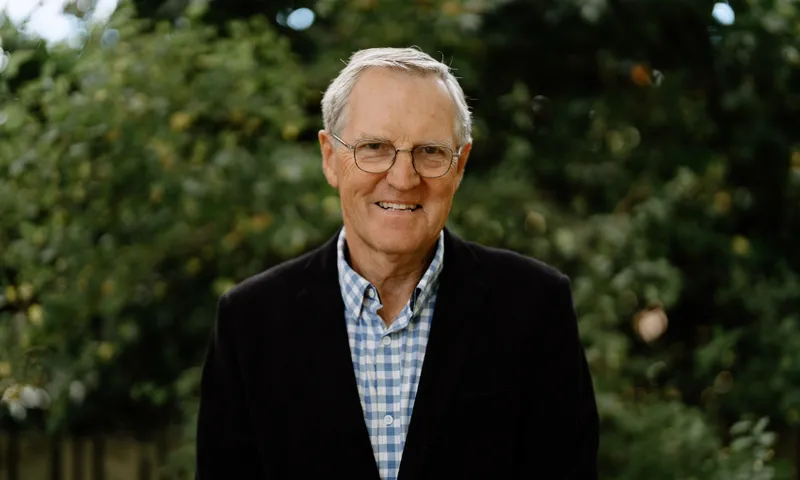
Jim Grenon (left) and Julian Batchelor (right) are suing TVNZ for defamation.
Billionaires, secrets, conspiracy theories, denials of racism, contempt of court and twists at every turn. This case had it all.
Really, it started in 2023, when Julian Batchelor published 550,000 copies of an anti-co-governance pamphlet and launched a nationwide speaking tour. Soon it became a hive of controversy due to his claims that a group of elite Māori were planning a coup of New Zealand democracy, which he described as “apartheid” and “the destruction of New Zealand”. Batchelor has said teaching children te reo Māori is akin to “child abuse”, and has likened the words “kia ora” to “heil Hitler”.
TVNZ reporter Te Aniwa Hurihanganui produced a story about Batchelor’s pamphlet, which the Electoral Commission said could have breached election advertising laws. The story, which aired on August 5, 2023, quoted Sanjana Hattotuwa, a researcher with The Disinformation Project, who described Batchelor’s speech in strong terms: “extremely worrying” “racist rhetoric” that “instigates harm offline”.
Batchelor sued TVNZ and Hattotuwa individually, seeking $50,000 and an apology on the 6pm news. “I live in tension knowing my neighbours don’t like me,” Batchelor told the court. He said people had thrown eggs at his house, and often glared at him on the street. “One time when I went into a cafe a group went quiet and I heard one person say ‘That’s him, Julian Batchelor, the racist’.”
The four-day trial at the Auckland District Court was full of drama and comedy. The Spinoff was there.
Strange twist #1: The secret billionaire backer
The case was thrown its first major curveball on day one when Batchelor was asked under oath who was funding his legal case. He tried to avoid answering before being ordered to address the question by judge David Clark. “The person who’s funding it is Jim Grenon,” he said.
Jim Grenon is a Canadian-New Zealand billionaire who bought a 16% stake in NZME earlier this year, which he later increased to 18.5%. NZME owns the New Zealand Herald, ZB and a range of other newspapers and radio stations.
Batchelor told the court Grenon called him the day after the TV1 piece aired and invited him to his home. They talked about “general politics and the direction New Zealand was taking”. Batchelor recalled Grenon saying, “I’ve been following you, I don’t think you’re a racist. I think we should sue TVNZ’.”
“He said a great injustice has been done here,” Batchelor said. “I was very, very happy that someone wanted to help.”
As the trial progressed, it soon became clear that Grenon had done more than just fund the case. He appeared to be orchestrating the entire thing. Batchelor couldn’t recognise several of the initial legal letters that were sent under his name. He was unaware who paid for his lawyer Stephen Franks, who represented him against the Electoral Commission when it investigated whether his co-governance pamphlet was in breach of the Electoral Act. “I don’t know, I didn’t pay him,” he said. And he wasn’t involved in choosing his defamation lawyer, Matthew Hague. “It was something Mr Grenon did on his own,” he said.
“This is your case, Mr Batchelor. How much involvement have you personally had in running this case?” TVNZ’s lawyer Daniel Nilsson asked.
“Very little,” Batchelor admitted.
Hattotuwa’s lawyer Davey Salmon said Batchelor had “unlawfully assigned his claim to a third party funder.… he’s not making decisions, he’s not paying, and he’s not profiting”.
Grenon’s involvement reared its head again in relation to Peter Williams, the former TV1 newscaster and Reality Check Radio host who gave expert evidence in support of Batchelor about journalism practices. TVNZ executive editor Phil O’Sullivan said under oath that Williams told him Grenon had paid for him to get to the hearing – a fact which had not been disclosed to the court. He also revealed Williams privately called Batchelor “a nutter”.
The Spinoff has contacted Grenon for comment.
Strange twist #2: The other secret funders
Not only was Batchelor’s lawsuit funded by a (previously) secret benefactor, so too was the pamphlet that prompted it. Batchelor said it cost “roughly a quarter of a million dollars” to print the 550,000 copies, but refused, repeatedly, over multiple days, to say who paid for it.
Judge David Clark ordered him to name the funders. Batchelor refused. Clark warned him that he could be held in contempt and placed in custody. Batchelor refused. Clark said he could throw the entire case out. Batchelor refused. Clark said he would use his silence to assume the worst possible interpretation. Batchelor still refused.
Salmon was absolutely fuming. “This is an extraordinary event, which in my time I have not seen. A witness has become his own judge in determining whether he should answer a question,” he said. “Rather than being honest, he is telling the court to infer that there are bad actors behind him and that negative conclusions can be drawn about his intention. That is effectively conceding the case. It suggests there is something wrong we can’t see. We will be submitting this is an abuse and contempt of court.”
Eventually, Clark allowed the trial to continue – “by a very fine margin” – in part because it wasn’t entirely clear how relevant the matter of the funder was and because, apparently, he just wanted to get on with it.
Which brings us to the core arguments of the case. TVNZ and Hattotuwa relied on three defences:
- That the reporting and quotes were true.
- That Hattotuwa’s comments were his honest opinion based on underlying true facts.
- That the story was in the public interest and TVNZ reported it responsibly.
The defence of truth: ‘That’s a negative comment about a race of people’
Batchelor said he was not racist. “I have friends who are Māori,” he said. “There are many fine Māori. I live just down the road from Kiri Te Kanawa.” He cited David Seymour, Winston Peters and golfer Michael Campbell as Māori he respected because “they have kept their Māori culture but they’ve westernised”.
Salmon and Nilsson brought up Batchelor’s past interactions with members of the Proud Boys and National Front (Batchelor disavowed both groups). They compared his descriptions of Māori to Hitler’s phrasing about Jewish people (Batchelor said Hitler was “the greatest racist on the earth”). They brought up his promotion of the theory that a race of fair-skinned, ginger-haired people had occupied New Zealand before Māori (Batchelor insisted it was true).
Salmon produced a YouTube video from March 2025 where Bachelor said: “I have thought about this a lot and there is nothing I admire about Māori culture or the Māori race. There’s nothing I want to emulate.”
“That’s a negative comment about a race of people, isn’t it?,” Salmon asked.
“Yes, it’s my opinion. I’m allowed to hold that opinion,” Batchelor said.
The largest chunk of time was focused on Batchelor’s unpublished book The Māori Agenda for New Zealand, in which he argued that Māori had fundamental character flaws which led to negative social outcomes and that Māori language and culture “should be allowed to die a graceful death”.
Here are some of the highlights from the cross-examination:
Salmon: You are making an observation about the race of Māori, as you’ve described it, and something seriously wrong in that race’s culture as a whole?
Batchelor: Yes.
…
Salmon: What you’re suggesting should die a graceful death is the language and culture of the Māori people. Correct?
Batchelor: No. You’re missing the context. It is the lack of character inside Māoridom that I believe is the issue.
…
Salmon: What’s caused the lack of character, if not their race?
Batchelor: I think character can be learned. Do you know what the character is? Can you define it for me?
Judge Clark: Let’s do it this way. You keep referring to character, so you explain in your own words what you mean.
Batchelor: Character is a cluster of internally driven characteristics that somebody holds that makes them succeed in life. Things like integrity, perseverance, ability to handle failure, ability to be self disciplined, honesty, the ability to work hard when things are very hard, the ability to discipline oneself in study or work, generosity, altruism. Those are some of the characteristics of a person with great character. The more you have of those, the more likely you are to succeed in life, and the less you have of them, the less you are going to be predicted as being a success.
Salmon: And you’re saying, on your definition, that this particular race lacks character?
Batchelor: Correct.
Salmon: But that’s not racist, based on your definition of racism?
Batchelor: Correct.
The defence of honest opinion: ‘As a researcher…’
Hattotuwa appeared by video link from Sri Lanka to describe his work for The Disinformation Project and his research on Batchelor, and gave academic explanations for how he defined racism and violent language.
Batchelor’s lawyer Michael Hague, while cross-examining Hattotuwa, argued he had presented his statements as fact because the quotes in the news story didn’t include qualifiers such as “in my opinion”. TVNZ produced a 12-minute video of the raw interview showing that Hattotuwa repeatedly cited his research to back up his statements and framed questions using language such as “in my view” and “as a researcher”.
The defence of responsible communication: ‘He was rambling’ vs ‘she’s lying’
Everyone agreed that the story was in the public interest, so this defence was solely based on whether TVNZ had acted responsibly.
While being cross-examined under oath, Batchelor gave a range of conflicting statements. First, he claimed he wasn’t interviewed for the story – “I was never rung by TVNZ”. Then he said he couldn’t remember. Later, he said the interview happened, but “we only had one phone conversation”. After TVNZ produced Te Aniwa Hurihanganui’s phone log, he accepted they had had two conversations.
Then, Batchelor claimed Hurihanganui never asked him to respond to Hattotuwa’s comments. Hurihanganui vehemently denied this, though she testified that she couldn’t remember if she referred to Hattotuwa by his name or job title. “She’s lying,” Batchelor said.
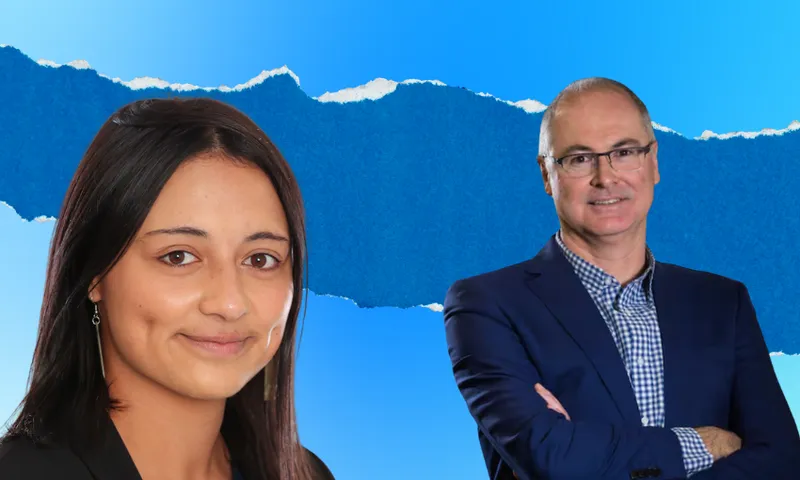
Batchelor took particular umbrage with the fact that he wasn’t quoted directly in the story; instead the interview was paraphrased as “Batchelor denies he is racist, inciting hate or spreading misinformation”. Hurihanganui said this was because his responses were “long-winded, a little bit confusing, and he was rambling a bit”, and that she summarised it as concisely as she could. Hurihanganui no longer had her notes from the phone call, which O’Sullivan accepted was “not ideal”.
Peter Willliams said the story was a “hit piece” intentionally designed to destroy Batchelor’s reputation. He raised an issue with the sentence: “The pamphlets make a number of unfounded claims, including that a group of Māori elites are conspiring to take over the country”. Williams said this claim was based on He Puapua, a 2019 government-commissioned report on indigenous peoples. Hague picked on this, arguing that even if Batchelor’s interpretation of the report was wrong, it showed it was founded. This led to Hague questioning Hurihanganui about her use of the word “unfounded” which she said was largely the same as “unsubstantiated” and “untrue”.
Throughout the four-day trial, a rotating cast of TVNZ staff popped into the public gallery to watch, especially while Hurihanganui was on the stand. It has been a big year in year in court for TVNZ, which was also sued for defamation by Talley’s. There were cries of elation on the third day of the trial when TVNZ staff learned the Talley’s case had been dismissed.
Batchelor’s case initially didn’t receive as much attention, but after the revelations of Grenon’s involvement it took on new significance. It no longer seemed to be only about racism, but about the future of media in New Zealand and the potential role of wealthy operators.

Joel MacManus
Joel MacManus is a senior writer for The Spinoff. He previously worked at RNZ and Stuff, and began his career at Critic Te Ārohi. His writing explores the political, economic and cultural systems that underpin modern New Zealand. He won the 2025 Voyager Media Award for Best Columnist, Opinion or Critique.


