Another Auckland Council meeting, another long, loud howl over housing in Parnell

Some councillors are keeping up the fight against apartments in Auckland’s wealthier suburbs. (Image: Tina Tiller)
After the marathon meeting finally ended, the mayor accused one councillor of using it as ‘one long filibuster to keep poor people out of her area’.
When the government’s efforts to intensify Auckland were debated at council back in August last year, critics took turns wringing their hands about the strain it would place on infrastructure. Plan Change 120 could end up putting apartments in places that weren’t set up to handle them, they fretted. “Ultimately you can’t do all this upzoning without making the commitment to provide the infrastructure that will support it,” warned Albert-Eden-Puketāpapa ward councillor Christine Fletcher, in a complaint echoed at length by Waitematā’s Mike Lee and Albany’s John Watson.
Yesterday the worriers got their wish. Thanks to a government backdown wrangled over chardonnays and summer barbecues, councillors are allowed to reduce the capacity in the new plan from two million to 1.6 million houses. Council’s policy and planning committee was meeting to decide where to make those cuts, and its chair Richard Hills started out explaining the staff recommendations to prioritise places 10km or more from the city centre. Asked why those areas should get first dibs on downzoning, council planner John Duguid was clear: it was because the land within 10km of the city centre had the best access to public transport, employment opportunities, regional amenities like parks and pools and three waters capacity, as measured by Watercare.
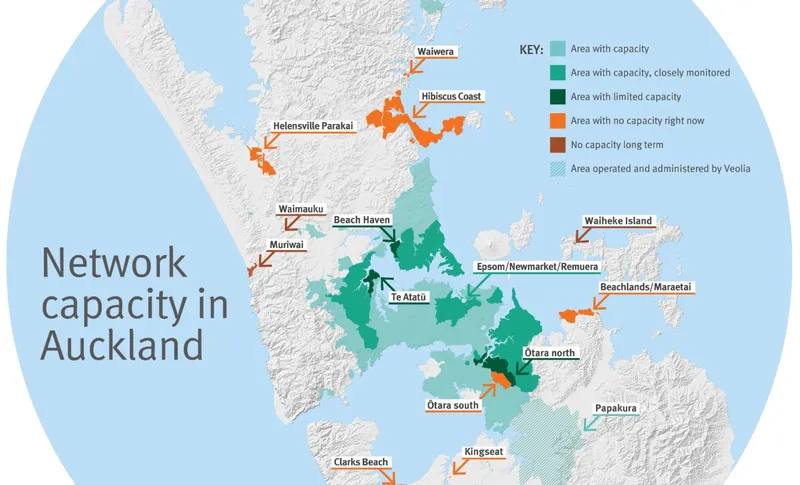
It should have been a celebration. But what would you know, most of the people who were once so concerned about ensuring housing is near infrastructure weren’t happy. Instead they were stewing over the revelation that the places with the best infrastructure were in their well-to-do wards. North Shore councillor John Gillon had looked at the maps and found that a 10km radius from the city centre would include the entire area he represents. He moved an amendment, seconded by Fletcher, to delete the 10km clause, saying he was “concerned” about the figure.
Waitākere councillor Shane Henderson was having none of it. He pointed out that west and south Auckland had accepted the vast bulk of the new houses in Auckland since the Unitary Plan passed in 2016. As for strain on infrastructure, those areas have limited pipe capacity and less access to public transport, and we see the effects of that outside-in planning in rush-hour congestion, parking shortages and sewage overflows, he said. Henderson argued Fletcher and Gillon were engaged in “a poorly dressed up move to take away intensification from the best-equipped parts of the city”. “The intention is simple: to downzone wealthy suburbs. There is no sensible reason for excluding central isthmus communities – again – from doing their part.”
The mayor was, if anything, more blunt. He said Gillon’s motion was aimed at putting housing in Pukekohe rather than areas close to “all the infrastructure”. “I don’t want to see endless sprawl just so nimbys in Parnell and politicians can get re-elected,” he said, in what appeared to be a shot at his political nemesis, Act leader David Seymour. “That’s disgraceful, I can’t vote for it.”
The mayor got his way. The amendment was shot down, with only Gillon, Fletcher, Waitākere’s Ken Turner, Howick’s Maurice Williamson and deputy mayor Desley Simpson voting in favour. Waitematā’s Mike Lee voted against the motion, but later clarified he was for it. The council is trying out a new electronic voting system and it’s causing trouble for a few elected officials.
As Brown saw it, his colleagues’ first purpose was elitism. But if they had a second priority, it was delay. Gillon and Fletcher also put forward an amendment proposing to ask the government for more time to enact Plan Change 120. After lobbying hard for it to lower its two million housing target, they said it was unfair for it to do so without going out for public consultation.
The demand was familiar. Fletcher has asked for more consultation in just about every planning meeting for years, and the mayor was incensed. “I want to get out of this without further delay and dithering,” he said. “God almighty, it would be great to do something this three-year period.”
When he wasn’t getting mad, Brown was trying not to fall asleep. He appeared to be too zoned out to notice Lee essentially accusing him of corruption during a lengthy speech where he listed all the campaign donations the mayor had received from developers. “$25,000 from Precinct Properties,” he said. “Well, they got their money’s worth.” Lee had earlier insinuated council’s planners were corrupt as well, asking them whether their decision-making was tied up with “real-estate interests”. “Ah, no,” came head council planner Megan Tyler’s terse two-word reply.
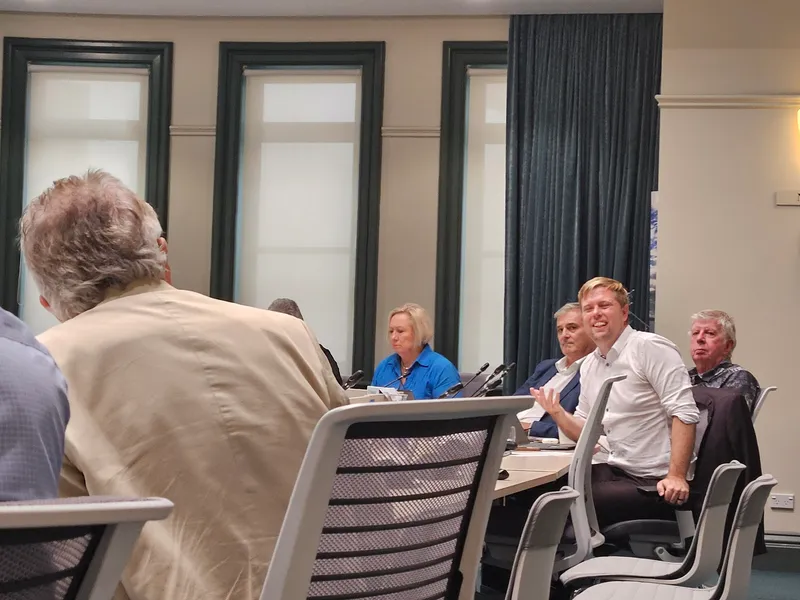
This morning on RNZ, Brown described the meeting as “long and painful”. There’s no reason to doubt his honesty. By the end of the debate, with councillors clearly starting to run out of gas, things started to unravel. Hills was palpably frustrated at Gillon and Fletcher for their last-minute amendments, which he thought could undermine the council’s response. “I’m doing my god damn best with the current government, who I’m not a super fan of, to get the best for our city,” he said. Fletcher accused both National and Labour of having “blood on their hands” over their housing plans, before lamenting how polarising and divisive the intensification debate has become. Manurewa-Papakura councillor Daniel Newman quoted Jeremiah 29:11, before comparing the government to a “self-appointed deity”. “I won’t quote anything from the Bible but I will quote 50 Cent: behind me is infinite power, before me is endless possibility, around me is boundless opportunity’,” responded Maungakiekie-Tāmaki ward councillor Josephine Bartley.
What was going on? No one could tell. As things closed up, the mayor could be heard grumbling during the speeches. “For fuck’s sake, get on with it,” he said, as Fletcher spoke for the final time. “Shame,” cried Lee, before turning to his neighbours at the table. “That’s a code of conduct isn’t it?” he asked.
Afterward, Brown expanded on his frustration with Fletcher, saying the meeting was “one long filibuster to stop poor people living in her area”. It was a pithy summary, but if the Albert-Eden-Puketāpapa councillor is guilty of filibustering apartments in Parnell, she’s hardly the only one. This meeting lasted eight hours. It came six years after the then-Labour government put out the National Policy Statement on Urban Design which kicked off this whole debate. As things wound up on Tuesday, Whau ward councillor Sarah Paterson-Hamlin summed up the situation with an air of exasperation. “We risk a scenario where we get the exact perfect number for development, but by that point everyone’s gone and they’ve bought something in Melbourne because they got sick of us going round and round,” she said.
In the end, the council opted not to ask for more delays. It prioritised areas close to the city for development and areas further away for downzoning. After it makes those changes to its maps, Plan Change 120 is set to go out to independent commissioners for a year or so before finally passing into law in May 2027. Hopefully some of us are still around by the time it gets enacted.

Hayden Donnell
Hayden Donnell is a senior writer for The Spinoff. He previously worked at RNZ, TVNZ and the New Zealand Herald, alongside other media companies that have since closed down or been renamed. His primary passions are local politics and the Big Fresh animatronic fruit and veggies.


