Wayne Brown’s exciting week of insulting everyone

Image: The Spinoff
Auckland’s mayor has abandoned his small-target election strategy and pivoted to what political analysts are calling the ‘pissing everyone off approach’.
Wayne Brown was meant to be sneaking his way to political triumph. Auckland’s mayor seemingly spent the first few weeks of his re-election campaign barricaded in his office’s secret toilet, trying to stay as quiet and still as possible. He skipped the first few mayoral debates. When he finally turned up to one, rival candidate Ted Johnston called him out for trying to campaign while lying horizontal with his eyes closed. “He thinks he’s the incumbent mayor,” he told the crowd at the Auckland Chinese Community Centre. “I think he’s the recumbent mayor.”
It was a good barb, and would have had even more sting if Brown hadn’t already begun abandoning his small-target strategy, pivoting instead to what political analysts call the “pissing everyone off approach”. It started last Thursday, when he fronted a “meet the mayor” event in Hobsonville. Stuff’s report euphemistically described the event as “colourful”. What it meant was Auckland’s mayor set a world record for insulting as many people as possible in a Q&A session.
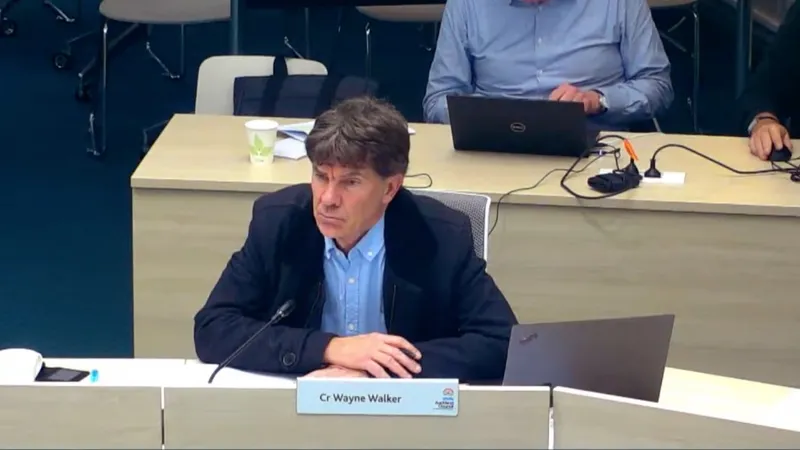
His councillors bore the brunt of the scorn tsunami. Albert-Eden-Puketāpapa’s Christine Fletcher was mocked for coming to him in tears “all the time”. Albany’s John Watson and Wayne Walker, or as Brown calls them, the “Albanians”, were “morons” for trying to claim credit for Port of Auckland’s newfound profitability. All this was pretty standard for Brown, who’s never shied away from insulting colleagues he dislikes, nor from forming political tickets specifically to get rid of them.
But then, some friendly fire. The conversation turned to Devonport, where hordes of reliable Brown voters lie encased in their ageing villas. The mayor said he wanted to interrupt their repose with the sound of hammers and diggers, churning up the earth of Victoria Road to create high-rise apartments. “We want the Devonport ferry to be marked up as a mainline transit so we can [have] concentration of building design as you do in other high-speed transit,” he said. The event’s moderator, National MP Cameron Brewer, was aghast. “You’re not going to be building high rises in Devonport, are you? This is going to upset everyone,” he said. But Brown was relishing the chance to scull heritage tears. “Yeah, but they deserve to be upset,” he responded.
From there, the mayor went looking for other villa owners to enrage. He settled on Mount Eden, which he said “looks like Gaza”. There are actually several key differences between Mount Eden and Gaza. One has been reduced in large part to rubble by two years of bombing from a nuclear-armed government which stands accused of genocide, while the other is a quiet inner-city suburb where the median house price stands north of $1.5 million. Brown would later claim his comment was a joke, though it didn’t possess a key attribute for a joke: being funny.
If the mayor was making a wider point about low-rise housing in well-connected central areas, he wasn’t done. He was similarly derisive of David Seymour when asked to comment on the Act leader hosting a meeting for Parnell residents freaked out about the prospect of dense housing in their suburb that’s a 15-minute walk from the city centre. He told the Sunday Star-Times “the “desperate deputy prime minister” shouldn’t “stick his nose in it”, adding he “wants to build out in Pukekohe so they can get re-elected in Epsom? Yeah, that makes a lot of sense, doesn’t it?”
Brown could defend most of these outbursts. Politicians like Walker, Watson and Fletcher were his natural allies at the start of his term, only to retreat from leadership into their comfort zone of ceaseless and unrelenting opposition. He might argue they’ve complained a lot, and achieved relatively little. Suburbs like Mount Eden have enjoyed billions of dollars in council and government investment, while refusing to do their bit and accept a fair share of the city’s growth. Politicians advocating for greenfields growth rarely take responsibility for the exorbitant infrastructure costs it incurs, nor the extra congestion it generates on already-packed roads. Nobody likes Devonport.
But they’re bold all the same. Turnout in local elections skews older, wealthier and whiter than the general population. The median council voter is more likely to live in a villa than a flat, and Brown rode to victory in 2022 on a wave of support from the richer, so-called “leafy” suburbs. Now the Devonport community Facebook page is abuzz with condemnation. “It is difficult enough getting in and out of Devonport now, think about it – the Devonport prison,” said one commenter. “NONE of our children want to live in ANY of the high-rise ghettos planned for Auckland,” claimed another.
It remains unlikely a critical mass of disillusioned Devonportians are going to sweep one of Brown’s rivals to victory. It’ll be hard for Brown to find a way to piss off enough Parnellites to actually lose when ballots are cast. But if this week has proved anything, it’s that he’s willing to give it a go. The recumbent mayor has woken up, he hasn’t had his coffee, and he’s feeling absolutely ropeable.

Hayden Donnell
Hayden Donnell is a senior writer for The Spinoff. He previously worked at RNZ, TVNZ and the New Zealand Herald, alongside other media companies that have since closed down or been renamed. His primary passions are local politics and the Big Fresh animatronic fruit and veggies.


