The 2026 Ockham Book Awards shortlist: surprise inclusions, shock omissions and more

The sixteen titles in the running for the year’s top literary prizes. Any surprises there for you?
Made possible by
Claire Mabey assesses the final 16 books in the running for the biggest prize in New Zealand literature.
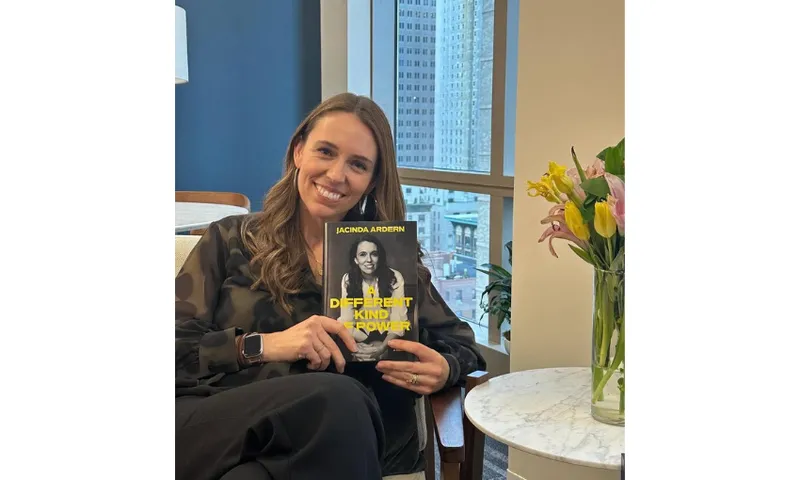
Jacinda Ardern’s memoir, A Different Kind of Power, is one of the 16 books in the running for the top literary prizes in this year’s Ockham New Zealand Book Awards. The judges started with 178 entries which they shucked down to 44 for the longlist.
Only god and sentient AI know what happened in those deliberation room/zooms between then and now because, quite frankly, some of the shortlist is a right riddle to me. While I’m delighted for our former prime minister, who’s one of the final four in the general non-fiction category, I’ve got to say I’m puzzled: it’s a good book, but is it a great one?
Let’s dive in and analyse the four titles in each category who will now enjoy some deserved time in the awards spotlight ahead of the ceremony to announce the overall winners on May 14.
General Non-Fiction Award ($12,000 prize)
A Different Kind of Power by Jacinda Ardern (Penguin, Penguin Random House)*
Northbound: Four Seasons of Solitude on Te Araroa by Naomi Arnold (HarperCollins Aotearoa New Zealand)
The Hollows Boys: A Story of Three Brothers & the Fiordland Deer Recovery Era by Peta Carey (Potton & Burton)
This Compulsion in Us by Tina Makereti (Te Ātiawa, Ngāti Tūwharetoa, Ngāti Rangatahi-Matakore, Pākehā) (Te Herenga Waka University Press)
Thoughts:
I was not expecting this. Ardern’s memoir is a good book, sure, but shortlist quality? Puzzlement! (Note the asterisk: this means Ardern is also up for best first book in this category and may have a very high chance of pipping that post.)
While I found Ardern’s memoir to be interesting and somewhat useful, I didn’t think it was an outstanding memoir as far as the form goes. I mention down in the fiction spot (below) that I am perplexed by the exclusion of Josie Shapiro’s novels over the years and that I strongly suspect the reason is that they’re seen as commercial fiction rather than literary. Here, it reads as the opposite. Is Ardern’s memoir here for the craft? Or here for the person and what she achieved and now stands for?
Possibly there’s a clue to be found in the words of convenor of judges Philip Matthews who says “the shortlisted books are highly readable works that give honest impressions of this country and its people. The final four were elevated by artful writing and personal reflections that also offered profound insights. Each came as a surprise, even to those who thought they knew the story”.
Ardern’s memoir is an artefact that speaks to certain aspects of this country and its people, and it does, to an extent, get under the hood of her life and how she became who she is. I get it; but I’m not totally convinced. While I’m not one to necessarily knock a celebrity publication (Keira Knightley’s picture book is actually pretty great guys – the illustrations are amazing), I wanted more from this book (and was joined in this opinion by reviewer Mad Chapman); whereas others on the longlist truly, for me, did plumb depths and impart vital, at times urgent, knowledge (in particular: Macfie on how communities are fighting poverty, O’Hagan on a career in the medical system, Morrow on Ruth Dallas).
Then again, looking back at the longlist it’s clear that the memoir – a truly “readable” form – wasn’t strongly represented (Ali Mau’s memoir didn’t make it in, sadly) and thus there was plenty of space for Ardern’s very popular book to shine. Next year the category will be heavier on memoir competition – brilliant, bold books by Noelle McCarthy and Elizabeth Knox are hitting the shelves very soon.
Northbound is the frontrunner for me: a propulsive account of walking Te Araroa, Arnold’s writing is exquisite and effortless and evokes obsession and awe in a way that felt fresh. Makereti is a masterful writer across many forms and I’m deeply relieved that her collection of essays, This Compulsion in Us, is getting some time basking in the Ockham generated sunshine. Potton & Burton is a publisher with one of the most impressive backlists in the country: a goldmine of books about this land and its people. The Hollows Boys by Peta Carey is an impressively told, thrilling and devastating account of three brothers and their lives as helicopter pilots over the deer recovery era (which, honestly, who knew? Not I).
Jann Medlicott Acorn Prize for Fiction ($65,000 prize)
All Her Lives by Ingrid Horrocks (Te Herenga Waka University Press)
Hoods Landing by Laura Vincent (Ngāti Māhanga, Ngāpuhi) (Āporo Press)
How to Paint a Nude by Sam Mahon (Ugly Hill Press)
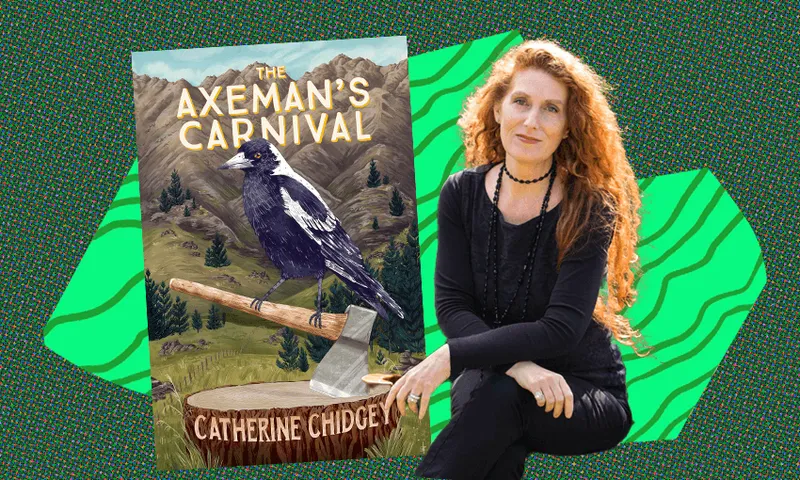
The Book of Guilt by Catherine Chidgey (Te Herenga Waka University Press)
Thoughts:
Floored. I am extremely surprised that 1985 by Dominic Hoey didn’t make the cut. For me it was one of the stand-out novels of 2025. Also while I’m here I need to rectify an omission in my previous commentary on the longlist – I didn’t whine about the exclusion of Josie Shapiro’s Good Things Come and Go at the time because, I realise, I was fully expecting it not to be there after her smash-hit novel Everything is Beautiful and Everything Hurts also didn’t make it back in 2024. Shapiro’s novels are terrific, and they are also, I suspect, seen as commercial fiction. These here Ockham awards are (whether by default or design) reserved for literary fiction. I’m genuinely fuzzy on the distinction when it comes to Shapiro’s work, which is not genre fiction. Is it because they sell well? Perhaps an essay for another time.
So, I’m bummed for Hoey and very surprised that neither Tracy Farr’s Wonderland nor Bryan Walpert’s Empathy got through.
As for what is here, great! Chidgey was a shoo-in so no surprises there. The Book of Guilt is a banger and surely it’s got this one in the bag. Ingrid Horrocks’ All Her Lives is only a surprise insofar as the longlist’s exclusion of Michelle Duff’s Surplus Women was concerned. I thought, based on that crazy omission, that the judges were leaning away from the short story … I can’t help but suspect the judges felt there was only room for one excellent collection focussed on the lives of women? Nevertheless, happy that All Her Lives is here at least and in celebration of the hardest form of literature there ever was. Horrocks’ has now proven herself one of those maverick writers who can shift between non-fiction and fiction with equal aplomb.
It’s a bit of a coup for the indie presses to have half the shortlist sewn up: Āporo Press is paving a visionary path for new and exciting voices with Hoods Landing arriving to critical acclaim and now this honour (hope the reprint has been ordered!). Ugly Hill Press, run by former ACT MP and journalist Deborah Coddington, “publishes books with attitude” and can now claim an Ockham-shortlisted publisher on its “About” page. How to Paint a Nude by Sam Mahon was the wildcard of the longlist and now, the wildcard of the shortlist. I haven’t read it yet. I really have to now (is this the book that made the judges “shudder”? See below). I’ll report back.
The awards’ fiction category convenor of judges, Craig Cliff, says these four books indicate the breadth and brio of fiction being produced in Aotearoa today: “You laugh, you shudder, you are pulled along by character and voice and plot. Set in different time periods and across the globe, these four authors speak directly to the contemporary concerns of New Zealanders. How free are we really? How much have attitudes to gender and sexuality actually changed? What might be killing us and what sustains us?”
Mary and Peter Biggs Award for Poetry ($12,000 prize)
Black Sugarcane by Nafanua Purcell Kersel (Satupa‘itea, Faleālupo, Aleipata, Tuaefu)(Te Herenga Waka University Press)*
No Good by Sophie van Waardenberg (Auckland University Press)*
Sick Power Trip by Erik Kennedy (Te Herenga Waka University Press)
Terrier, Worrier: A Poem in Five Parts by Anna Jackson (Auckland University Press)
Thoughts:
I suspect the judges had a terrible time arriving at this final four: the longlist was a ridiculous bounty.
This category produced my favourite longlist and is now my favourite shortlist. It has to make sense because nothing makes sense to me when it comes to judging poetry (good poetry that is, bad poetry is another story): four brilliant collections tidily split between two University Presses who each deliver some of the best poetry Aotearoa has to offer every year (where would we be without them is what I’d like to know).
I have my heart set on Terrier, Worrier to take this one out because reading it was a sublime experience that reached the part of my brain that usually sits there twiddling thumbs waiting for me to stop being bamboozled by the world. It is an immensely soothing and simulating book; like chickens (read and you’ll get it). But to be honest if any of these collections took the big prize then, hurray and bless poetry at large. What I think this shortlist shows us is that poetry is a rich, rich vein in Aotearoa’s literature right now. I don’t think long-form literature speaks to the human dilemma with the same urgency and tenderness and faith as poetry does. Maybe especially now when everything feels pretty fucked but everything can still be beautiful and precious and explicable.
Here’s what the judges said about their choices: “We were filled with imagination and excitement, and we were also torn by the reasoning, culture, storytelling and language of the high-quality poetry collections in this year’s submissions,” says category convenor of judges Daren Kamali. “We salute the four finalists, from the island realness of Black Sugarcane and the love, loss and distance in No Good, to long Covid in Sick Power Trip and the shape and form of Terrier, Worrier.”
So basically, no notes. Carry on. Buy these books.
Bookhub Award for Illustrated Non-Fiction ($12,000 prize)
Garrison World: Redcoat Soldiers in New Zealand and Across the British Empire by Charlotte Macdonald (Bridget Williams Books)
He Puāwai: A Natural History of New Zealand Flowers by Philip Garnock-Jones (Auckland University Press)*
Mark Adams: A Survey – He Kohinga Whakaahua by Sarah Farrar (Massey University Press and Auckland Art Gallery Toi o Tāmaki)
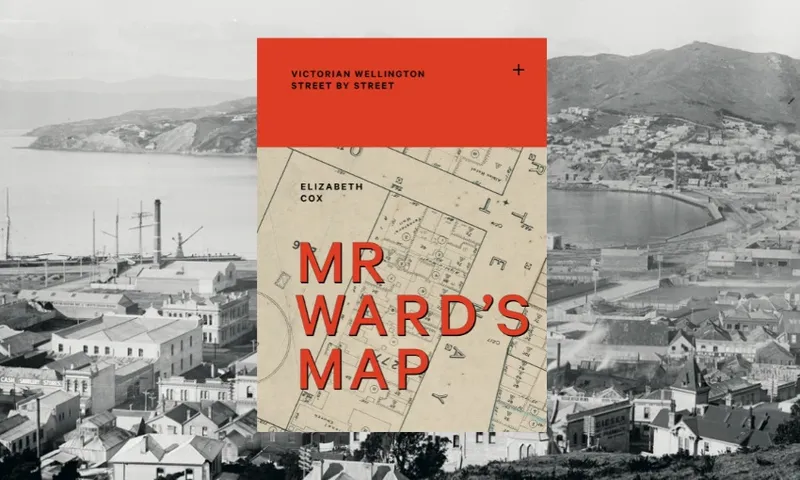
Mr Ward’s Map: Victorian Wellington Street by Street by Elizabeth Cox (Massey University Press)
Thoughts: Yeahhhhh Mr Ward! Stoked that this stonker is on this list. I’ve gone back to Mr Ward’s Map by Elizabeth Cox many times because it’s such a fun exercise to open the book to a random page and discover what was going on in that corner of Victorian Wellington. I also had a hunch that He Puāwai by Philip Garnock-Jones was going to make it. Thanks to the photography this book is vivid and arresting, not a hint of your stale old floral almanac but a technicolour ode to the marvel that is nature.
Charlotte Macdonald’s Garrison World is a mammoth chunk of work by an acclaimed historian which clearly won the judges over (I mean, the longlist contained quite a few mammoth chunks of work by acclaimed historians). I can also see why Sarah Farrar’s survey of photographer Mark Adams is here: it’s a stunning book that illuminates a 50-year career of capturing Aotearoa – the photos like held breaths, pausing on windows into places and people and cultures. Remarkable.
The category’s convenor of judges Lauren Gutsell says: “These titles each bring new understandings of their subject matter, not only through research and narrative but through photography, artwork, illustration, and mapping. Each book makes a notable contribution to our understanding of our country.”
Well, well, well – I expect that this year’s ceremony (May 14) is going to be an especially electric one with, I’ll assume, a home-game appearance from the former prime minister who now resides over the ditch (where she has some creepy fans). We’ll be there on the night covering the action as it happens: canapés, couture, speeches, surprises and all.
Three cheers for the judges:
The Jann Medlicott Acorn Prize for Fiction is judged by novelist, short story writer and reviewer Craig Cliff (convenor); novelist, poet and Arts Foundation Te Tumi Toi Laureate Alison Wong; and bookseller, writer and reviewer Melissa Oliver (Ngāti Porou).
Judging the Mary and Peter Biggs Award for Poetry are poet, musician and multi-disciplinary artist Daren Kamali (convenor); poet, writer, performer and editor Jordan Hamel; and writer, musician and translator Claudia Jardine.
The General Non-Fiction Award judges are journalist, author and reviewer Philip Matthews (convenor); academic and writer Georgina Stewart (Ngāpuhi-nui-tonu, Pare Hauraki); and screen director, producer, and author Dan Salmon.
The BookHub Award for Illustrated Non-Fiction is judged by art historian and curator Lauren Gutsell (convenor); photographer, moving-image artist, writer and academic Natalie Robertson (Ngāti Porou, Clann Dhonnchaidh); and non-fiction writer and former magazine editor Rebekah White.
All of the above books can be ordered through Unity Books. The winners (including winners of the best first book awards) will be announced at a public event at Auckland Writers Festival on May 14.
The Spinoff Books section is proudly brought to you by Unity Books and Creative New Zealand. Visit Unity Books online today.

Claire Mabey
Claire Mabey is a children's author of The Raven's Eye Runaways, The Raven's Eye Rebellion, and a picture book Cass and the Beast illustrated by Jill Calder. For a long time Claire worked on literary festivals and is the founder of Verb Wellington. She lives in Te Whanganui-a-Tara with her partner and son.


