Jacinda Ardern longlisted for this year’s Ockham New Zealand Book Awards

All the books in this year’s Ockhams longlist.
Made possible by
Announcing the 44 books competing for the year’s major literary awards.
This year’s Ockhams have already been in the news thanks to those AI book covers and the whole “we can’t accept them” and then the “actually we will but only this one time” to-ing and fro-ing by the book awards trust (which, to be fair, is doing the hard yards navigating a brave new world).
Below are the longlists for each of the four categories as selected by the panels of weary-eyed judges who have done god’s work reading through all 178 entries. An asterisk means the book is a debut and therefore up for Mātātuhi Foundation Best First Book Award (worth $3,000 each).
Shortlists will be announced on March 4, and winners (including the best first book award recipients) will be revealed at a ceremony at the Auckland Writers Festival on May 13.
The Jann Medlicott Acorn Prize for Fiction ($65,000 prize)
1985 by Dominic Hoey (Penguin, Penguin Random House)
All Her Lives by Ingrid Horrocks (Te Herenga Waka University Press)
Before the Winter Ends by Khadro Mohamed (Tender Press)
Empathy by Bryan Walpert (Mākaro Press)
Hoods Landing by Laura Vincent (Ngāti Māhanga, Ngāpuhi) (Āporo Press)
How to Paint a Nude by Sam Mahon (Ugly Hill Press)
Star Gazers by Duncan Sarkies (Te Herenga Waka University Press)
The Book of Guilt by Catherine Chidgey (Te Herenga Waka University Press)
The Last Living Cannibal by Airana Ngarewa (Ngāti Ruanui, Ngā Rauru, Ngāruahine) (Moa Press)
Wonderland by Tracy Farr (The Cuba Press)
Notes: First thought: “What? No Surplus Women!?” I expected Michelle Duff’s debut to be here: it’s an especially strong collection of short stories and for me surpassed some of the novels from 2025. But, there you go. Tells you just how subjective book judging can be.
Second thought: “The AI book covers did not pass go.”
Third thought: “Have never heard of How to Paint a Nude by Sam Mahon: wild card.”
Predictions: I have strong feelings about at least half of this year’s shortlist. I would be extremely surprised if Chidgey’s The Book of Guilt and Hoey’s 1985 didn’t make the final cut. Why? Catherine Chidgey, who has won this very award twice before, is a masterful novelist. The Book of Guilt is a ripping yarn that provokes and lingers – it deserves to hassle the remaining books for their money’s worth. I’m still sore that Chidgey’s novel Pet didn’t make the shortlist back in 2024 so I’m hoping we won’t be in for a repeat of that in this already kind of cursed year of 2026. Hoey’s 1985 is his best novel yet: it’s incredibly strong across tone, voice, plot, character and also contains the ineffable quality of a singular writer. I’d be quite happy if it won.
As for the final two spots, that’s murkier. Ingrid Horrocks’ All Her Lives (Horrocks’ first work of fiction) is representing the short story in fine form; but given Duff’s exclusion I’d say the judges’ propensities are leaning towards the novel. Wonderland by Tracy Farr has fervent advocates out there among readers and booksellers – it’s an evocative, original book fictionalising elements of history while at the same time evoking 19th century Wellington in detail. Empathy by Bryan Walpert – shortlisted for this prize in 2022 for his novel Entanglement – is also being well received by readers; praised for its inventive concept (it’s a dystopian-tinged thriller). Duncan Sarkies’ alpaca allegory has a good shot, too: original, funny, dark, political and timely, with some unforgettable scenes involving plucking alpaca fur, and ice cube trays. Airana Ngawera’s The Last Living Cannibal is a rollicking read with a propulsive energy and marvellously compelling characters; Hoods Landing by Laura Vincent and Before the Winter Ends by Khadro Mohamed (winner of Best First Book, poetry, in 2023) are solid first novels with passionate readers rooting for them. But, I’m going to put my money on Wonderland and Empathy making up the final four – it would be a real coup for indie Wellington publishers The Cuba Press and Mākaro. And between now and March 4, when the shortlist is announced, I’ll read Sam Mahon’s How to Paint a Nude and reassess the situation.
The Mary and Peter Biggs Award for Poetry ($12,000 prize)
Black Sugarcane by Nafanua Purcell Kersel (Satupa‘itea, Faleālupo, Aleipata, Tuaefu) (Te Herenga Waka University Press)*
Clay Eaters by Gregory Kan (Auckland University Press)
E kō, nō hea koe by Matariki Bennett (Ngāti Pikiao, Ngāti Whakaue, Ngāti Hinerangi) (Dead Bird Books)*
Giving Birth to my Father by Tusiata Avia (Te Herenga Waka University Press)
If We Knew How to We Would by Emma Barnes (Auckland University Press)
Joss: A History by Grace Yee (Giramondo Publishing)
No Good by Sophie van Waardenberg (Auckland University Press)*
Sick Power Trip by Erik Kennedy (Te Herenga Waka University Press)
Standing on my Shadow by Serie Barford (Anahera Press)
Terrier, Worrier: A Poem in Five Parts by Anna Jackson (Auckland University Press)
Notes: First thought: “So many fine poets! Poor judges!”
Second thought: “Grace Yee is back!”* (*Some readers may remember that in 2024 Yee won several awards, including this one, for her magnificent book Chinese Fish, and is bound to be a powerful contender.)
Predictions: I would love to be a fly on the wall when the judges deliberate on the shortlist if only to learn precisely how they argue the merits of one collection over another when poetry is so idiosyncratic and the territory so vast. In the spirit of gambling I’m going to hazard a stab at a top four based purely on vibes and personal preferences: Terrier, Worrier: A Poem in Five Parts by Anna Jackson (because I read it cover to cover – it would not let me put it down; and was an intensely curious exposure of an inner life that both fascinated and led me to ponder my own observations, worries and questions); Sick Power Trip by Erik Kennedy (because it made me laugh, surprised me and it reflected a lot of how I feel about the crazed world we are in); Clay Eaters by Gregory Kan (I was sort of mesmerised by this book about grief – for family, for a cat – and about living and working in Singapore in the National Armed Forces. There is something filmic about Kan’s work – the images so clear and crisp and the poet’s eye has a coolness to it, not quite detachment but observational while being intimate). The last spot I’m going to give to Black Sugarcane by Nafanua Purcell Kersel because the cycle of poems about the deadly tsunami that struck Sāmoa, American Sāmoa and Tonga in 2009 haunts me.
The BookHub Award for Illustrated Nonfiction ($12,000 prize)
Atlas of the New Zealand Wars: Volume One 1834–1864, Early Engagements to the Second Taranaki War by Derek Leask (Auckland University Press)*
Books of Mana: 180 Māori-Authored Books of Significance edited by Jacinta Ruru (Raukawa, Ngāti Ranginui), Angela Walhalla (Kāi Tahu) and Jeanette Wikaira (Ngāti Pukenga, Ngāti Tamaterā, Ngāpuhi) (Otago University Press)
Garrison World: Redcoat Soldiers in New Zealand and Across the British Empire by Charlotte Macdonald (Bridget Williams Books)
Groundwork: The Art and Writing of Emily Cumming Harris by Michele Leggott and Catherine Field-Dodgson (Rongowhakaata, Ngāi Tāmanuhiri, Te Aitanga a Mahaki) (Te Papa Press)
He Puāwai: A Natural History of New Zealand Flowers by Philip Garnock-Jones (Auckland University Press)*
Mark Adams: A Survey – He Kohinga Whakaahua by Sarah Farrar (Massey University Press and Auckland Art Gallery Toi o Tāmaki)
Mr Ward’s Map: Victorian Wellington Street by Street by Elizabeth Cox (Massey University Press)
Takoto ai te Marino: Selected Works 2018-2025 by Raukura Turei (Ngā Rauru Kītahi, Taranaki, Ngāti Pāoa, Ngāi Tai ki Tāmaki), Greta van der Star, Vanessa Green and Katie Kerr (Raukura Turei)*
The Collector: Thomas Cheeseman and the Making of the Auckland Museum by Andrew McKay and Richard Wolfe (Massey University Press)
Whenua edited by Felicity Milburn, Chloe Cull (Ngāi Tahu, Ngāi te Ruahikihiki) and Melanie Oliver (Christchurch Art Gallery Te Puna o Waiwhetū)
Notes: First thought: “Don’t fall asleep with any of these: they’ll cause injuries if they fall on your face.”
Second thought: “The sheer volume of hours spent on creating these books collectively must add up to at least one average lifetime.”
Predictions: Elizabeth Cox’s Mr Ward’s Map has gone off; in Wellington at least. It’s a gold mine of social history in a cloth-bound package with enough mappage to win over the most intense of cartography enthusiasts. I think it’s a sure-fire for the shortlist. After that I think Books of Mana has a decent shot: a brilliantly reference-able container for Māori-authored books that actually left me wanting more (the over 180 books listed are all non-fiction; I am pestering for the fiction edition next). The Te Papa Press contender – Groundwork – is an object of beauty and intrigue as Michele Leggott and Catherine Field-Dodgson unravel the curious life of early botanical artist Emily Cumming Harris. Based purely on “wow factor”, Philip Garnock-Jones‘ Puāwai has it in spades: the 3D photograph of indigenous flowers are wondrous and work to draw the reader in and make it a sort of all-ages object, too.
The General Nonfiction Award ($12,000 prize)
50 Years of the Waitangi Tribunal: Whakamana i te Tiriti edited by Carwyn Jones (Ngāti Kahungunu, Te Aitanga-a-Māhaki) and Maria Bargh (Te Arawa, Ngāti Awa) (Huia Publishers)
A Different Kind of Power by Jacinda Ardern (Penguin, Penguin Random House)*
An Uncommon Land: From an Ancestral Past of Enclosure Towards a Regenerative Future by Catherine Knight (Totara Press)
Everything But the Medicine: A Doctor’s Tale by Lucy O’Hagan (Massey University Press)*
Hardship and Hope: Stories of Resistance in the Fight Against Poverty in Aotearoa by Rebecca Macfie (Bridget Williams Books)
Northbound: Four Seasons of Solitude on Te Araroa by Naomi Arnold (HarperCollins Aotearoa New Zealand)
Polkinghorne: Inside the Trial of the Century by Steve Braunias (Allen & Unwin)
Ruth Dallas: A Writer’s Life by Diana Morrow (Otago University Press)
The Covid Response: A Scientist’s Account of New Zealand’s Pandemic and What Comes Next by Shaun Hendy (Bridget Williams Books)
The Hollows Boys: A Story of Three Brothers & the Fiordland Deer Recovery Era by Peta Carey (Potton & Burton)
The Middle of Nowhere: Stories of Working on the Manapōuri Hydro Project by Rosemary Baird (Canterbury University Press)*
The Welcome of Strangers: A History of Southern Māori by Atholl Anderson (Bridget Williams Books and Te Rūnanga o Ngāi Tahu)
This Compulsion in Us by Tina Makereti (Te Ātiawa, Ngāti Tūwharetoa, Ngāti Rangatahi-Matakore, Pākehā) (Te Herenga Waka University Press)
Tony Fomison: Life of the Artist by Mark Forman (Auckland University Press)
Notes: First thought: “#$#$%. Where is Nadine Hura’s Slowing the Sun!? I’m floored that this superb essay collection was skipped on this, the longest of the lists.”
Second thought: “I’ve been asked to stop whining about this category so I’ll just point to previous whines and leave it there.”
Third thought: “Grant Robertson: snubbed. We’re not getting over Jacinda Ardern any time soon, are we.”
Predictions: I’ll be pissy if Naomi Arnold’s Northbound isn’t on the shortlist. I think about Arnold traipsing through mud from hell and hearing the voice of God and eating sugary snacks until her molars melt all the time. Her writing is immediate and evocative and thanks to this book I can tick Te Araroa off my list: I feel like I was there, walking 40km a day despite my toes falling off, with Arnold the whole way. Simply fantastic writing and an intimate window into what it means to immerse, obsess, complete. I also really want This Compulsion in Us to be on the shortlist. Makereti is one of our great writers and this collection goes deep with her precise, generous mind. Rebecca Macfie, national treasure, brought us Hardship and Hope: Stories of Resistance in the Fight Against Poverty in Aotearoa – both an infuriating and mobilising read, essential for anyone who cares about the daily lives of our most vulnerable and the shitty systems that govern poverty (and wealth). As for the third spot? I suspect Braunias’ Polkinghorne book will make the cut, but in my fantasy line-up I’m putting Ruth Dallas: A Writer’s Life by Diana Morrow. Dallas was a poet that many might have heard of but few know anything about. Morrow’s book slunk under the radar a bit in 2025 but it’s a hugely important piece of work that illuminates the quiet persistence of this really quite remarkable woman who forged a body of work in post-war Aotearoa when men tended to dominate the literary scene.
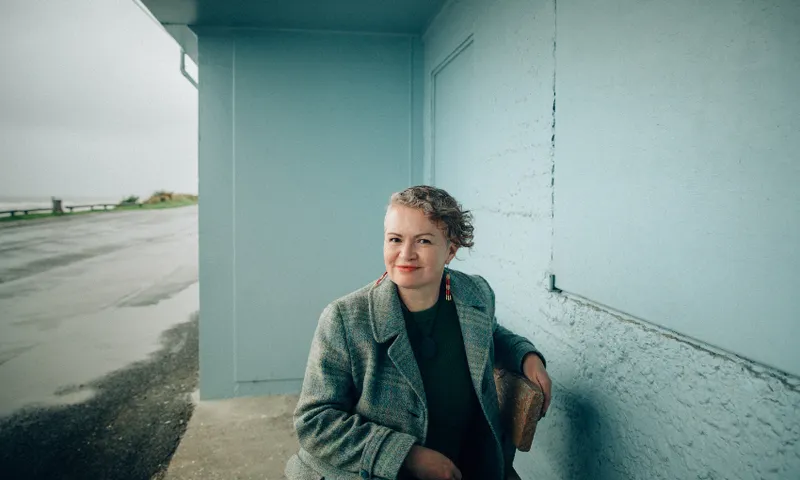
Thoughts and prayers to the judges:
The Jann Medlicott Acorn Prize for Fiction is judged by novelist, short story writer and reviewer Craig Cliff (convenor); novelist, poet and Arts Foundation Te Tumi Toi Laureate Alison Wong; and bookseller, writer and reviewer Melissa Oliver (Ngāti Porou).
Judging the Mary and Peter Biggs Award for Poetry are poet, musician and multi-disciplinary artist Daren Kamali (convenor); poet, writer, performer and editor Jordan Hamel; and writer, musician and translator Claudia Jardine.
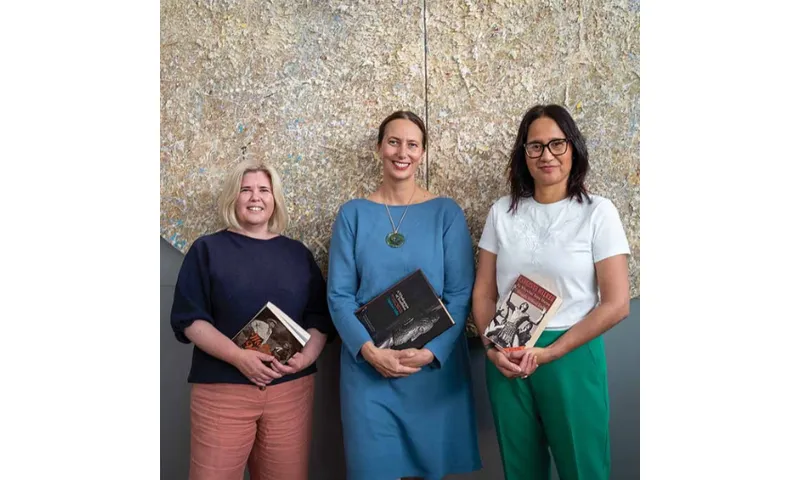
The General Non-Fiction Award judges are journalist, author and reviewer Philip Matthews (convenor); academic and writer Georgina Stewart (Ngāpuhi-nui-tonu, Pare Hauraki); and screen director, producer, and author Dan Salmon.
The BookHub Award for Illustrated Non-Fiction is judged by art historian and curator Lauren Gutsell (convenor); photographer, moving-image artist, writer and academic Natalie Robertson (Ngāti Porou, Clann Dhonnchaidh); and non-fiction writer and former magazine editor Rebekah White.
The Spinoff Books section is proudly brought to you by Unity Books and Creative New Zealand. Visit Unity Books online today.

Claire Mabey
Claire Mabey is a children's author of The Raven's Eye Runaways, The Raven's Eye Rebellion, and a picture book Cass and the Beast illustrated by Jill Calder. For a long time Claire worked on literary festivals and is the founder of Verb Wellington. She lives in Te Whanganui-a-Tara with her partner and son.


