An A to Z of The Spinoff’s best books of 2025

Just some of the titles that have made it into this year’s best-of list.
Made possible by
Books editor Claire Mabey selects the best books of the year, with help from a panel of experts.
I had the thought when I was visiting Unity Books Wellington the other day that I’d be keen curl up somewhere in the corner of the shop and have a sleep. I’d love to snooze away the rest of December surrounded by books and Christmas cheer and frantic booksellers.
There is no busier time for an indie bookshop, and that gives me great heart: a throng of buyers matching books to friends and family, maybe even selecting a title or two for themselves to unwrap on the big day. Best-of lists abound in December, too – and why not? It’s when some of us get to proclaim that we’ve read enough books in a year to select just a few to hold up and say “This one! This one stuck!”
Thanks hugely to the readers and critics who contributed to this list, the 2025 experts’ edition; and remember to come back next week for The Spinoff’s best books of 2025: the people’s choice.
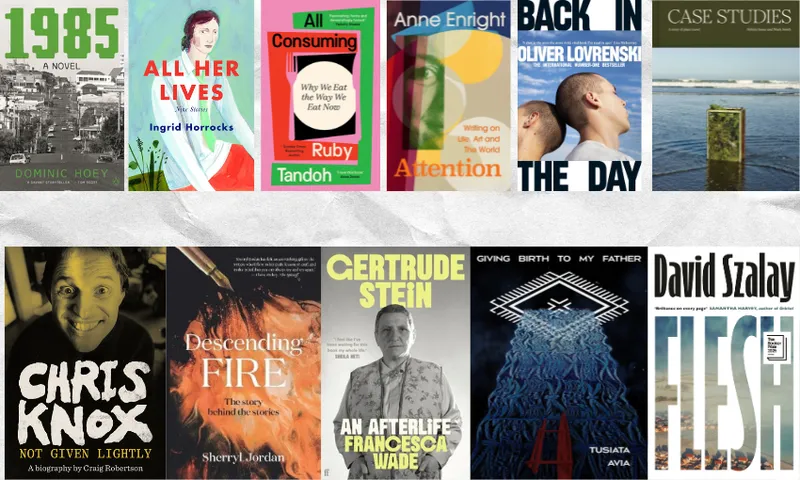
1985 by Dominic Hoey
I think Dominic is a sensationally good writer and 1985 grabbed me in a way that many books straight outta Aotearoa do not. Great characters. Tick. Wonderful dialogue. Tick. Laugh out loud humour. Tick. Heart. Tick. Politics. Tick. Can’t wait for the next one to drop. / Victor Rodger
A Guide to Rocks by Sacha Cotter and Josh Morgan
Cotter and Morgan are responsible for several of Aotearoa’s most beautiful picture books but this latest is my favourite. A Guide to Rocks is a heartfelt, genuinely useful book about the importance of sharing your burdens. / Claire Mabey
All Consuming by Ruby Tandoh
This was my favourite nonfiction read of the year. I can’t get enough of Tandoh’s deeply intelligent, funny, sharp writing on food culture, from bubble tea to allrecipes.com to supermarkets. If you’re remotely interested in great writing and/or in food and why we eat the way we do then this book is for you. / CM
All Her Lives by Ingrid Horrocks
All Her Lives impressed me as one of this year’s front runners. The stories begin in rural New Zealand at the end of the first World War, and the characters and their descendants thread their way subtly through generations in the following stories, a little in the manner of Olive Kitteridge. They are interspersed with two stories based on Mary Wollstonecraft, shadowing early feminism, the sacrifice and the grief. / Dame Fiona Kidman
Attention by Anne Enright
Just the author’s name makes me jump to attention. Her attentive gaze has collected up views and opinions about books, life, art and things that go on in the world, relayed in a series of gripping essays. She doesn’t shy away from the hard stuff, the Alice Munro dilemma, priests in Ireland, girls mistreated in Irish laundries and the like. But she brings compassion, humour and a breadth of understanding to the most difficult topics. And some are just pure entertainment. A book to return to many times. / Dame Fiona Kidman
Back in the Day by Oliver Lovrenski
Mary Shelley with Frankenstein. Brett Easton Ellis with Less Than Zero. And now Croatian/Norwegian writer Oliver Lovrenski with Back in the Day. All authors who’ve been showered with praise for their literary debuts by the age of 21. Lovrenski’s tale of diverse Norwegian youf features prose that doesn’t just jump off the page, it also does a round house kick straight into your puku. Loved it. / Victor Rodger
Case Studies by Felicity Jones and Mark Smith
This is the book that surprised me the most this year. I have long been curious about the transportation of plants: how they cross borders and change landscapes and lives. This incredibly beautiful book explores this idea with the starting point of an experiment: a sealed glass container containing a plant to transport from London in 1829. The book contains within it a range of perspectives on botanical exchange alongside stunning photography by Mark Smith. / CM
Chris Knox: Not Given Lightly by Craig Robertson
This is the finest biography ever written about an Aotearoa musician and cultural figure. You should see my copy, riddled with 2B pencil marginalia and underlinings on every page, with exclamations like “YES!” From his music with The Enemy, Toy Love and Tall Dwarfs, to his comics and strident film and music criticism from a time when Aotearoa still had a robust and healthy reviewing culture, Chris Knox is a beloved legend. With care, Craig Robertson has brought together interviews with over 80 people to meticulously craft a fascinating, inspiring and prismatic portrait of Knox’s creative life and the social backdrop of his work. Rich in detail where you can really get among the weeds, this is also a visually stunning book, jam-packed with ephemera. While music lovers will love this, anyone interested in our social and cultural history will absolutely appreciate this too. / Kiran Dass
Descending Fire: The Story Behind the Stories by Sherryl Jordan
Sherryl Jordan (1949–2023) was a much-loved children’s author; there is a whole generation of readers who utterly adored her books. Her life – both writing and personal – was not always easy; she wrote a dozen books before having Rocco published, and she was dogged by ill health and other problems, but this memoir (reviewed here by Claire Mabey) is written with a deep sense of joy, faith, purpose and fulfilment. It’s an honest and fascinating insight into the life of a writer, highlighting her resilience and determination and the way that her characters and settings (almost literally) became real for her. The manuscript was passed to Bateman Books by Sherryl’s editor Penny Scown at Scholastic and Sherryl died before knowing it had been accepted – but it is a lovely legacy to her and her work. / Philippa Werry
Flesh by David Szalay
When I started I thought, ugh, what a bleak, austere book, and then when I read the last page and shut the book, I said aloud, “Wow.” Because hell, what an intense powerful book this is. A penetrating violence lurks on every page, and bitter sorrow hides in the remarkable use of blank space and white page. The sort of book that exemplifies that you can do anything in a novel, but you have to pull it off, and geez, what a staggering magic trick Szalay has managed to execute. Devastating and strangely addictive. / Josie Shapiro
Gertrude Stein: An Afterlife by Francesca Wade
By crikey. Francesca Wade is fast becoming one of the great biographers: her first, widely acclaimed, book, Square Haunting, followed the lives of five women writers who all at one time lived in Mecklenburgh Square in London. Now, Wade had produced an enormous biography of Gertrude Stein, one of the most fascinating and influential writers of the 20th century. The biography is in two parts: the first, the story of the life, and the second, the story of how Stein arranged her afterlife, her legacy. Wade is a dream to read – she allows the reader to slip through the work absorbing huge amounts of information, inhabiting past lives – the mark of a truly superb nonfiction stylist and researcher. / CM
Giving Birth To My Father by Tusiata Avia
This might be my new favourite work of Tusiata’s. Here she processes the grief of her father’s death and at the same time sets about interrogating some of the challenges she faced from family around his funeral. This is her most personal work yet and more evidence that that politician who had a go at her the other year wouldn’t know good poetry if it twerked right in his kisser. / Victor Rodger
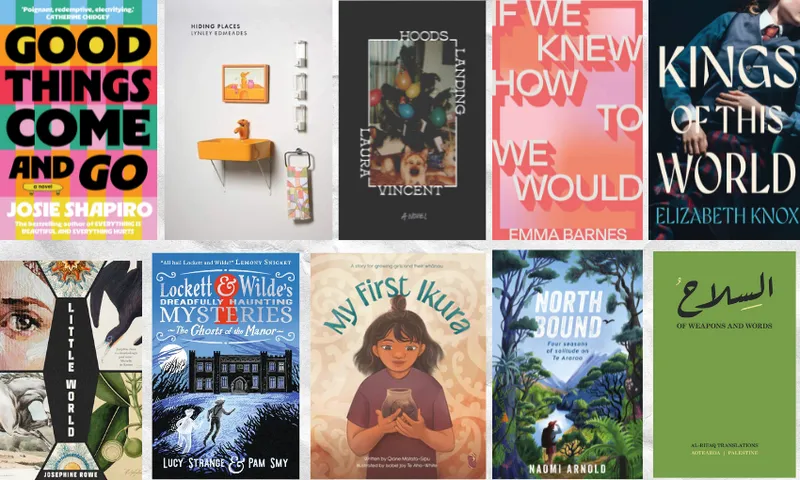
Good Things Come and Go by Josie Shapiro
I’m forever grateful for books that get me invested. Shapiro has a gift for crafting characters so real you feel you know them. Good Things Come and Go moved me but more importantly it has lingered: the spectre of dreams going south and life taking unexpected and wrong turns haunts us all. Shapiro is brave enough to play this out in novel form: a stunning second book from a writer proving herself to be one of our best. / CM
Hiding Places by Lynley Edmeades
It is rare to find a book that can’t be easily explained. Hiding Places isn’t quite memoir, nor is it a full essay collection. It’s not not fiction either. It’s a hybrid exploring motherhood, failure, fragments, collective memory, specificity among the universal, and the offerings of other writers. This book reawakened an interest in form for me – a highly sculpted mess of realities. Edmeades has spiked this year’s stack with something raw and exciting. / CM
Hoods Landing by Laura Vincent
Hoods Landing has been rolling around my brain since I read it a month ago. Laura Vincent’s family drama – set just a bit further than a stone’s throw south of Auckland – is full of the characters that make up a life, with all their attendant secrets, grudges, affections and affectations. It’s the kind of fiction that feels like memoir, but it’s Vincent’s surgical attention to inventive detail that elevates it beyond any local book I’ve read this year. / Sam Brooks
If We Knew How To We Would by Emma Barnes
People use the word “tender” about poetry more than I would prefer but this book is tender in the sense of, like, a bruise that’s healing that feels kind of good to press. A big chunk of it deals with suicidality, both your own and your friends’, and I haven’t really read it written about in this way before, and I felt really freaking held by it. I think it’s a very generous book, and it’s a teeming book, there’s so much to it. / Freya Daly Sadgrove
Kings of this World by Elizabeth Knox
A year in which we get a new Knox book is a great one. Kings of this World is a heady, heartrace of a novel that returns us to the world of Southland. When Vex and five others from her school for people who possess the power of P are kidnapped, readers are in for an exploration of power, politics, crushes, friendship and inequality. For more, read Shanti Mathias’ astute review in The Spinoff. / CM
Little World by Josephine Rowe
Little World is a strange, lyrical novel that speaks of the divine. In the rough landscapes of Western Australia, where heat and drought are the highest powers, a child saint arrives without fanfare and touches a handful of quiet, unextraordinary lives. Josephine Rowe’s prose is heady and poetic as she asks questions of the cruelty inherent in idolisation. / Ash Davida Jane
Lockett & Wilde’s Dreadfully Haunting Mysteries by Lucy Strange
If your kid is onto their millionth re-read of Wimpy Kid or Dog Man, may I suggest slipping them Lucy Strange’s Lockett & Wilde books? Nothing at all wrong with WK or DM but everyone needs a bit of breadth in their reading lives. There are two Lockett & Wilde books so far and each is heavily, and brilliantly, illustrated by Pam Smy. Super storytelling, beautiful writing, thrilling mysteries – they might just provide the fresh obsession you and your kids need this summer. / CM
My First Ikura by Qiane Matata-Sipu
A classic. Finally, a book that celebrates getting your first period. Through a te ao Māori lens My First Ikura draws on ancestral wisdom to celebrate a first period as a sacred change. Essential for schools, libraries and homes. / CM
Northbound by Naomi Arnold
I’m a sucker for a book about thru-hiking, and Northbound doesn’t disappoint. A physical and emotional journey of walking Te Araroa from bottom to top, through the mud and the loneliness and the rain and the astounding glory, this is narrative non-fiction at its finest. Arnold’s writing is compelling and spark-bright. I have recommended her book to everyone I know – this is one of those special books that all ages and genders and reading proclivities can enjoy. / Josie Shapiro
Of Weapons and Words by Al-Rifaq Translations
My Aotearoa book of the year is Of Weapons and Words by the Pōneke-based collective Al-Rifaq. Al-Rifaq has translated six essays of political commentary and analysis on Palestine and the echoes of colonialism in the wider region. Of course, this book is particularly urgent with the horrors of Gaza and the international community’s failure to respond, and this goes some way to redressing the continued lack of Palestinian and Arab voices in Aotearoa. The book is a fascinating and cogent collection, drawing together history, theory, and analysis, and re-casting narratives in important ways. / Brannavan Gnanalingam
Ogg by HP Fryer
Ogg is a debut book for writer and illustrator HP Fryer, set in a world of wizards, trolls and annoying siblings that nails the fine art of the classic bedtime story – short and clever, able to withstand a hundred reads. It reminded me of two all-time great writer/illustrators – Raymond Briggs and Anthony Browne – with it’s gentle tone and warm, richly-detailed illustrations that reward closer examination on repeat viewings. The troll steals the show, and the moment where our heroes sit together and eat soggy sandwiches by the riverbank is my favourite page of the year. / Toby Morris
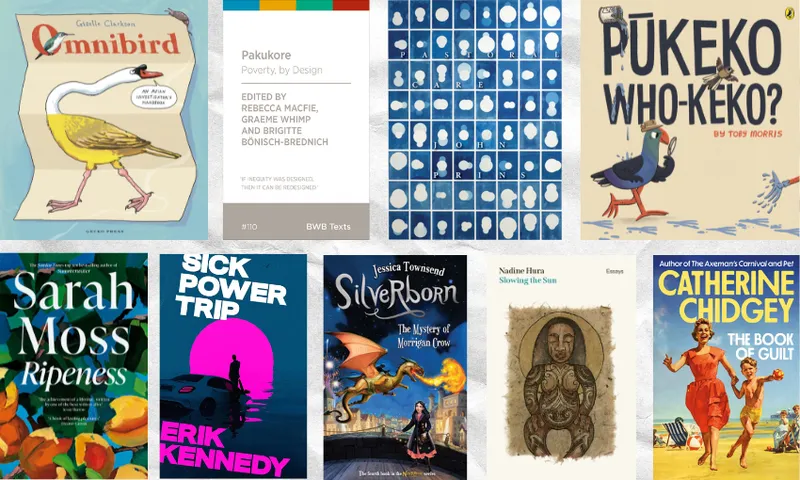
Omnibird by Giselle Clarkson
Put down the phone. Stop the clocks. Strap on the sandals. Pick up Omnibird and take yourself (and any kids if they’re handy) outside to watch some birds. I adored this book. Clarkson balances humour, science and old-fashioned, earnest nerdery. Her admiration for nature is palpable and infectious and I think might just urge a new generation of conservationists into being. Clarkson makes regular birds magical and curious and weird and incredible. Bravo. / CM
Pakukore: Poverty by Design edited by Rebecca Macfie, Graeme Whimp and Brigitte Bönisch-Brednich
Anyone interested in the systemic failures of successive governments will be interested in this book. Contributors analyse education, health, housing, justice and welfare to unpack how poverty is enforced and reinforced by inadequate systems. Read an excerpt from one of the contributions, here, to get a sense of how clear and how rousing this small but mighty publication is. / CM
Pastoral Care by John Prins
Slower and more contemplative than the prose styles dominating bookstores right now, John Prins writes with a quiet majesty about the small moments of everyday life. This debut collection of short stories is magnetic and submersive, like being held underwater for too long and the lack of oxygen makes your mind feel clear and empty. The final paragraph of the story ‘But Baby, I Love You’ I can read over and over again, mesmerised by the meaning and the language and the beauty. / Josie Shapiro
Pūkeko Who-Keko? by Toby Morris
Just when I thought maybe we have enough books about Aotearoa birds, Toby Morris pops out with this dad-joke banger: layered, lols, linguistic. The play on sound and language is deceptively simple: there’s a beautiful and charming family story at the heart of it as well as a deft and invisible invitation for families to have fun riffing off what Morris puts down. Bloody genius. / CM
Ripeness by Sarah Moss
Sarah Moss is one of those writers so consistent she can sometimes be taken for granted. Her novels Ghost Wall, Summerwater and The Fell were three consecutive bangers, chronicling contemporary politics in real time. Ripeness is different in that it’s a slower character study of two different women, at different times, linked by themes of babies lost and migration. Deft, intelligent, compelling. / CM
Sick Power Trip by Erik Kennedy
In his best work yet, Erik Kennedy writes of powers great and small with his classic dry humour and discerning eye. Every poem in Sick Power Trip earns its place in a collection that couldn’t be more timely. Poets everywhere should study Erik’s ability to speak to the urgent and necessary without veering into didacticism. / Ash Davida Jane
Silverborn by Jessica Townsend
No other book series has made me contemplate getting a tattoo quite so seriously. Townsend’s world of Nevermoor is irresistible. Silverborn is the fourth book in a planned series of nine and frankly I don’t remember ever wanting to live in a fantasy realm so much (and I am a sucker for well-built worlds). The whole family will fall in love with Morrigan Crow and her terribly exciting life in complex, dangerous and enchanting Nevermoor. Get amongst it folks: there is so much to love here, so many mysteries solve and characters to root for. / CM
Slowing the Sun by Nadine Hura
A stand-out essay collection from one of the finest nonfiction writers in the country. Hura’s inquiries draw science, grief, pūrākau, poetry and bone-deep intelligence to pull climate change close. The work Hura does in this book helps us see the climate crisis as inextricable from daily life: a story we are living and can take ownership of. / CM
The Book of Guilt By Catherine Chidgey
I was seduced by the title and the Australian cover and it was my first Chidgey and it blew my mind and I was like “OK wow good lord I have been sleeping on Chidgey”. I’ve since read Pet and The Axeman’s Carnival which have solidified my opinion of her as a fuckin’ legend, and I’m so stoked she writes so prolifically so I can eat up lots more. The Book of Guilt has serious staying power – it has lodged in my head. She does ominous like no one else. / Freya Daly Sadgrove
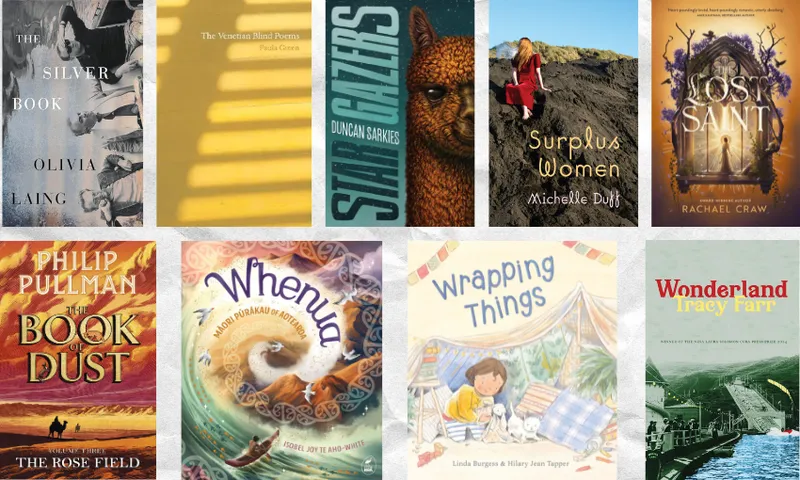
The Lost Saint by Rachael Craw
Craw is so damned good. I defy anyone not to be completely absorbed by this riveting romance with high stakes and lush Medieval worldbuilding. Anyone into time slip stories, prose that will pull you under and not let go, and characters you believe in will love this book. / CM
The Rose Field by Philip Pullman
It’s so huge and so important and I was so completely unwilling to leave the world that I had no choice but to immediately go back to the beginning of His Dark Materials. And as I’ve said, I’ll be thinking about it forever. / Freya Daly Sadgrove
The Silver Book by Olivia Laing
I’ve been evangelical about Olivia Laing’s writing for over a decade, and continue to be besotted with their books. Each book they write is completely different to the last, but look closely and the connecting throughlines are there. They have an uncanny knack of writing about my niche interest topics too, whether that be American artist and activist David Wojnarowicz (The Lonely City), Derek Jarman (The Garden Against Time: In Search of a Common Paradise), rivers (To the River) and now, in their second novel The Silver Book, the films and life of Italian filmmaker and political intellectual Pier Paolo Pasolini, who was murdered in 1975. Framed around the making of the films Casanova by Fellini and Pasolini’s Salò through the perspective of costume and production designer Danilo Donati, this is a homage to the magic of cinema, a warning of the rise of fascism, a queer love story, and a very stylish thriller. With its lush Patricia Highsmith atmosphere, this is the perfect book to luxuriate in over the summer break. Unquestionably, my Book of the Year. / Kiran Dass
The Venetian Blind Poems by Paula Green
This lovely collection was written while Paula Green was in hospital and later recovering at home; she describes it on her blog as “a gathering of illness poems” and “a way of saying thank you to the doctors and nurses who have given, and are giving so much”. I love the cover, with its enticing warm tones and hints of shadows and light, things inside and outside, hidden and to be revealed, and I was struck by how the poems don’t have titles, but gently carry you along through this period in her life. Paula describes the many small things that nourished her through a tough spell in hospital – so much so that, looking back, she could say that she treasured that time. I love the way she is able to look for and celebrate beauty even in the confines of an isolated hospital room, and how she records the books she was reading or listening to, grateful for their power to inspire and sustain, even if she could only catch “every ninth word”. / Philippa Werry
Star Gazers by Duncan Sarkies
This novel is classic Sarkies; lively, funny, honest, kind of dark and gritty underneath, with characters you feel like you’ve met and a compelling storyline you can’t stop reading even as you’re quietly and uncomfortably wondering; Do I just follow the herd? Is that…bad? If you’re in the market for an alpaca allegory set in rural New Zealand which asks whether democracy is failing us while making you snort into your gumboot tea, look no further. / Michelle Duff
Surplus Women by Michelle Duff
Sometimes I get bored with short story collections. I did not get bored at any moment in this outrageously excellent debut that spans genre and unearths universal truths about the state of it for women young and old. Surplus Women jazzed me right up and now I’m excited about Duff as a fiction talent and can’t wait to see what she does next. / CM
Whenua by Isobel Joy Te Aho-White
This book is destined to be a classic. Te Aho-White’s rich illustrations accompany pūrākau, each about 5-8 pages long, perfect for reading aloud. Te Aho-White is already a well-established illustrator but this book has cemented her as an author who will impact generations. / CM
Wrapping Things by Linda Burgess
Charmed! What a delightful picture book. Hilary Jean Tapper’s illustrations have a very Shirley Hughes warmth to them and the story is gentle and right at kid level. Perfect for Christmas and for families expecting a new arrival. / CM
Wonderland by Tracy Farr
What a wonder this novel is! Tracy Farr makes a brilliant leap of imagination, bringing Marie Curie to New Zealand, through her connection with Sir Ernest Rutherford, for rest and recuperation with a joyous loving family. They run a real amusement park on Miramar Peninsula in Wellington and have bouncing, brainy triplet girls who are such a joy, I wanted to leap into the novel and hug them. Utterly original and life-affirming, this novel shines, like Curie’s radium. / Carole Beu
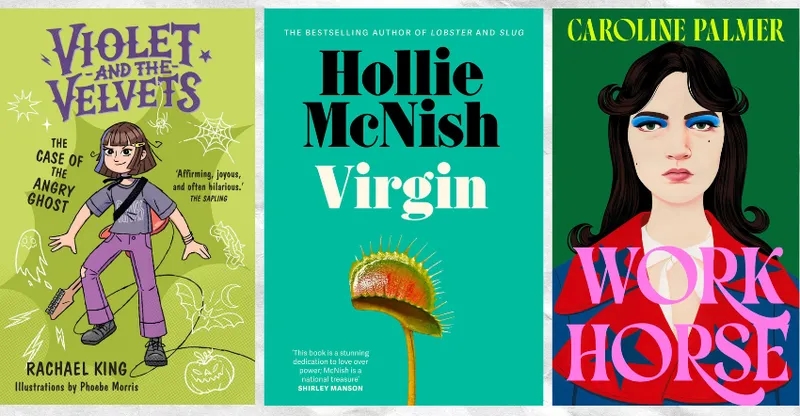
Violet and the Velvets series by Rachael King
A banger series about a kid-band who rock out! Violet Grumble is 12 years old and a determined rockstar perpetually interrupted by problems like the fact her bandmates don’t know how to play their instruments, ghosts and missing stuff. There are two books in the series our so far and they’re fast-paced, fun and filled with gorgeous characters. / CM
Virgin by Hollie McNish
I was lucky enough to hear McNish perform some of the poems from her latest collection in Edinburgh this year, and was blown away. McNish has a supreme talent for poems that feel like she has articulated aspects of your own mind. This collection takes issue with the word “virgin” and the connotations it has been burdened with. The poems are a love-rage – an explosion of passion, anger and tenderness – heart-lifting take downs of violent patriarchal frameworks through sheer love and language. / CM
Workhorse by Caroline Palmer
Workhorse by Caroline Palmer is almost certainly my favourite international book of the year. I personally think The Devil Wears Prada is a terrible book, elevated by a good movie, and this novel – also from a former Vogue staffer – comes through on the promise of that barely veiled memoir. It follows an assistant throughout the aughts, from the high-flying glamour of the print industry through to the start of the sunset era, and her desire to take herself, a self-labelled “Workhorse”, as far as she can go in a world that values connections, surfaces and perks. It’s funny, it’s sharp, it’s dark, it’s basically The Talented Mr Ripley. If you’re the kind of person who checks news sites more than once a day, this is for you. / Sam Brooks
Your Forest by Jon Klassen
Klassen is the master of tasteful restraint, honing in on an approach that gets more and more minimal with every book. But where minimalism in art often ends up feeling cold and distant, Klassen’s books keep getting warmer. Your Forest is part of a set (with Your Farm and Your Island) where everything is boiled down to it’s absolute essence – Character and plot are completely gone and all that’s left is world-building, landing on a simple, generous and loving idea that to read to someone is to gift them a world to play in. Your Forest is my favourite of the three, with it’s sprinkled in detail of the nice ghost. Incredible book! / Toby Morris
The Spinoff Books section is proudly brought to you by Unity Books and Creative New Zealand. Visit Unity Books online today.

The Spinoff Review of Books
A smorgasbord of books thoughts and formats by The Spinoff.


