
After Friday’s horror poll, the prime minister enters the week with his leadership hanging by a thread, writes Catherine McGregor in today’s excerpt from The Bulletin.
To receive The Bulletin in full each weekday, sign up here.
The poll that changed the calculus
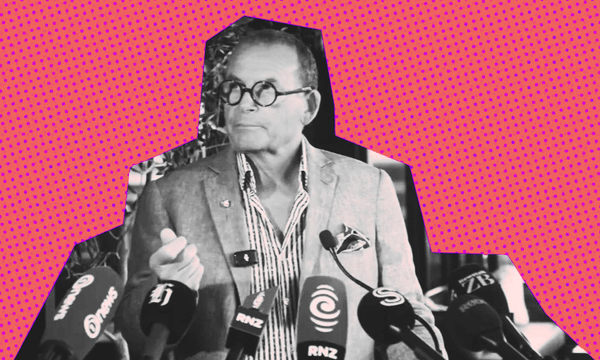
Christopher Luxon went into the weekend facing the most serious threat to his leadership since he became National’s leader in December 2021. The trigger was Friday’s Taxpayers’ Union-Curia poll, which put National at just 28.4% – its worst public result since the party was in turmoil in 2020 and 2021, and almost 10 points below its 2023 election result. Sensing the danger, Luxon took the unusual step of seeking out a Newstalk ZB interview on Friday evening. “Absolutely not,” he told the broadcaster when asked if he would step aside. He insisted he had the full support of his caucus, and that internal polling had the party higher – Stuff’s Glenn McConnell reports that National believes it’s sitting around 32%.
A weekend of pointed denials is unlikely to settle matters. Caucus phones ran hot on Friday, The Post’s Henry Cooke says (paywalled), adding that for many MPs who face losing their seat, the narrative of an improving economy they’d been counting on was “no longer realistic”.
Confusion in caucus
The difficulty for National MPs contemplating action is that the case for a leadership change remains muddied. Many backbenchers say they sense economic conditions beginning to improve in their electorates. Yet, as Luke Malpass writes in The Post (paywalled), “while things seem to be getting better, National’s polling keeps getting worse”. This has left MPs paralysed, unsure whether to hold onto the leader they know or roll the dice with a newcomer.
New Zealand history has not been kind to parties that change leaders mid-term, and the memory of the chaos following National’s 2020 leadership churn haunts the current caucus. But Malpass suggests looking to Australia. The accepted wisdom is that six prime ministerial changes in a decade had a destabilising effect on both main parties there. Yet the post-leadership-spill results tell a different story. “Every Australian prime-ministerial change since Paul Keating rolled Bob Hawke in the early 1990s has basically been an electoral success,” he says. So why couldn’t that happen here? As Malpass points out, “New Zealand voters are not that different from Australians.”
Winston’s veto
Any move would, however, have to reckon with the coalition. In The Spinoff, Toby Manhire reaches back to 1997 for the relevant lesson: when Jenny Shipley’s faction rolled Jim Bolger, Winston Peters – leader of the support party in New Zealand’s first MMP coalition – was notified at the 11th hour rather than properly consulted. Peters was “very, very unhappy”, Bolger later recalled, and the coalition soon fell apart when Peters walked out over the sale of Wellington Airport shares. Peters confirmed as recently as last December that a change of National leader should be run past coalition partners first.
There is a further wrinkle. Both Peters and David Seymour have managed to hold comfortably above 5% – and as Manhire observes, part of that may owe something to the prime minister’s relative unpopularity. A more effective National leader, polling better, might squeeze both parties’ margins. A different leader might also be less indulgent of their need to regularly flex their political muscles.
The life preserver that sank
Luxon’s disastrous week began last Monday with his stumbling attempt to articulate New Zealand’s position on the US-Israel strikes on Iran – an episode that drew comparisons to Clare Curran’s infamous Question Time disaster. But as Thomas Coughlan writes in the Herald (paywalled), the geopolitical turmoil has done something more damaging than generate bad headlines: it has likely “extinguished the last remaining hope that an economic recovery will gently lift the coalition’s polling as the election approaches.” If the war continues, higher oil prices, higher inflation and weaker growth now loom instead.
For months, National had been quietly banking on a brightening fiscal picture to carry it towards the election. That hope looks to be gone, Coughlan says. And the deeper problem is not just the economic outlook but Luxon himself. Unlike his predecessors John Key and Jacinda Ardern, who could “explain their way out of a pickle” in tough economic times, Luxon has shown no such ability. As Malpass concludes: Luxon’s predicament “might be bad management or bad luck. It is almost certainly unfair. But that’s politics.”