A nuclear arms race is brewing in the Pacific

China unveils new weapons as part of the V-Day parade in Beijing in 2025 (Photo: Getty Images)
Don’t panic, but countries in our region are increasingly considering nuclear weapons, writes Anna Fifield.
This story was originally published on the author’s Substack, Between Giants.
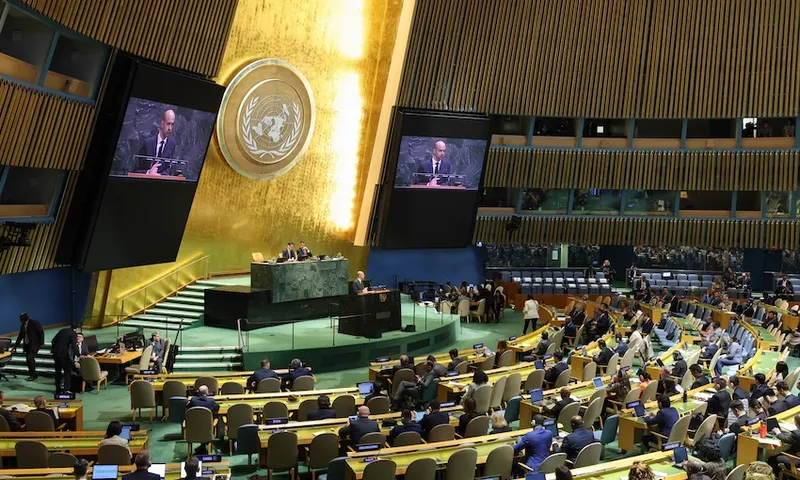
The stakes could hardly be higher as diplomats at the United Nations conduct their five-yearly review of the Treaty on the Non-Proliferation of Nuclear Weapons (NPT) – the landmark agreement to prevent the spread of nuclear weapons, signed by 191 member states.
The talks, which began this week, are taking place at a time when the war against Iran has reinforced the idea that a state is best positioned to fend off military aggression when it has nuclear weapons. After all, the US attacked Iran (which did not have nuclear weapons) and not North Korea (which demonstrably does).
As celebrated American political scientist John Mearsheimer said recently: “Isn’t the main lesson of this whole war that you’d better have your own nuclear deterrent – whether you’re Iran, South Korea, or Japan?”
Indeed, there are mounting calls in both South Korea and Japan for those countries to consider having their own nuclear arsenals – partly to respond to the growing capabilities in China and North Korea, and partly because people increasingly feel they can’t rely on the United States to abide by their security treaties and come to their defence.
This matters for New Zealand, says Toby Dalton, co-director of the Nuclear Policy Program at the Carnegie Endowment, an expert I’ve been turning to for years to talk about North Korea and Iran and their nuclear ambitions.
“Geographic distance, being an ocean away, is not going to protect New Zealand from the potential results of a conflict in any part of the world that involves nuclear weapons,” Dalton told me.
“We look right now at the effects of a war over nuclear weapons in the Middle East, and what that’s done to oil and gas prices, to agriculture. So, for folks in New Zealand, you should absolutely be concerned about the trajectory of these events.”
What you need to know
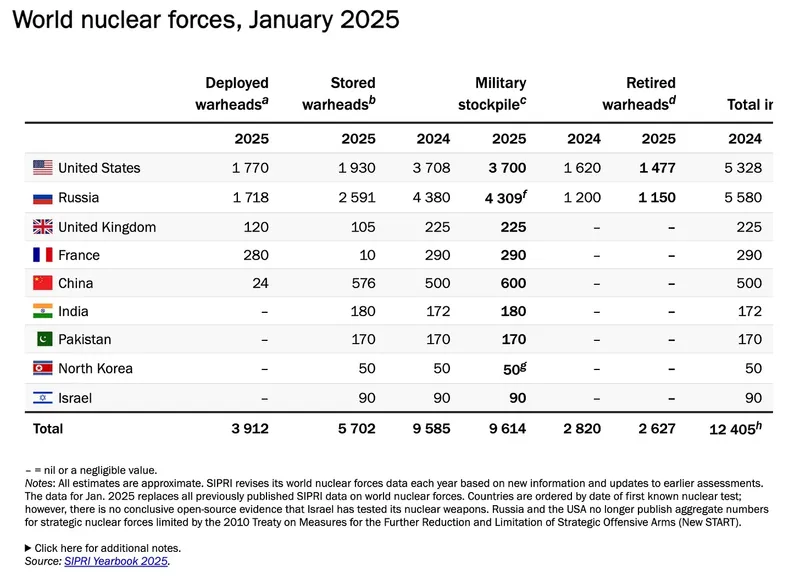
- The latest iteration of the Strategic Arms Reduction Treaty (START) between the United States and Russia, under which both sides agreed to reduce their stockpiles of strategic nuclear weapons, officially lapsed in February this year. Now there are no active arms limitation agreements in place between the two, which together have about 90 per cent of all nuclear weapons.
- China’s nuclear arsenal is growing faster than any other country’s. The Stockholm International Peace Research Institute (SIPRI), an internationally respected think-tank, estimates that China now has at least 600 nuclear warheads and has the potential to reach 1,000 by 2030.
- South Korea doesn’t have nuclear weapons but relies on the United States’ “nuclear umbrella” for protection. But a growing proportion of the public thinks South Korea should develop its own nuclear arsenal and South Korea has the technical ability to develop weapons if it makes the political decision to do so.
- The public in Japan, the only nation to have been bombed with nuclear weapons, remains overwhelmingly opposed to them. But the political mood has shifted slightly, and the broader issue is up for discussion. Prime Minister Sanae Takaichi recently declined to rule out nuclear weapons as an option.
- Both countries are increasingly talking about their “nuclear latency” – having the capability to develop a nuclear weapons program but stopping short of actually doing so.
Get smarter
There are nine countries recognised as nuclear-armed states: Russia, the United States, China, France, the United Kingdom, India, Pakistan, Israel and North Korea. Between them they have 12,241 nuclear warheads, according to the latest count by SIPRI.
India, Pakistan and Israel have never signed the nuclear non-proliferation treaty, while North Korea withdrew from it in 2003 and quickly set about developing nuclear weapons.
We shouldn’t be freaking out, but the nuclear balance is looking increasingly precarious.
“I think there is an arms race brewing: China is catching up with the US in terms of nuclear numbers… so the US will be adding capability, I think, and then North Korea continues to announce new and more dangerous systems,” Dalton said.
“And all of those factors, plus wariness about the strength of US alliance commitments, is driving conversations in Japan and South Korea. And so I think that the sum of all of that math is more and more weapons, more risks, more danger of escalation.”
Nuclear powers in our neighbourhood
China has been open about its nuclear ambitions, saying it is developing a deterrent and adhering to a “no first use” policy – meaning it won’t use its growing arsenal offensively, but will use them to retaliate if necessary. But at the same time, it has been rapidly growing its nuclear infrastructure, including silos for launching missiles.
Although it’s been nearly a decade since its last nuclear test, North Korea has made astonishing and observable advances in its missile program, including in missiles capable of reaching the United States.
Then there are the heightened tensions between India and Pakistan, both of which have nuclear weapons, and fired missiles at each other last year.
But it is the conversation among countries that do not currently have nuclear weapons that should concern us here the most.
South Korea
South Korea has been protected under the “extended deterrence” part of its security alliance with the United States. In 1992, as concern about North Korea’s nuclear ambitions were mounting, the two Koreas signed an agreement not to make, test or use nuclear weapons.
South Korea stuck to its side of the deal. North Korea, clearly, did not.
As Pyongyang has made advances, a small group of influential South Korean politicians, mostly conservatives, started advocating for Seoul to do the same. It was a very fringe movement, though, until a couple of years ago.
Now, it’s a much more mainstream idea.
More than 70 percent of people say in polls that they’re in favour of South Korea developing its own arsenal to counter North Korea, China, and Russia. In one poll last year, fewer than half of respondents said they believed the US would use its nuclear weapons to defend South Korea if North Korea struck first.
At the same time, there has been movement to loosen an agreement with the US that restricted South Korea’s ability to produce fissile material.
Washington and the left-leaning government in Seoul recently signed a deal that would allow South Korea to enrich uranium up to 20 percent for civilian purposes – which is still a long way from the 80 percent needed to make weapons – including to build nuclear-powered submarines.
Analysts point out that this step increases South Korea’s technical capability to make the leap from civilian to military use, although Dalton said the current government was highly unlikely to proceed because it would jeopardise the alliance with the US.
“But I do worry that a future government might take a different position,” he said, “and having advanced the technical capacity for nuclear weapons, they could make that decision much easier and faster.”
Japan
The previously taboo question of Japan acquiring nuclear weapons is now much more regularly discussed – including about whether Japan should allow the US to deploy its nuclear weapons there, and whether it should develop its own capability.
A senior official in the prime minister’s office suggested in December that the country should do so to deter potential threats. The government clarified that Japan remained committed to its three non-nuclear principles: not to possess, produce or permit the introduction of nuclear weapons.
But the openness to discussing the idea has a lot to do with Trump.
“Trump is so unpredictable, which is his strength maybe, but I think we have to always think about Plan B,” Rui Matsukawa, a member of the ruling Liberal Democratic Party’s influential national security policy council, told Reuters. “Plan B is maybe go independent, and then go nukes.”
Japan is widely considered to have a more advanced nuclear infrastructure than South Korea. It has a stockpile of about 45 tons of plutonium and possesses the technical capability to produce nuclear weapons quickly if it chooses to do so, analysts say.
“With nuclear latency, either country could assemble weapons relatively quickly,” says Joshua Kurlantzick of the Council on Foreign Relations. “Experts expect that this could take just a few months for Japan, but South Korea would likely take longer.”
The discussion is taking place amid a broader move to revise Japan’s post-war pacifist constitution and allow the country to operate on a more normal military footing.
There have already been some significant changes: Tokyo last week scrapped its ban on exporting lethal weapons – including warships and combat drones – as part of an effort to build up its arms industry amid worries about Chinese and North Korean aggression.
So real changes are happening and old norms are being questioned. That’s a development that could, sooner or later, upend the security calculus in our broader neighbourhood.

Anna Fifield
Anna Fifield is the former Asia-Pacific editor and Beijing bureau chief of the Washington Post. She is bow the editor of The Spinoff’s World Bulletin newsletter and writes on New Zealand’s place in the world on her Substack, Between Giants.


