All the ways politicians want to mess with your KiwiSaver

Political parties are throwing around a variety of KiwiSaver proposals.
NZ First has announced it wants to sign all citizens up to KiwiSaver at birth, but it’s not the only party with plans.
When Labour finance minister Michael Cullen first proposed KiwiSaver, National party leader John Key derided it as a “glorified Christmas club”. In the almost two decades since, KiwiSaver has grown into one of New Zealand’s most important sources of personal wealth.
In 2025, the Financial Markets Authority reported 3,385,856 New Zealanders were KiwiSaver members, with an average balance of $36,349 per member. KiwiSaver providers now manage more than $120bn. Members, employers and the government contribute a combined $12.2bn per year to the scheme.
As KiwiSaver enters its second decade, providers are looking for more innovative ways to deploy capital. Simplicity uses a portion of its members’ funds to build housing. Sharesies has the first KiwiSaver scheme that allows members to self-select part of their investments. Aurora is expanding into private lending. Simplicity uses a portion of their members’ investments to build rental housing.
Politicians, meanwhile, are obsessively looking for ways of tweaking the scheme. Several parties have already announced the KiwiSaver reform policies they will take into this year’s election.
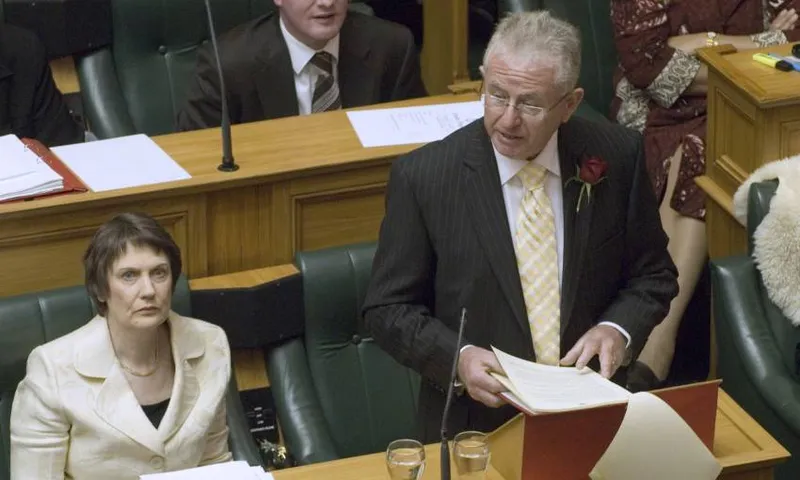
National
National has pledged to raise the default contribution rate, matched by employers, to 6% by 2032. The coalition government has already begun that process: on April 1, the minimum rate rose from 3% to 3.5%, with a further increase to 4% due in 2028.
In Budget 2025, the government reduced the annual Crown contribution to a maximum of $260.72 per person. This is half of the previous rate. Members earning over $180,000 lost access to the government contribution entirely.
In March, the government announced changes allowing some KiwiSaver members to use their funds to buy property they don’t live in (withdrawals of this nature had previously only been allowed for first-home buyers committed to an owner-occupier situation). The change was primarily aimed at people who are provided housing as part of their employment, such as farmers, rural police officers and defence force personnel.
The government has also made regulatory changes enabling KiwiSaver funds to invest in infrastructure through public-private partnerships.
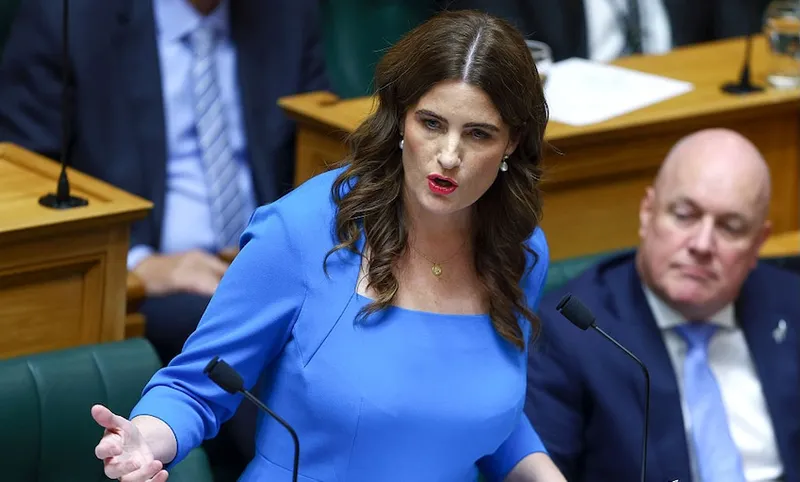
NZ First
While its coalition partner wants to reduce government spending on KiwiSaver and turn it into a mostly private system, NZ First is pitching a government-led expansion. On Sunday, party leader Winston Peters announced a policy that would automatically enroll every newborn citizen in the scheme and give them a starting bonus of $1,000.
NZ First wants to increase minimum contributions to 8%, with the goal of eventually increasing them to 10%.
Act
The Act Party generally opposes any KiwiSaver expansion that requires the government or employers to pay more. Leader David Seymour said the party voted for the government’s changes to minimum contributions because of the trade off of reducing government contributions.
Seymour recently proposed reducing the government KiwiSaver contribution further and instead putting $500 in a controlled investment account for every year 11 student to teach them about investing.
Labour
Labour hasn’t released a KiwiSaver policy yet. Leader Chris Hipkins strongly criticised the government’s decision to halve the annual Crown contribution in 2025 but hasn’t committed to restoring it.
The party’s capital gains tax policy explicitly excludes KiwiSaver (and all other share portfolios), which could create an incentive to shift away from residential property and toward financial assets.
Greens
The Green Party has not released its KiwiSaver policy yet. In 2021 the party successfully championed laws that required default KiwiSaver providers to exclude investments in fossil fuel production and illegal weapons.
Te Pāti Māori
While the party doesn’t currently have a formal KiwiSaver policy, co-leader Debbie Ngarewa-Packer has raised equity concerns for people who can’t afford to make the minimum contributions. The party has previously called for Māori to have an earlier age of eligibility for KiwiSaver withdrawals and superannuation due to lower life expectancy rates.
Opportunity
Like National, the Opportunity Party wants to increase matched contribution rates to 6% for employers and employees, phased in gradually over 6-7 years. The party’s policy proposes a compulsory “KiwiSaver 2.0” scheme which would have greater tax benefits but could not be withdrawn to purchase a first home, though it could be used as collateral for a bank loan.

Joel MacManus
Joel MacManus is a senior writer for The Spinoff. He previously worked at RNZ and Stuff, and began his career at Critic Te Ārohi. His writing explores the political, economic and cultural systems that underpin modern New Zealand. He won the 2025 Voyager Media Award for Best Columnist, Opinion or Critique.


